.webp&w=384&q=75)

Loading, please wait...
Loading, please wait...
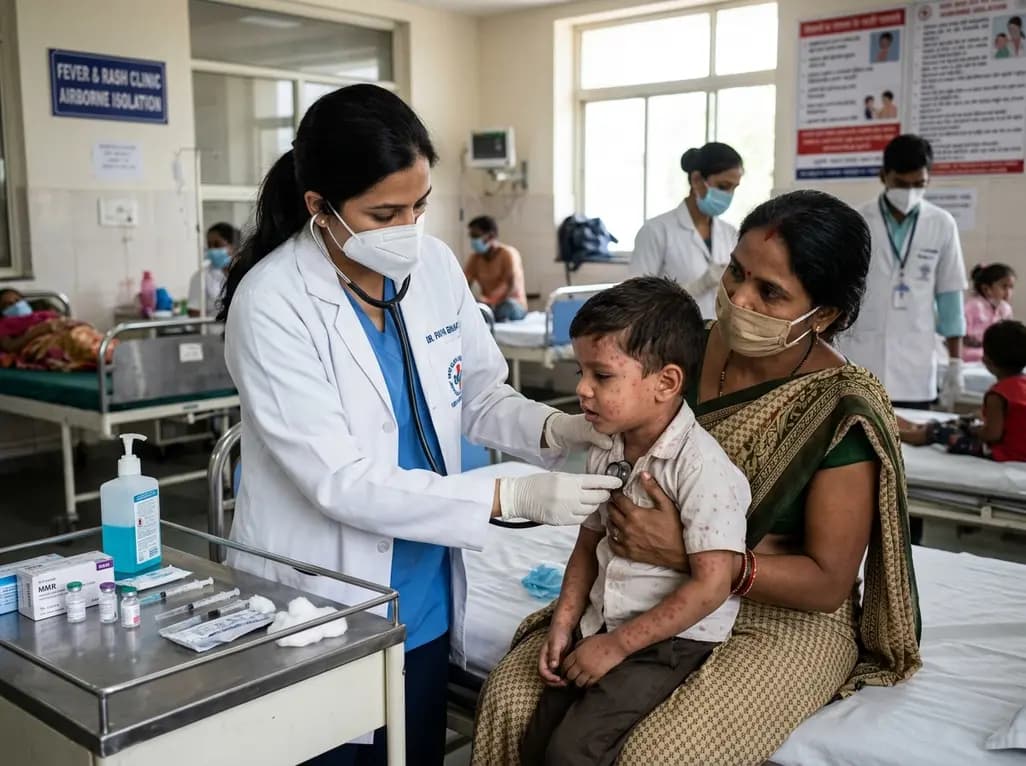
Recent epidemiological surveillance reports a sharp escalation in measles infections across multiple jurisdictions, underscoring the critical need for robust measles outbreak management. With case numbers reaching multi-decade highs, healthcare providers face increasing diagnostic and containment challenges. Specifically, this resurgence highlights persistent immunity gaps within communities and emphasizes the importance of rapid clinical identification. Primary care practitioners and hospitalists must maintain high clinical suspicion to prevent widespread transmission. Furthermore, prompt institutional action protects susceptible infants and immunocompromised individuals who cannot receive live vaccines.
The measles virus remains one of the most contagious human pathogens known to medicine. It spreads readily via airborne respiratory droplets when an infected person breathes, coughs, or sneezes. Furthermore, viral particles can remain suspended in ambient air for up to two hours after an infectious individual departs. This extraordinary contagiousness generates a basic reproduction number between twelve and eighteen in fully susceptible populations. Consequently, even minor declines in community vaccination coverage can trigger explosive transmission chains across large areas.
Recent epidemiological data demonstrate that unvaccinated individuals constitute the overwhelming majority of severe cases and hospital admissions. When community vaccine uptake falls below ninety-five percent, population-level herd immunity rapidly collapses. In addition, secondary attack rates among non-immune household contacts often exceed ninety percent within days of exposure. As a result, outpatient clinics and emergency departments face abrupt surges in patient volume during localized outbreaks. Clinicians must understand these transmission dynamics to evaluate patient risk profiles accurately during routine consultations. Therefore, robust surveillance systems, prompt reporting, and meticulous contact tracing remain indispensable interventions to halt disease propagation.
Effective measles outbreak management requires coordinated clinical triaging, prompt reporting, and aggressive exposure mitigation across outpatient and inpatient settings. Primary care centers and emergency departments must establish strict screening protocols at initial patient arrival to intercept febrile rash illnesses. When clinicians suspect measles, they should immediately isolate the individual in an airborne infection isolation room. Moreover, healthcare workers must don fit-tested N95 respirators prior to entering the patient care area.
Prompt diagnostic confirmation is equally vital for successful containment. Clinicians should collect nasopharyngeal swabs for reverse transcription polymerase chain reaction testing alongside serologic testing for measles-specific IgM antibodies. Furthermore, physicians must notify local public health departments immediately without waiting for confirmatory laboratory results. Rapid reporting allows epidemiologists to initiate post-exposure prophylaxis for exposed individuals within strictly defined therapeutic windows. Unvaccinated susceptible contacts can receive the measles vaccine within seventy-two hours of initial contact. Alternatively, susceptible high-risk individuals can receive intramuscular immunoglobulin within six days. Consequently, these systematic containment measures significantly reduce secondary attack rates and protect vulnerable healthcare personnel.
The classic clinical course of measles begins with a prodrome lasting two to four days. During this early phase, patients typically develop high fevers accompanied by the classic triad of cough, coryza, and conjunctivitis. In addition, patients frequently display prominent photophobia, malaise, and marked lethargy. Pathognomonic Koplik spots appear on the buccal mucosa opposite the lower molars approximately forty-eight hours before cutaneous eruptions develop. Clinicians must inspect the oral cavity carefully, as these bluish-white lesions fade quickly once the exanthem begins.
Subsequently, an erythematous, maculopapular rash emerges along the hairline and behind the ears. This characteristic exanthem then spreads centrifugally downward over the face, neck, trunk, and extremities. Over three to five days, the individual macules become confluent on the face and torso before gradually resolving with fine desquamation. However, clinicians must distinguish measles from other febrile rash illnesses common in clinical practice. Differential diagnoses include rubella, roseola infantum, scarlet fever, enteroviral infections, Kawasaki disease, and drug-induced eruptions. Therefore, thorough dermatologic evaluation paired with detailed exposure histories remains essential for accurate differentiation.
Although many patients recover from measles uneventfully, serious clinical complications occur in approximately thirty percent of cases. Young infants under five years of age and adults over twenty experience disproportionately high complication rates. Respiratory compromise represents the most frequent cause of measles-related mortality worldwide. Specifically, primary giant cell measles pneumonia or secondary bacterial pneumonia often causes severe hypoxemia requiring intensive respiratory support. In addition, acute otitis media occurs frequently and may lead to permanent conductive hearing loss if neglected.
Neurologic sequelae present another grave clinical concern for treating physicians. Acute post-infectious encephalomyelitis occurs in roughly one in every one thousand infections, frequently resulting in permanent cognitive deficits or motor disability. Furthermore, measles induces profound immune amnesia by depleting circulating memory B and T lymphocytes. This secondary immunodeficiency leaves patients vulnerable to opportunistic infections for months following clinical recovery. In rare instances, subacute sclerosing panencephalitis develops years later as an insidious, fatal neurodegenerative disorder. Consequently, clinicians must maintain vigilant monitoring for early indicators of pulmonary decompensation or altered mental status.
Sustained population immunization remains the only dependable foundation for eliminating measles transmission and community morbidity. The live attenuated measles, mumps, and rubella vaccine demonstrates exceptional clinical efficacy across diverse populations. Indeed, a single dose confers ninety-three percent protection, while the full two-dose series achieves ninety-seven percent effectiveness. Routine pediatric schedules recommend the first dose between twelve and fifteen months, followed by a second dose between four and six years of age.
However, during active community outbreaks, public health authorities may recommend an accelerated vaccination schedule for infants as young as six months. Clinicians must actively review immunization records during every clinical encounter to identify unprotected children and adults. Moreover, healthcare facilities must enforce strict occupational health policies by ensuring all staff members possess documented immunity. If non-immune healthcare workers sustain an exposure, institutions must exclude them from patient contact for twenty-one days. Therefore, proactive vaccination programs combined with rigorous infection control measures provide the strongest defense against widespread healthcare-associated transmission.
Q1: What is the infectious window for a patient diagnosed with measles?
Patients infected with the measles virus remain contagious from approximately four days before the maculopapular rash appears until four days after its onset. Transmission occurs most intensely during the catarrhal prodromal phase when coughing and sneezing disperse high viral loads into the air. Consequently, healthcare providers must enforce airborne isolation immediately upon clinical suspicion to avoid exposing other susceptible patients in waiting rooms or hospital corridors.
Q2: How should clinicians administer post-exposure prophylaxis for measles?
Clinicians should determine post-exposure management based on vaccination status, time elapsed since exposure, and clinical risk factors. Non-immune healthy individuals aged six months or older should receive the live attenuated MMR vaccine within seventy-two hours of initial contact. Conversely, susceptible individuals at high risk for severe illness, including infants under six months, pregnant women, and severely immunocompromised patients, should receive intravenous or intramuscular immunoglobulin within six days of exposure.
Q3: What role does vitamin A supplementation play in measles management?
The World Health Organization recommends therapeutic vitamin A administration for all children diagnosed with acute measles. Measles infection severely depletes systemic vitamin A reserves, which impairs mucosal barrier integrity and suppresses cellular immunity. Therefore, age-appropriate oral doses administered over two consecutive days significantly decrease the severity of viral complications, prevent corneal ulceration and xerophthalmia, and reduce overall mortality rates, particularly in hospitalized pediatric patients or malnourished cohorts.
Disclaimer: This content is for informational and educational purposes only. It does not constitute medical advice or replace professional judgment. Refer to the latest local and national guidelines for clinical practice.
References

Read summarized clinical updates, watch expert medical content, and earn CME certifications right from your smartphone.
Open your smartphone camera to scan and install.





Measles cases are escalating rapidly, driven by declining vaccination rates and high transmissibility. Healthcare providers must remain alert to prodromal symptoms, implement prompt airborne isolation, deliver post-exposure prophylaxis, and promote two-dose MMR coverage to curb morbidity and severe complications.
Today
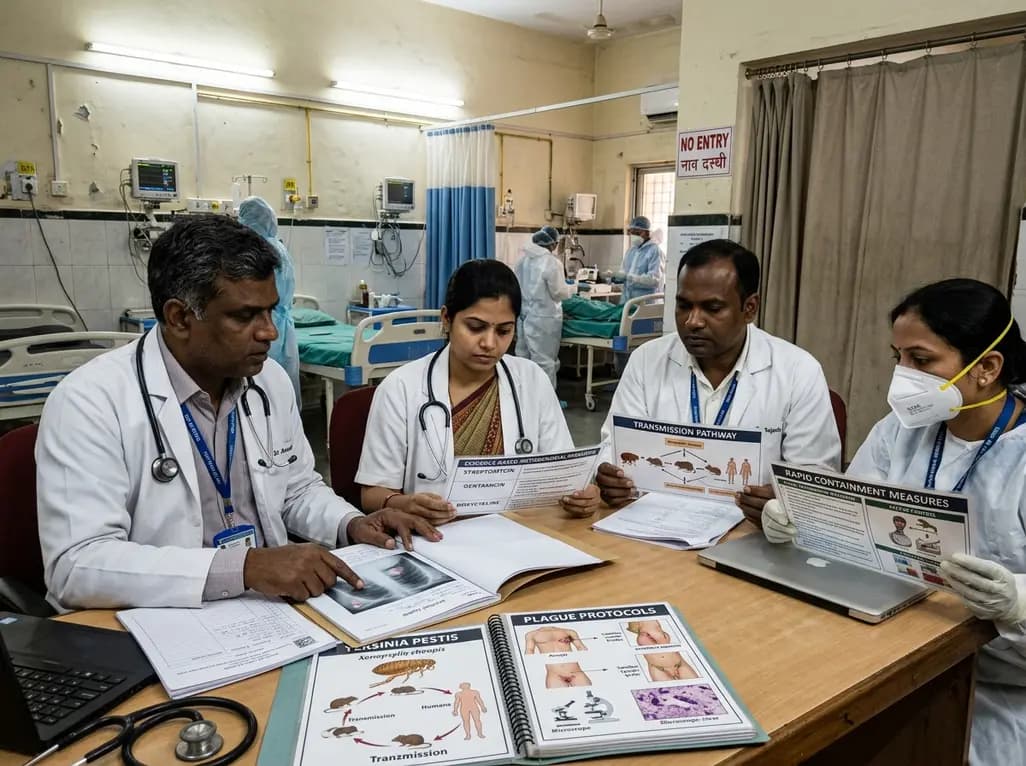
Explore the clinical features, transmission routes, and diagnostic evaluation of bubonic plague. Review evidence-based antimicrobial regimens and public health measures for rapid containment.
Today

A ten-year cohort study of ABU case logs reveals that URPS fellowship training significantly drives higher annual case volumes, advanced surgical complexity, and increased female representation in pelvic floor reconstruction, underscoring the vital need for structured subspecialty training.
Today

Systemic amyloidosis management is undergoing a therapeutic revolution. This clinical review synthesizes updates from the International Society of Amyloidosis, detailing novel plasma cell therapies, TTR stabilizers, silencers, translational models, and artificial intelligence in drug development.
Today

Posttraumatic pisotriquetral instability is a rare wrist injury causing severe hypothenar pain and weakness. Explore clinical examination, imaging, and pisiformectomy.
Today

A comprehensive review analyzes periconceptional GLP-1 receptor agonist exposure, revealing reassuring data on congenital anomalies and adverse perinatal outcomes while emphasizing the need for cautious patient counseling.
Yesterday
