.webp&w=384&q=75)

Loading, please wait...
Loading, please wait...

Public health authorities face significant challenges when infectious respiratory pathogens resurface in highly susceptible communities. Recently, federal health officials initiated a comprehensive measles outbreak investigation in Pennsylvania following a steep rise in infections. Consequently, clinicians must maintain high diagnostic vigilance across outpatient and inpatient settings. Rapid identification prevents severe morbidity, secondary transmission, and healthcare-associated exposures. Therefore, reviewing epidemiological dynamics, diagnostic criteria, and supportive clinical protocols remains vital for frontline medical practitioners worldwide.
The measles virus represents one of the most contagious human pathogens known to modern medicine. In Pennsylvania, public health authorities reported over eleven hundred confirmed cases alongside several outbreak-related fatalities. Additionally, federal teams deployed through the Epi-Aid mechanism to provide vital epidemiological field assistance. Similar multi-jurisdictional responses previously supported containment efforts across states like Texas, Kansas, and Wisconsin.
However, escalating transmission rates underscore persistent vulnerabilities in community-level herd immunity. The basic reproduction number for measles frequently ranges between twelve and eighteen in unimmunized cohorts. Consequently, single imported cases can trigger widespread transmission chains within pockets of low vaccine uptake. Furthermore, secondary attack rates among susceptible household contacts routinely exceed ninety percent.
Hospital systems must therefore prepare for increased triage demands during regional surges. Clinicians should swiftly isolate patients presenting with fever and acute maculopapular rash. Moreover, facility directors must review staff immunization records to prevent nosocomial dissemination. Timely reporting to disease surveillance registries ensures coordinated tracking across adjacent healthcare districts. Thus, robust epidemiological surveillance remains the primary barrier against uncontrolled regional propagation. Early containment protects immunocompromised individuals who cannot receive live vaccines.
A structured measles outbreak investigation requires prompt clinical recognition paired with rigorous laboratory confirmation. Measles typically manifests in three distinct clinical stages: incubation, the prodromal phase, and the exanthematous period. During the prodrome, patients consistently exhibit high-grade fevers accompanied by the classic triad of cough, coryza, and conjunctivitis. Additionally, clinicians frequently identify pathognomonic Koplik spots on the buccal mucosa shortly before cutaneous eruption occurs.
Subsequently, a characteristic erythematous, maculopapular rash emerges at the hairline and spreads centrifugally downward. The eruption rapidly blankets the face, trunk, and extremities, often becoming confluent across the upper body. Furthermore, diagnostic teams must obtain both nasopharyngeal swabs for reverse-transcriptase polymerase chain reaction and serum for measles-specific IgM antibodies.
Because early clinical symptoms mimic other respiratory illnesses, physicians must thoroughly examine recent travel and exposure histories. Moreover, healthcare providers should immediately implement airborne infection isolation precautions upon initial clinical suspicion. Clinicians should not delay infection control measures while awaiting final laboratory confirmation. Consequently, early airborne containment safeguards vulnerable clinic staff and other awaiting patients from aerosol transmission. Frontline facilities must prioritize these strict triage safeguards.
The ongoing outbreak highlighted prominent public debates regarding how surveillance registries count measles-associated fatalities. Pennsylvania health agencies documented five deaths, whereas national registries officially tallied fewer fatalities nationwide. Consequently, these discrepancies demonstrate the complex challenge of defining attributable mortality in patients with underlying chronic illnesses.
Public health epidemiologists generally distinguish between direct deaths from acute viral pneumonia or encephalitis and indirect secondary complications. In many vulnerable adults and malnourished children, measles induces transient immune amnesia. This immunosuppression elevates susceptibility to fatal secondary bacterial infections. Therefore, state reporting guidelines may classify a death as measles-associated if the infection substantially contributed to clinical deterioration. Conversely, restrictive federal definitions may require direct causality verified by standard death certificate coding.
Nevertheless, establishing harmonized surveillance definitions remains vital for accurate public health communication. Misalignment in official counts generates unnecessary confusion among healthcare workers and the general public. Furthermore, transparent mortality data reinforces public trust and clarifies true disease severity. Clinicians must thoroughly document clinical timelines, infectious milestones, and intermediate cardiopulmonary complications to assist medical examiners. Careful documentation ensures precise epidemiological analyses during subsequent federal reviews.
Measles presents profound clinical risks to infants, pregnant individuals, and severely immunocompromised patients. Acute otitis media and viral croup occur frequently in young children. However, severe pneumonia remains the most common fatal complication of measles in pediatric populations. Additionally, central nervous system involvement, such as acute post-infectious encephalomyelitis, produces permanent neurological sequelae in vulnerable patients.
Inpatient management focuses primarily on aggressive supportive therapy and hemodynamic stabilization. Clinicians must administer supplemental oxygen to maintain adequate oxygenation during lower respiratory tract compromise. Furthermore, medical teams must closely monitor fluid balance, electrolyte stability, and nutritional status. The World Health Organization recommends therapeutic doses of oral vitamin A for all acute pediatric measles cases. Specifically, two consecutive daily doses of vitamin A restore mucosal epithelial integrity and significantly reduce overall mortality rates.
Meanwhile, healthcare providers must judiciously identify secondary bacterial complications. Physicians should prescribe targeted antimicrobial therapy when sputum cultures or clinical findings indicate bacterial superinfections. Routine prophylactic antibiotics, however, provide no measurable clinical benefit and encourage antimicrobial resistance. Therefore, cautious, evidence-based antimicrobial stewardship remains paramount in acute inpatient units. Clinicians should reserve antibacterial agents strictly for documented secondary infections.
Sustained community vaccination remains the cornerstone of measles elimination strategies globally. The live attenuated measles, mumps, and rubella vaccine demonstrates exceptional long-term efficacy and safety. A single dose provides approximately ninety-three percent protection, whereas two doses increase vaccine effectiveness to ninety-seven percent. Therefore, public health initiatives must consistently target ninety-five percent population coverage to prevent community transmission.
Nevertheless, vaccine hesitancy and operational disruptions continue to erode protective population thresholds in numerous communities. When local coverage drops, measles inevitably reemerges due to its extreme transmissibility. Consequently, clinicians must actively review vaccination histories during every clinical encounter. Primary care practitioners should engage hesitant parents with compassionate, science-based counseling. Specifically, addressing parental concerns about vaccine ingredients, adverse effects, and scheduling dispels pervasive misinformation.
Additionally, health systems must deploy post-exposure prophylaxis protocols for susceptible individuals exposed to active cases. Unvaccinated individuals can safely receive the MMR vaccine within seventy-two hours of exposure. Alternatively, clinicians administer intramuscular immune globulin within six days to high-risk contacts, including pregnant women and infants. Thus, rapid clinical coordination mitigates severe disease progression in newly exposed populations. Proactive preventive medicine ultimately safeguards community health.
Q1: What are the primary diagnostic tests used during a measles outbreak investigation?
Clinicians confirm measles using viral detection and serological testing. Healthcare personnel collect nasopharyngeal or throat swabs for real-time reverse transcription-polymerase chain reaction to detect viral ribonucleic acid. Additionally, laboratories evaluate serum samples for measles-specific IgM antibodies, which typically emerge within three days after rash onset. Collecting both specimens simultaneously provides the highest diagnostic accuracy, ensuring rapid confirmation and immediate contact tracing across healthcare systems.
Q2: Why do death counts differ between state health departments and national registries?
Discrepancies arise because jurisdictions employ differing surveillance case definitions for measles-associated mortality. State health departments often count fatalities whenever measles clinically contributes to acute terminal decompensation, including secondary bacterial pneumonia or multi-organ failure. Conversely, federal reporting agencies may require precise death certificate coding designating measles as the underlying primary cause. These methodological differences create temporary reporting gaps while federal epidemiologists conduct comprehensive medical record reviews.
Q3: How should clinicians administer vitamin A in confirmed pediatric measles cases?
Healthcare providers should administer oral vitamin A immediately upon measles diagnosis for all pediatric patients. Clinical guidelines recommend age-adjusted dosing: 50,000 international units for infants under six months, 100,000 units for infants aged six to eleven months, and 200,000 units for children twelve months or older. Patients receive two consecutive daily doses. This vital therapy restores serum retinol concentrations, preserves epithelial surfaces, and markedly reduces pediatric mortality.
Disclaimer: This content is for informational and educational purposes only. It does not constitute medical advice or replace professional judgment. Refer to the latest local and national guidelines for clinical practice.
References

Read summarized clinical updates, watch expert medical content, and earn CME certifications right from your smartphone.
Open your smartphone camera to scan and install.





With over a thousand cases reported in Pennsylvania, federal epidemiologists are aiding outbreak response efforts. Clinicians must understand surveillance protocols, diagnostic parameters, mortality definitions, and MMR vaccination strategies to curb transmission and manage potential complications effectively.
Today
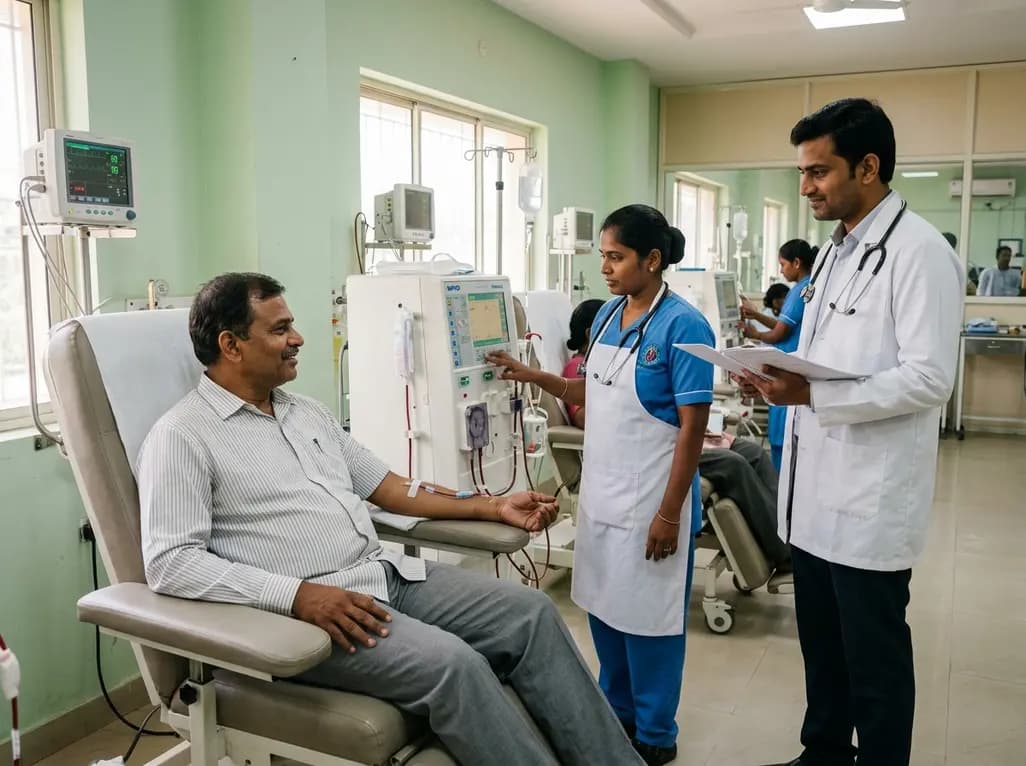
The Andhra Pradesh government is setting up 22 new dialysis units under the national program to broaden free renal replacement therapy. With high private care costs and growing end-stage renal disease cases, this decentralized expansion eases substantial financial and logistical burdens for rural kidney patients.
Today

The government of Maharashtra is establishing a novel state-level Living Lab to elevate clinical outcomes, bridge public-private service gaps, and test real-world health interventions. By integrating digital innovations and frontline feedback, the platform fosters sustainable, equitable care models across communities.
Today

Cardiac involvement is the leading cause of mortality in EGPA. This report highlights an overlap phenotype of lymphocyte-predominant myocardial injury, Takotsubo-like cardiomyopathy, and left ventricular thrombus, emphasizing early multimodality diagnostics and aggressive immunosuppressive biologic therapy.
Today

A landmark biomechanical study demonstrates that sports bra support and running shoe cushioning interact significantly to influence tibial acceleration, breast motion, and comfort in female runners, providing crucial insights for clinical counseling in sports medicine and women's health.
Yesterday

A systematic review and meta-analysis of 5,406 participants reveals that tirzepatide significantly reduces hsCRP by 34.3%, improves cardiorenal biomarkers, and enhances functional capacity and exercise endurance in patients with heart failure.
Today
