.webp&w=384&q=75)

Loading, please wait...
Loading, please wait...
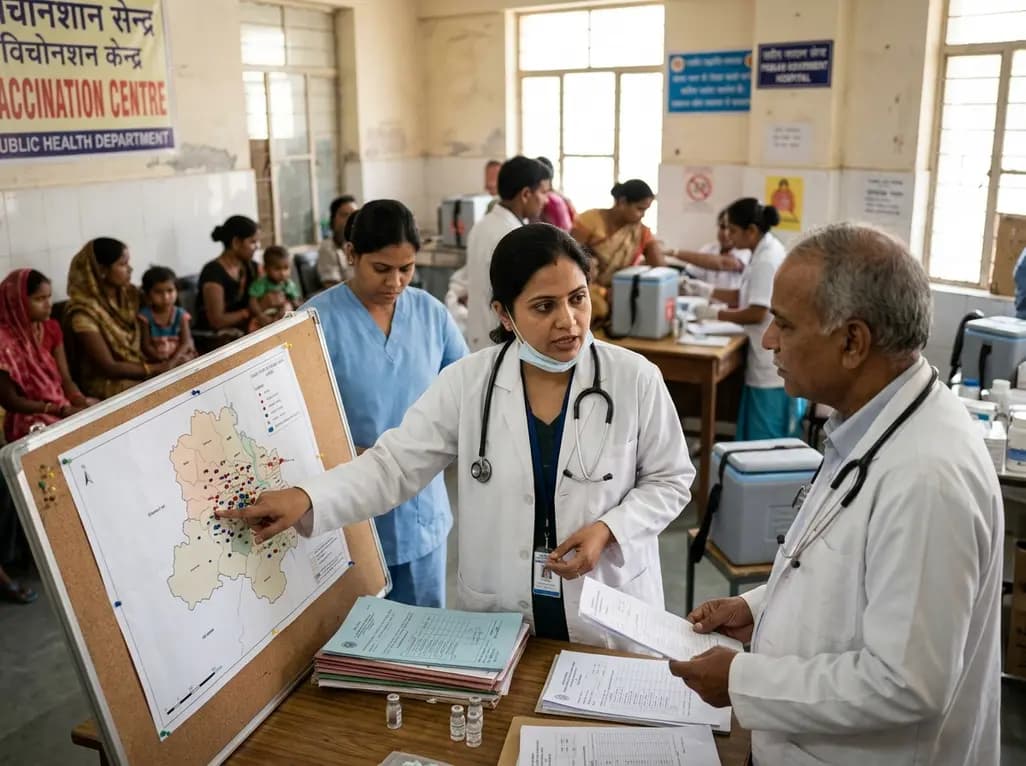
Evaluating measles outbreak costs is essential for understanding the true financial burden that vaccine-preventable diseases place on modern healthcare systems. Consequently, public health experts emphasize that the economic toll extends far beyond direct hospital bills. When an outbreak occurs, local health departments must immediately mobilize extensive resources to trace exposures and isolate infected individuals. Furthermore, these proactive containment measures require thousands of staff hours, rapid diagnostic testing, and emergency vaccination drives. Without robust population immunity, even a minor cluster of viral transmissions can quickly trigger massive public health expenditures. Additionally, lost workplace productivity among quarantined individuals creates a substantial economic burden for local communities. As a result, analyzing these widespread financial consequences helps policymakers appreciate the critical value of routine immunization programs.
In recent years, declining vaccination coverage has heightened the vulnerability of communities across multiple regions. Specifically, when childhood MMR vaccination rates drop below required thresholds, community protection weakens significantly. Therefore, imported cases or localized transmissions can spread rapidly through undervaccinated pockets. Ultimately, containment efforts become increasingly complex and expensive as the virus moves across municipal and state borders. Healthcare facilities must deploy specialized infection control protocols to prevent clinical cross-transmission. Consequently, evaluating the total financial impact provides clear evidence that prevention remains far more cost-effective than reactive response measures.
A groundbreaking study published in the Annals of Internal Medicine examined a major 2025 outbreak in New Mexico. Overall, the research team calculated that containing this single outbreak generated nearly $5.4 million in total societal expenses. The outbreak originally began in an undervaccinated Texas community before crossing state lines into border areas. Consequently, health authorities identified 100 confirmed cases, which included 57 adult patients and 43 infected children. Tragically, the outbreak also resulted in one patient death, further adding to the societal loss. Furthermore, researchers calculated that the average expense exceeded $53,000 for every single confirmed infection. This high per-case average demonstrates the massive financial strain associated with containing highly contagious viral pathogens.
To understand the full economic impact, researchers evaluated expenses from a comprehensive societal perspective. Specifically, they analyzed direct clinical treatment, agency response budgets, and lost workplace productivity. Moreover, the study documented that containment efforts involved monitoring 205 exposed contacts who required strict quarantine measures. In addition, 133 public health responders worked continuously over several months to manage contact tracing and outbreak logistics. Consequently, this detailed breakdown proves that clinical symptoms represent only a fraction of the total economic damage. Public health systems must absorb immense operational strains to stop community transmission before wider regional spread occurs.
Public health response efforts accounted for the largest single proportion of the total expenditure in New Mexico. Specifically, outbreak containment activities required roughly $3.2 million from local and federal agency budgets. Within this category, emergency vaccination efforts represented the single largest component, costing approximately $2.1 million. Public health teams established mobile vaccination clinics, expanded hotline assistance, and provided rapid immunization access to high-risk populations. Consequently, these targeted vaccination drives helped curb further transmission across rural and underserved geographic regions. Additionally, agency staff spent countless hours conducting epidemiological investigations and coordinating cross-jurisdictional health communications.
Furthermore, effective outbreak response relies on continuous public communication and rapid contact monitoring. Health departments had to deploy dedicated helpline services to answer public inquiries and direct exposed individuals to testing centers. Consequently, these administrative operations required significant financial reallocation from other essential public health initiatives. For instance, routine wellness outreach and chronic disease prevention programs faced temporary resource diversions during the active response phase. Therefore, the high cost of outbreak containment highlights the strategic importance of sustaining strong foundational public health infrastructure. Investing in proactive routine immunization prevents these expensive emergency diversions.
Direct medical treatment costs represented another significant component of the overall financial burden. Specifically, medical care expenditures totaled approximately $290,000 across the 100 confirmed patients. Among these clinical costs, seven inpatient hospitalizations accounted for $238,000, illustrating the high price of managing severe measles complications. Furthermore, outpatient clinical visits for 79 patients cost $32,000, while commercial laboratory testing required an additional $20,000. Although direct medical expenses were smaller than public health containment costs, they still imposed notable financial stress on healthcare systems. Additionally, uncompensated care and emergency room visits placed added economic pressure on regional medical facilities.
Meanwhile, indirect economic losses from missed work and reduced productivity reached nearly $1.6 million. This substantial figure included lost earnings for adult patients, adult caregivers of sick children, and quarantined contacts. Moreover, lost lifetime productivity from the single fatal case significantly elevated the societal cost calculation. When exposed individuals must undergo mandatory quarantine, local businesses experience workforce disruptions and reduced economic output. Consequently, economic productivity losses demonstrate that viral outbreaks spill over into commercial sectors, affecting families and businesses alike. Therefore, maintaining high community vaccination levels safeguards both public health and broader economic stability.
The findings from New Mexico offer crucial lessons for clinical practitioners and health policy leaders worldwide. Notably, measles is among the most contagious human pathogens, capable of infecting up to 90% of susceptible individuals. Consequently, maintaining high coverage with two doses of the MMR vaccine remains the most effective defense against widespread outbreaks. However, routine childhood immunization rates have declined nationally, creating dangerous gaps in herd immunity. For instance, in 2026, confirmed US measles infections surged past 2,300 cases, reaching a 35-year high. Therefore, healthcare providers must actively address vaccine hesitancy and champion routine childhood immunizations during patient encounters.
Furthermore, clinicians must maintain a high index of suspicion for early measles symptoms during primary care consultations. Rapid identification of fever, cough, coryza, conjunctivitis, and characteristic rashes allows for prompt isolation and reporting. Consequently, early clinical recognition prevents widespread exposures in healthcare waiting rooms and emergency departments. Additionally, public health agencies must collaborate closely with primary care providers to ensure equitable vaccine distribution. By strengthening vaccination outreach in rural and underserved areas, health systems can prevent future localized clusters from spiraling into multi-million-dollar health emergencies. Ultimately, sustained investment in immunization protection remains an essential priority for global public health.
Q1: What were the primary drivers of measles outbreak costs in the 2025 study?
In the 2025 New Mexico study, public health response efforts accounted for the largest share of overall expenditures, totaling roughly $3.2 million. Specifically, emergency vaccination activities alone required $2.1 million. Meanwhile, indirect productivity losses from missed work, caregiver obligations, and quarantine restrictions contributed nearly $1.6 million. Direct clinical medical expenses, including hospitalizations, outpatient care, and laboratory diagnostics, accounted for approximately $290,000 of the total $5.4 million societal cost burden.
Q2: Why do localized measles cases create a cascading economic ripple effect?
Measles is extremely contagious, so a single confirmed infection triggers an extensive cascade of public health responses. Public health teams must trace hundreds of exposed contacts, enforce strict quarantines, and establish rapid vaccination clinics to stop transmission. Consequently, personnel hours, emergency communications, lost workplace productivity, and clinical diagnostic testing multiply rapidly for every confirmed case. As a result, even localized outbreaks generate disproportionately high societal expenditures across public agencies, healthcare facilities, and private businesses.
Q3: How does declining routine childhood vaccination impact overall health system expenses?
Declining routine childhood vaccination rates erode population herd immunity, allowing minor imported cases to spark large community outbreaks. When vaccination coverage drops, public health departments must spend millions on emergency containment, contact tracing, and mobile vaccination campaigns. Furthermore, health systems face increased emergency room visits and costly clinical hospitalizations for preventable complications. Therefore, maintaining high routine MMR immunization rates remains far more cost-effective for health systems than managing recurring, highly disruptive viral outbreaks.
Disclaimer: This content is for informational and educational purposes only. It does not constitute medical advice or replace professional judgment. Refer to the latest local and national guidelines for clinical practice.
References

Read summarized clinical updates, watch expert medical content, and earn CME certifications right from your smartphone.
Open your smartphone camera to scan and install.





A detailed cost analysis of the 2025 New Mexico measles outbreak revealed a total societal expense of nearly $5.4 million across 100 cases. Public health containment and vaccination drives accounted for the majority of expenditures, demonstrating that declining vaccination rates carry severe economic consequences.
last month

A 2026 meta-analysis evaluates PDE5 inhibitors in advanced ILD with severe gas exchange impairment. While overall mortality was not significantly reduced, a targeted subgroup with pulmonary hypertension showed a 49% risk reduction, underscoring the necessity of precise hemodynamic phenotyping.
Today

A multicentre RCT in China shows that the PAICS AI system significantly boosts sonographer sensitivity in detecting fetal intracranial malformations by 8.7% without compromising specificity, offering promising diagnostic support for prenatal neurosonography.
Today

The Supreme Court questioned FSSAI's phased warning approach, urging single-phase implementation for foods exceeding limits in any nutrient of concern. Backed by ICMR-NIN recommendations, the proposed red hexagonal warnings target added sugar, salt, and fat to combat India's escalating chronic disease epidemic.
Today

A premature neonate developed upper limb compartment syndrome after uterine rupture extruded the arm through a scar defect. Conservative management with continuous monitoring yielded complete functional recovery and normal limb growth at 10-year follow-up, highlighting non-operative safety in selected cases.
Today
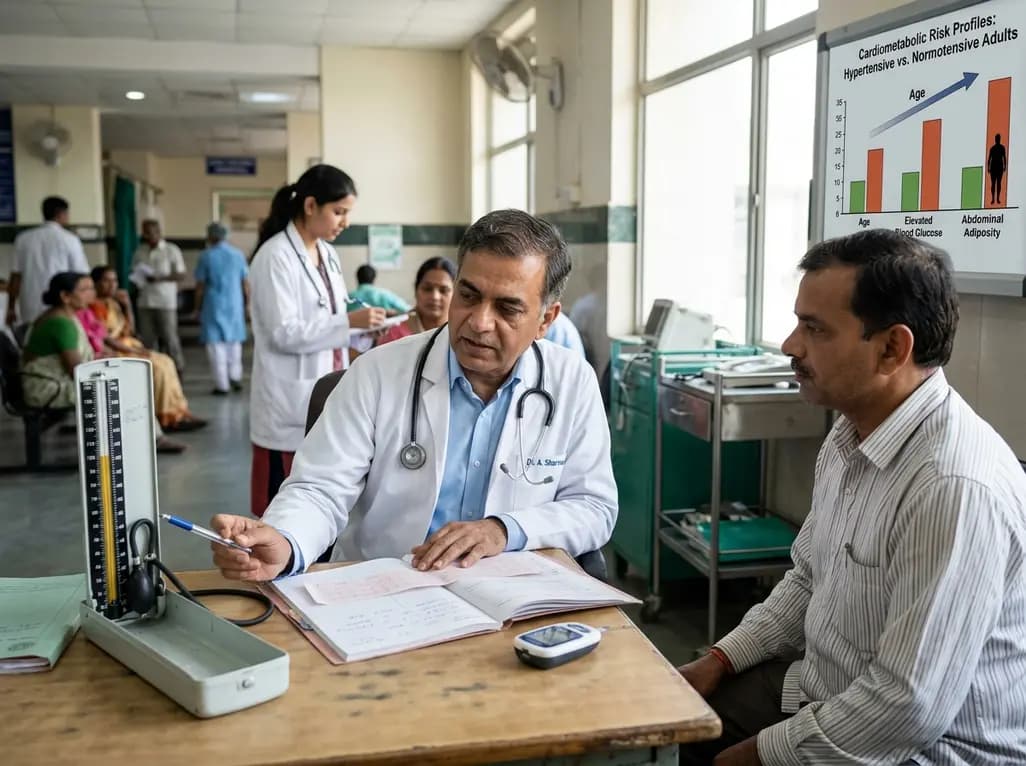
A comparative analysis shows that older age, elevated blood glucose, and abdominal adiposity are primary drivers of hypertension. Comprehensive evaluation of cardiometabolic risk profiles enables clinicians to detect overlapping metabolic dysfunctions early and optimize targeted prevention strategies.
Today
