.webp&w=384&q=75)

Loading, please wait...
Loading, please wait...
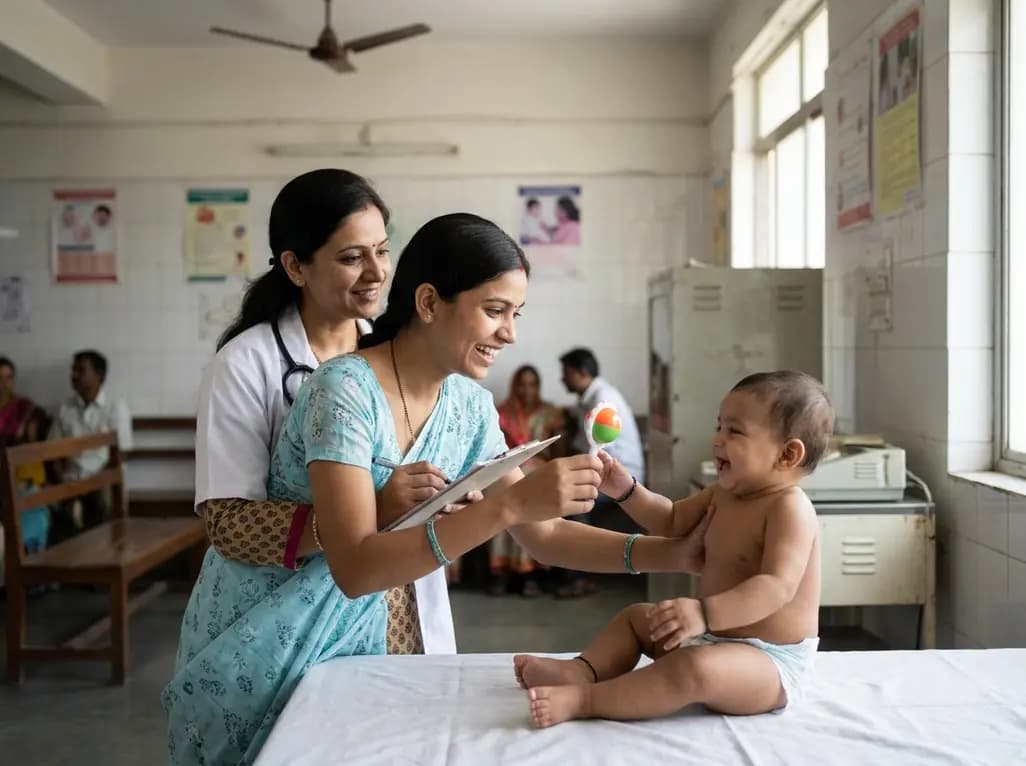
Parenting behaviors play a fundamental role in child development, yet researchers continually seek to understand how mental health challenges pass across generations. Specifically, intergenerational depression transmission represents a major clinical concern in maternal-child healthcare. While maternal sadness receives widespread attention, researchers recently examined how mothers respond to their infants' joyful moments. This novel research reveals that early socialization of infant positive affect serves as a critical mediator linking postpartum maternal depressive symptoms to toddler emotional difficulties.
Understanding how emotional health travels from parent to child requires examining subtle daily interaction patterns. Historically, psychological models of intergenerational depression transmission focused primarily on negative emotional states, maternal irritability, and overt parental withdrawal. Although these factors influence child outcomes, they offer an incomplete picture of early development. Positive emotional experiences, such as shared laughter and joyful vocalizations, form the cornerstone of healthy infant social bonding. Consequently, when a mother experiences postpartum depressive symptoms, her ability to mirror and validate her infant's positive affect may become significantly compromised. Researchers hypothesized that this specific impairment in supporting positive emotions represents a unique mechanism through which risk transfers from mother to infant. By examining this distinct interpersonal pathway, clinicians gain deeper insights into early risk trajectories. Furthermore, identifying specific interactional deficits allows healthcare providers to design targeted screening tools and therapeutic interventions for postpartum families. Ultimately, expanding our theoretical framework beyond negative affect helps demystify maternal-child mental health continuity.
Emotion socialization describes the ongoing process through which caregivers teach infants how to express and regulate their feelings. During the first year of life, infants rely heavily on maternal cues to process their emotional experiences. When an infant smiles or coos, a supportive caregiver typically responds with enthusiastic vocalizations and smiling. This reciprocal exchange reinforces the infant's positive emotional displays and fosters emotional resilience. However, maternal depression often disrupts this dynamic exchange. Mothers coping with depressive symptoms may exhibit blunted affect or minimal enthusiasm when their infants express joy. Consequently, infants experience a lack of validation during key moments of positive engagement. Over time, these compromised social exchanges alter how infants process positive emotions and manage interpersonal relationships. Furthermore, reduced positive affect socialization can teach children to suppress joyful expressions. Therefore, investigating maternal socialization of infant positive affect provides invaluable clinical clarity regarding early emotional development.
To evaluate these interactive dynamics, researchers conducted a longitudinal investigation involving a community sample of 128 mothers and their infants. The study tracked participating families across three assessment timepoints spanning a full one-year period. At the initial visit, infants averaged 6.65 months of age, allowing researchers to capture early developmental interactions. To ensure comprehensive evaluation, the research team employed a robust multi-method assessment battery. Mothers completed self-report measures detailing their postpartum depressive symptoms. Additionally, trained observers evaluated mother-infant interactions during standardized laboratory play tasks. These observational measures specifically evaluated maternal responses to infant positive affect as well as overall maternal sensitivity. Finally, mothers reported on their children's depressive problems during toddlerhood at the final assessment. This rigorous longitudinal structure allowed the research team to establish clear temporal sequences between early maternal behaviors and later toddler outcomes. Consequently, the study provided strong empirical evidence regarding how early interactive nuances shape child mental health.
The study's statistical analyses yielded striking findings regarding early developmental trajectories. Mediation analyses revealed that mothers with elevated postpartum depressive symptoms displayed significantly fewer supportive responses to their infants' positive affect. Specifically, depressed mothers were less likely to match their infants' joyful enthusiasm or offer validating praise during positive moments. In turn, infants who received fewer supportive maternal responses demonstrated elevated depressive problems upon reaching toddlerhood. This indirect pathway clearly demonstrated that maternal socialization behaviors mediate the link between maternal postpartum depression and subsequent toddler emotional distress. Importantly, the research team conducted rigorous control analyses to test the robustness of this finding. They discovered that the indirect effect of postpartum depressive symptoms on toddler depressive problems via maternal supportive responses remained statistically significant even after controlling for overall maternal sensitivity. Thus, maternal socialization of infant positive affect operates as an independent risk mechanism in intergenerational depression transmission.
A critical contribution of this research lies in distinguishing positive emotion socialization from general maternal sensitivity. Maternal sensitivity traditionally encompasses a mother's prompt response to her infant's distress cues, such as crying or fussing. While sensitivity to distress is vital for secure attachment, supporting positive affect requires distinct emotional skills. A mother may respond promptly to her crying infant yet struggle to generate enthusiastic, joyful engagement when her infant smiles. This study proves that failing to support positive affect carries distinct risks that general sensitivity cannot offset. Therefore, clinical assessments focusing solely on distress responses may overlook critical deficits in positive emotion sharing. Clinicians must recognize that promoting child emotional health requires fostering both distress relief and positive affect socialization. By separating these constructs, pediatric and psychiatric professionals can better pinpoint specific behavioral targets during early clinical evaluations.
These findings hold profound practical implications for maternal-child mental health professionals, pediatricians, and community healthcare providers. Early identification of mothers experiencing postpartum depressive symptoms remains essential, but clinical interventions must extend beyond general symptom reduction. Healthcare teams should integrate observational assessments of mother-infant positive emotional exchanges into routine pediatric visits and postpartum follow-ups. Furthermore, therapeutic interventions ought to explicitly coach mothers on mirroring and celebrating their infants' positive emotions. For instance, interaction guidance programs can help mothers practice enthusiastic vocalizations and joyful facial expressions during play. By actively enhancing maternal supportive responses to infant positive affect, clinicians can interrupt intergenerational depression transmission during critical early developmental windows. Protecting infant positive affect socialization ultimately equips young children with robust emotional foundations, reducing long-term vulnerability to depressive spectrum disorders.
Postpartum depression often impairs a mother's ability to engage enthusiastically during interactive play. Depressed mothers frequently demonstrate blunted facial affect, reduced vocal animation, and fewer supportive responses to their infants' positive emotional displays. These altered interaction patterns can disrupt early bond formation and hinder the infant's emotional development.
Maternal sensitivity refers primarily to how promptly and appropriately a caregiver responds to an infant's distress signals. Conversely, positive affect socialization focuses specifically on how a mother validates, mirrors, and amplifies her infant's joyful expressions. Both behaviors are crucial, but positive affect support uniquely protects against intergenerational depression transmission.
Effective clinical interventions combine maternal depression screening with targeted parent-infant coaching. Therapists can use video interaction guidance to help mothers recognize infant joy cues and practice enthusiastic responses. Early interventions that strengthen positive emotional exchanges effectively buffer infants against developing internalizing and depressive problems in toddlerhood.
Disclaimer: This content is for informational and educational purposes only and does not constitute medical advice, diagnosis, or treatment. Always seek the advice of your physician or other qualified health provider with any questions you may have regarding a medical condition. Refer to the latest local and national guidelines for clinical practice.
References
Schmitt G et al. Intergenerational transmission of depressive symptoms: Maternal socialization of infant positive affect as a mediator. Dev Psychopathol. 2025 Oct. doi: 10.1017/S0954579424001615. PMID: 39434626.

Read summarized clinical updates, watch expert medical content, and earn CME certifications right from your smartphone.
Open your smartphone camera to scan and install.





A longitudinal study reveals that maternal socialization of infant positive affect mediates intergenerational depression transmission, highlighting a key intervention target independent of overall sensitivity.
2 months ago

Explore vital recurrent stroke predictors in lacunar stroke patients managed with intensive blood pressure lowering. This analysis examines trial findings from SPS3 to uncover residual vascular risks, metabolic factors, and targeted secondary prevention strategies for high-risk neurological patients.
Today
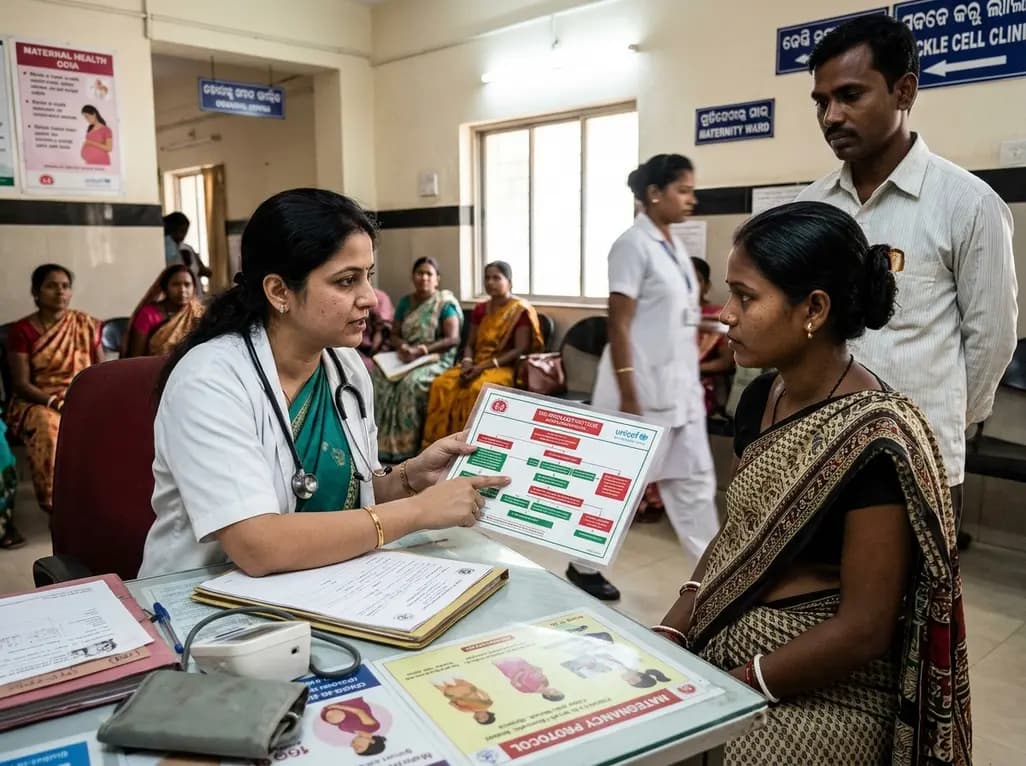
Odisha has established India's first state-level clinical protocol specifically tailored for pregnant women with sickle cell disease. Developed with NHM and UNICEF, the framework provides structured antenatal screening, crisis mitigation, standardized referral pathways, and specialized interdisciplinary care.
Today

The Directorate General of Health Services directs Indian states to halt the hazardous reuse and reprocessing of single-use medical devices. Discover regulatory implications under the Drugs and Cosmetics Act, critical infection risks, legal liabilities, and operational changes required across clinical specialties.
Today

Mitochondria-targeted nanoparticles self-assembled from EGCG and L-glutamic acid effectively restore mitochondrial homeostasis, suppress synovial inflammation, and attenuate chondrocyte senescence in osteoarthritis, offering a promising disease-modifying nanotherapy.
Today

India is advancing preventive healthcare by integrating genomics, artificial intelligence, and quantum technologies. With the SANGAM programme sequencing one million Indian genomes, clinicians can unlock personalized therapies, detect cardiometabolic risks early, and curb the burden of diabetes and heart disease.
Today
