.webp&w=384&q=75)

Loading, please wait...
Loading, please wait...

Chronic masticatory muscle pain represents a major clinical challenge across dentistry and pain medicine. Recent research demonstrates that sustained clenching patterns directly influence masseter muscle stiffness and tissue sensitivity. Clinicians frequently encounter patients who report persistent facial fatigue, tension-type headaches, and jaw discomfort without severe macro-trauma. Traditionally, clinicians assumed that forceful, high-load tooth grinding inflicted the most severe muscular damage. However, emerging physiological evidence suggests that low-intensity, long-duration clenching exerts a profoundly detrimental burden on the stomatognathic system.
During wakefulness, many individuals maintain subtle, subconscious tooth contact for extended periods. This continuous isometric tone prevents normal capillary perfusion within the masticatory apparatus. Consequently, intramuscular microcirculation suffers substantial impairment, which triggers local metabolic accumulation. Cellular hypoxia subsequently promotes peripheral sensitization of nociceptors and alters structural compliance. Therefore, evaluating how contraction parameters alter mechanical tissue properties remains essential for accurate diagnosis. In this context, investigators designed rigorous experimental models to compare distinct clenching profiles under equivalent muscular workloads. Their valuable findings offer vital biological insights for clinicians managing masticatory myofascial pain syndromes.
To resolve uncertainties regarding contraction kinetics, researchers developed a controlled crossover clinical investigation. The study recruited thirty-six healthy participants who completed two standardized experimental protocols on separate testing days. Furthermore, the protocol enforced a washout period of at least seven days between sessions to eliminate carryover fatigue. The researchers utilized continuous electromyographic monitoring to standardize total contraction exposure across both experimental conditions. Contraction exposure equaled the product of contraction intensity, contraction duration, and total completed sets.
Specifically, participants performed Task LL, which involved low-intensity, long-duration clenching at 10% maximum voluntary contraction for 75 seconds. In contrast, Task HS required high-intensity, short-duration clenching at 50% maximum voluntary contraction for 15 seconds. Both tasks consisted of thirty sequential sets interspersed with standardized 15-second rest intervals. Therefore, both groups received identical cumulative myoelectric exposure despite possessing markedly different mechanical profiles. Investigators measured pressure pain thresholds and masseter tissue stiffness before the tasks, immediately post-task, and at 10, 20, and 30 minutes during recovery. Additionally, investigators analyzed longitudinal data through mixed-effects statistical models and baseline-adjusted covariance testing.
The quantitative outcomes revealed substantial divergence in nociceptive responses between the two clenching regimens. Low-intensity, long-duration clenching produced a pronounced, prolonged reduction in pressure pain threshold across the masseter muscle body. Consequently, participants experienced heightened mechanical hyperalgesia that persisted throughout the entire thirty-minute post-exercise monitoring period. This continuous hyperalgesia indicates significant sensitization of muscle afferents following prolonged low-level isometric activation. Conversely, high-intensity, short-duration clenching generated only transient, modest drops in pain thresholds, with rapid normalization during early recovery.
Moreover, statistical analyses confirmed that contraction duration exerted a stronger influence on mechanical nociception than pure force magnitude. Even though the high-intensity task demanded five times greater peak contraction amplitude, brief intervals permitted sufficient microvascular reperfusion. In contrast, sustained ten percent contractions maintained continuous intramuscular tissue pressure above capillary closing thresholds. Thus, continuous ischemia generated persistent chemical irritation of local polymodal nociceptors through bradykinin, serotonin, and hydrogen ion accumulation. Ultimately, these experimental findings explain why subtle daytime tooth clenching frequently causes severe facial tenderness and localized trigger point development in clinical practice.
Beyond nociceptive sensitivity, the experimental protocols produced distinct biomechanical alterations in masseter passive stiffness. Notably, Task LL elicited significant increases in masseter muscle stiffness immediately after exercise completion. Furthermore, this elevated rigidity resolved much more slowly compared to the rapid recovery observed after Task HS. High-intensity contractions caused temporary muscle fatigue, but tissue elasticity returned toward baseline levels promptly within ten minutes. In comparison, prolonged low-intensity static holding induced persistent structural resistance and prolonged mechanical hardening of the masticatory tissues.
Biophysically, prolonged static tension disrupts normal cross-bridge detachment cycles within individual sarcomeres. Additionally, impaired local microcirculation hinders calcium reuptake into the sarcoplasmic reticulum, thereby prolonging low-grade involuntary actin-myosin engagement. This ongoing cross-bridge cycling maintains muscular tautness without active voluntary effort. Furthermore, continuous mechanical strain promotes interstitial fluid shifts that heighten extracellular matrix tension. Over time, these cumulative microscopic alterations manifest clinically as chronic muscle taut bands, restricted mandibular opening, and subjective jaw tightness. Therefore, clinicians must recognize that low-intensity habitual loading presents an insidious biomechanical challenge to stomatognathic equilibrium.
These experimental observations carry profound practical relevance for healthcare providers managing temporomandibular disorders in India. Indian dental and medical clinics witness an increasing prevalence of stress-related orofacial pain, bruxism, and masticatory myalgia among urban professionals and students. Often, patients remain unaware of their daytime tooth contacting habits, believing their symptoms stem solely from nocturnal grinding. However, this study demonstrates that prolonged, low-grade daytime clenching is exceptionally damaging to muscular integrity. Consequently, clinicians must expand screening protocols beyond nocturnal bruxism to detect awake parafunctional habits.
In daily clinical workflows, practitioners should educate patients regarding physiological resting jaw posture, emphasizing that teeth should only touch during swallowing and chewing. Furthermore, conservative behavioural interventions, cognitive biofeedback, and smartphone reminder applications provide effective strategies to interrupt sustained daytime clenching cycles. For refractory discomfort, clinicians can integrate targeted physical therapy, gentle jaw stretching, and therapeutic nightguards to unload fatigued masseter fibers. When necessary, judicious pharmacological support or trigger point interventions can alleviate severe muscular spasms. Ultimately, addressing sustained low-level contractions transforms clinical management, preventing progression to debilitating chronic temporomandibular disorders.
Low-intensity clenching maintains uninterrupted isometric contraction, which elevates intramuscular pressure above microvascular perfusion thresholds. Consequently, localized ischemia develops, impairing mitochondrial ATP production and delaying calcium reuptake within the sarcoplasmic reticulum. This biochemical disruption sustains actin-myosin cross-bridge coupling, preventing complete muscle relaxation. Additionally, metabolic byproduct accumulation and interstitial fluid shifts alter connective tissue compliance. As a result, masseter muscle stiffness increases significantly and persists long after voluntary contraction ceases.
Measuring pressure pain threshold provides an objective, reproducible metric for evaluating mechanical hyperalgesia in masticatory muscles. Clinicians use calibrated algometers to determine the minimum force that elicits a painful sensation. A lower threshold indicates heightened peripheral sensitization of muscle nociceptors and central hyperexcitability. Furthermore, tracking this parameter helps practitioners quantify disease severity and monitor treatment response. Ultimately, serial measurements help differentiate localized myofascial trigger points from widespread pain conditions.
Conservative therapies focus on breaking habitual clenching cycles and restoring normal jaw physiology. Clinicians recommend behavioural modifications, such as maintaining lips closed with teeth apart. Furthermore, cognitive awareness reminders, gentle mandibular stretching exercises, and physical therapy effectively decrease muscle hyperactivity. Occlusal splints provide joint unloading during nocturnal episodes, while stress-reduction techniques alleviate daytime tension. When necessary, clinicians combine these conservative modalities with short-term muscle relaxants to achieve optimal patient relief.
Disclaimer: This content is for informational and educational purposes only... Refer to the latest local and national guidelines for clinical practice.
References

Read summarized clinical updates, watch expert medical content, and earn CME certifications right from your smartphone.
Open your smartphone camera to scan and install.





A randomised crossover study evaluated low-intensity, long-duration versus high-intensity, short-duration clenching. Standardised EMG exposure revealed distinct physiological impacts on masseter muscle stiffness and pressure pain thresholds, guiding clinical approaches to bruxism and temporomandibular disorders.
Today
A quality-improvement study reveals how hospital pharmacy leadership improves medication safety at home. By eliminating concentrated electrolytes, standardizing kits, and auditing drug labeling, the model successfully aligned home acute care with international patient safety standards.
Today
A recent case-control study identified key protein changes in peritoneal fluid-derived small extracellular vesicles, highlighting candidates like S100-A10 and ALDOA as potential biomarkers to overcome diagnostic delays in endometriosis.
Today

Managing refractory hypoxemia after cardiothoracic surgery becomes perilous when prolonged air leak limits positive-pressure ventilation. This case-based review details how high-flow nasal cannula, paired with awake rehabilitation, enabled successful extubation and avoided invasive re-intubation.
Today

Idiopathic axillary web syndrome (IAWS) is a rare cause of shoulder pain and mobility restriction characterized by palpable axillary cording without prior surgery or trauma. Early diagnosis, nonsteroidal anti-inflammatory therapy, and physical rehabilitation lead to complete resolution of symptoms.
Today
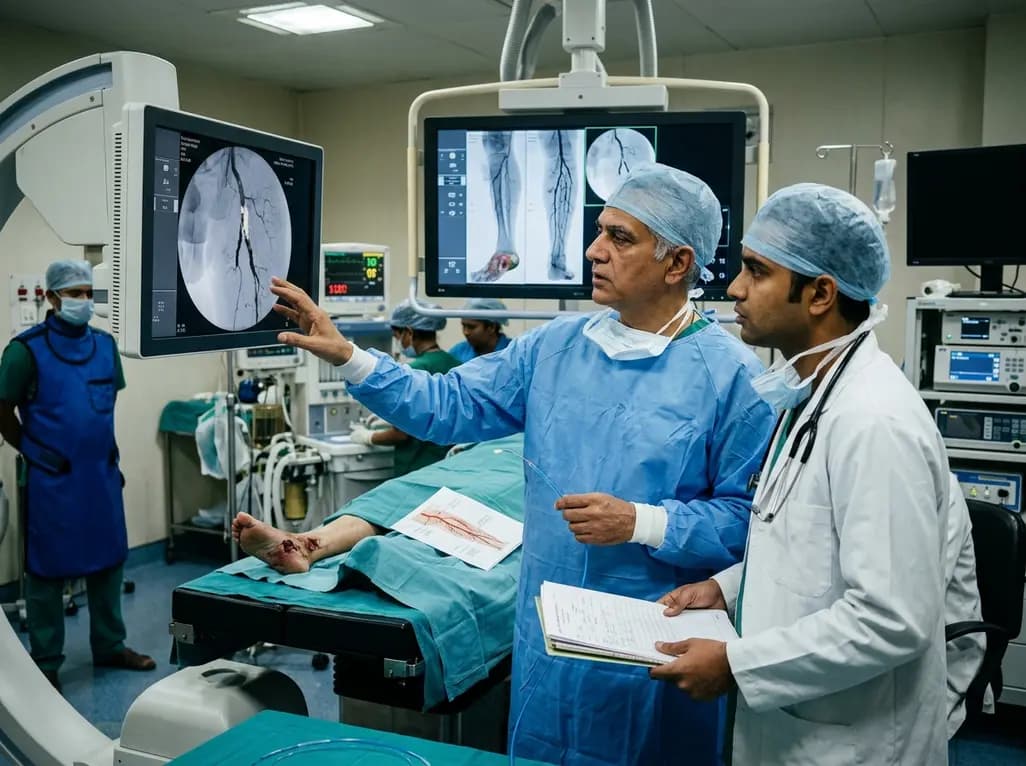
SWEDEPAD-1 trial insights show paclitaxel-coated devices do not improve long-term limb salvage in patients with chronic limb-threatening ischemia and tissue loss. While one-year reinterventions decreased, the devices were linked to a higher risk of major amputation at three months.
Today
