.webp&w=384&q=75)

Loading, please wait...
Loading, please wait...
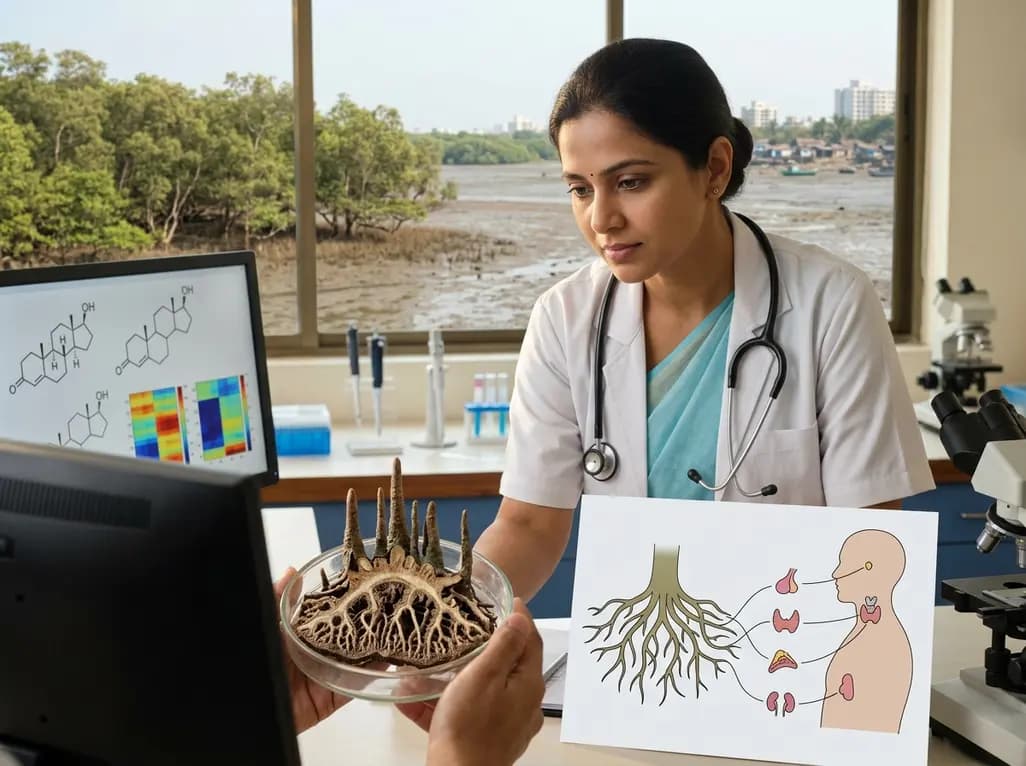
Mangrove ecosystems have long been celebrated for their ability to protect coastlines and support biodiversity. However, recent scientific investigations have unveiled a more complex role for these coastal forests. The phenomenon of mangrove steroid accumulation is emerging as a critical environmental concern, particularly regarding the sequestration of endocrine-disrupting chemicals. Steroid hormones, which enter aquatic environments through sewage and agricultural runoff, pose a significant threat to marine life and, potentially, human populations. This study, conducted in Kaozhou Bay, South China, represents the first systematic look at how these potent molecules interact with mangrove flora. By examining 24 different steroids, researchers found that these ecosystems are not just passive filters but are active, dynamic reservoirs. Consequently, the high concentrations of these hormones in water and sediment suggest that coastal areas near urban centers are becoming toxic hotspots. Understanding these dynamics is essential for medical professionals and environmental scientists alike, as the bioaccumulation of such compounds can lead to widespread endocrine disruption. The presence of these contaminants in such high levels underscores the urgent need for better wastewater management and ecological monitoring.
The study reveals fascinating insights into how different mangrove species handle steroid contaminants. Specifically, the research highlighted that steroids are ubiquitously detected in both water and sediment, but their behavior within plant tissues is highly variable. Most steroids showed a distinct preference for root tissues, where concentrations ranged significantly. This suggests a high root accumulation capacity, which is mathematically expressed through the Root Concentration Factor. For synthetic steroids, these factors reached remarkably high levels, indicating that roots act as the primary defense and storage mechanism. Furthermore, the translocation of these compounds from roots to stems and leaves varies by species. For instance, species like Avicennia marina and Kandelia obovata demonstrated an efficient ability to move these steroids into their stems. In contrast, other species primarily retained the contaminants within their root systems. This interspecies variation is crucial for predicting how different mangrove forests will respond to chemical stress. Moreover, the efficiency of this translocation process means that steroids are not merely trapped in the mud but are integrated into the living biomass of the forest, creating a long-term storage sink.
The primary source of these steroid contaminants is undeniably anthropogenic. Specifically, the highest concentrations of steroids were found near sewage discharge outlets, confirming that urban runoff is the leading contributor to this pollution. As coastal cities expand, the volume of pharmaceutical and biological waste entering the ocean increases. Mangroves, situated at the interface of land and sea, bear the brunt of this chemical influx. Notably, eleven distinct steroids were detected across various mangrove tissues, showing that these plants are absorbing a wide array of hormones, including both natural and synthetic varieties. This absorption is not without consequence. While the plants may appear healthy, the long-term physiological impact of housing such high levels of endocrine-disrupting chemicals remains unknown. Additionally, the study estimated a total steroid inventory of approximately 102 kg across the mangroves of Guangdong Province. This massive repository suggests that mangroves are holding a significant portion of the region's chemical legacy. Therefore, any restoration or removal of these forests could potentially re-release these stored steroids back into the water column, causing a secondary pollution event.
From a clinical standpoint, the bioaccumulation of steroids in coastal ecosystems is a major red flag for endocrine health. Endocrine-disrupting chemicals (EDCs) are known to interfere with the hormonal systems of both animals and humans. When mangrove steroid accumulation occurs on such a large scale, these hormones can enter the local food chain through fish and crustaceans that inhabit these forests. Consequently, coastal populations that rely on these resources may be at risk for chronic exposure to low levels of steroids. Medical professionals in India and other tropical regions must consider these environmental factors when assessing hormonal imbalances and reproductive health issues in coastal communities. Furthermore, synthetic steroids used in medicine, such as those found in birth control or anti-inflammatory drugs, are particularly persistent in the environment. Their efficient translocation within plants means they are effectively stored in the ecosystem for extended periods. As a result, the role of mangroves must be redefined from simple ecological buffers to significant storage sinks for contaminants that have direct implications for regional ecological risk assessments and human wellness.
The integration of field measurements with provincial-scale biomass data allows for a broader understanding of the environmental burden. By estimating a total inventory of over 100 kg of steroids in a single province, the study highlights the sheer scale of the issue. This findings suggest that mangroves globally may be sequestering thousands of kilograms of steroid hormones. For a country like India, which possesses vast stretches of mangrove forests in the Sundarbans and along the western coast, these findings are highly relevant. Coastal ecosystems often surround densely populated areas with similar sewage challenges. Accordingly, the capacity of Indian mangroves to act as steroid sinks could be comparable or even greater. However, this storage is dynamic. Changes in sea levels, temperature, and industrial activity can alter the stability of these reservoirs. If these steroids are released due to habitat degradation, the surge in endocrine disruptors could lead to significant reproductive failure in aquatic species. This potential for ecological collapse necessitates a shift in how we manage coastal environments, moving toward a model that accounts for chemical sequestration and long-term storage capacity.
Moving forward, the scientific and medical communities must collaborate to address the findings of this research. The identification of mangroves as dynamic reservoirs of steroid contaminants requires a revision of current ecological risk assessment models. Traditionally, these assessments focused primarily on water and sediment quality. However, the high levels found in plant tissues prove that the biological component of the ecosystem is a critical, yet often overlooked, variable. Therefore, future monitoring programs should include the sampling of mangrove roots and stems to gain a more accurate picture of environmental health. Additionally, further research is needed to determine the bioavailability of these sequestered steroids to higher trophic levels. Understanding how these chemicals move from plant tissue into the marine food web is vital for predicting human exposure. Finally, the study emphasizes the importance of preserving mangrove forests not only for their carbon sequestration but also for their role in trapping hazardous chemicals. By protecting these vital ecosystems and improving wastewater treatment, we can mitigate the risks posed by endocrine disruptors and ensure the health of both our oceans and our coastal populations.
Steroid hormones primarily enter mangrove ecosystems through anthropogenic pathways, such as untreated or poorly treated sewage discharge and agricultural runoff. Because many pharmaceutical compounds are not fully removed by standard wastewater treatment plants, they are released into coastal waters. Mangroves act as a natural filter, where these chemicals settle into the sediment and are subsequently absorbed by the plant roots, leading to significant bioaccumulation over time.
Endocrine disruptors, like the steroids found in mangroves, can interfere with natural hormonal signaling in aquatic organisms and humans. Exposure through the food chain—such as eating fish or shellfish from contaminated mangroves—can lead to reproductive issues, developmental delays, and metabolic disorders. In clinical settings, chronic low-level exposure to these chemicals is increasingly linked to hormonal imbalances and a higher incidence of certain endocrine-related cancers and fertility problems.
While mangroves show a high capacity for sequestering steroids, using them solely for bioremediation is complex. They effectively act as a storage sink, which prevents the immediate spread of contaminants. However, this accumulation means the plants themselves become reservoirs of toxins. If the mangroves are destroyed or the environmental conditions change, these stored steroids could be released back into the environment, potentially causing a concentrated surge of endocrine-disrupting chemicals.
Disclaimer: This content is for informational and educational purposes only. It does not constitute professional medical advice, diagnosis, or treatment. Always seek the advice of your physician or other qualified healthcare provider with any questions you may have regarding a medical condition. Refer to the latest local and national guidelines for clinical practice.
References
Chen JX et al. Root accumulation and efficient translocation of steroids in mangrove plants: Implications for an overlooked coastal reservoir. Mar Pollut Bull. 2026 Jul 08. doi: undefined. PMID: 42418896.
Siddiqui, M. T., et al. Endocrine disrupting chemicals in the aquatic environment of India: A review of occurrences and health risks. Environmental Research. 2022. 204(Pt B): 112104.
Wang, L., et al. Occurrence and distribution of steroid hormones in the coastal environment: A global perspective. Marine Pollution Bulletin. 2021. 165: 112158.

Read summarized clinical updates, watch expert medical content, and earn CME certifications right from your smartphone.
Open your smartphone camera to scan and install.





New research identifies mangrove plants as active reservoirs for steroid hormones. With significant bioaccumulation in roots, these findings reveal a hidden environmental risk that could impact endocrine health and coastal ecosystems, transforming our understanding of coastal contaminant cycling.
3 months ago

An elderly man with partially repaired Tetralogy of Fallot presented with STEMI caused by coronary embolism rather than atherosclerosis. Successful treatment with sustained mechanical aspiration thrombectomy underscores the vital need for high clinical vigilance in adult congenital heart disease.
Today

Demanding exhaustive hormonal profiling can inadvertently discourage clinical studies involving females. Methodological standards must align with the specific scientific question to expand, not restrict, equitable evidence for women.
Today

A recent study demonstrates that spinal oxygen sensors do not require mitochondrial electron transport to trigger sympathetic excitation during acute hypoxia, revealing new insights into how mitochondrial oxidative stress modulates autonomic tone in cardiovascular and neurological diseases.
Today

A novel calcium polyphosphate coacervate enables injectable bone implants with in situ hierarchical porosity via phase separation and gas foaming, significantly enhancing cell proliferation, energy metabolism, and osteogenic differentiation for minimally invasive bone defect repair.
Today

Following regulatory scrutiny from FSSAI regarding promotional representations and lean muscle preservation claims, Dr. Reddy's Laboratories and Nestlé Health Science are currently reviewing the branding and marketing strategy for their joint nutritional supplement Celevida GLP+.
Today
