.webp&w=384&q=75)

Loading, please wait...
Loading, please wait...

Chronic conditions such as diabetes and stroke represent a major global public health challenge. Effectively managing NCD complications requires healthcare professionals to look beyond purely biological markers and evaluate fundamental social determinants. Recently, a qualitative study conducted in Mzuzu, Malawi, explored the lived experiences of patients navigating chronic disease sequelae. The findings illuminate distressing vulnerabilities regarding basic sanitation, human dignity, and primary healthcare delivery in low-resource environments. Consequently, these observations provide vital clinical insights for physicians managing complex chronic illnesses in developing healthcare systems. To improve clinical outcomes, clinicians must address the multifaceted obstacles patients encounter outside the hospital setting.
Chronic medical conditions such as hypertension, diabetes mellitus, and cardiovascular diseases frequently lead to progressive physical impairment. Therefore, patients suffering from NCD complications frequently lose functional independence during daily activities, experiencing immense psychological distress. The qualitative study from Mzuzu evaluated nine purposively selected chronic disease patients using in-depth interviews. Most participants experienced debilitating physical limitations that severely altered their quality of life. Furthermore, inadequate primary care infrastructure compounded their functional declines, accelerating secondary disabilities. Clinicians frequently encounter identical clinical patterns in under-resourced primary health centers across India. Specifically, late clinical presentation and inconsistent metabolic monitoring accelerate irreversible end-organ damage among vulnerable populations. When tertiary referral pathways fail, local general practitioners must shoulder the long-term burden of rehabilitative care. Moreover, the absence of standardized multidisciplinary support leaves patients and informal caregivers without guidance. Consequently, primary healthcare providers must assess physical limitations alongside routine biomarker targets. Outpatient consultations should systematically evaluate mobility, caregiver stress, and baseline activities of daily living. By establishing early functional assessments, primary care physicians can prevent catastrophic secondary complications.
The investigation in Mzuzu identified severe deficits in sanitation access as a central obstacle for impaired individuals. Specifically, traditional pit latrines and conventional washroom facilities in resource-limited settings feature architectural barriers that impede disabled patients. In addition, many participants experienced substantial psychological trauma and a profound loss of dignity while attempting basic personal hygiene. Family members often lacked proper training regarding assistive transfers and hygienic patient handling. Therefore, household caregivers faced significant physical strain, which fostered emotional exhaustion and strained interpersonal relationships. In daily clinical practice, physicians frequently overlook domestic sanitary infrastructure during standard chronic disease reviews. However, recurrent urinary tract infections, severe pressure ulcers, and recalcitrant soft tissue infections often stem directly from poor domestic sanitation. Clinicians working in community clinics must consequently screen for environmental domestic hazards. Inquiring about home toileting facilities helps medical teams anticipate preventable dermatological and urological complications before they escalate. Furthermore, incorporating basic sanitation education into chronic disease counseling directly safeguards patient self-esteem. When healthcare providers advocate for accessible home modifications, they restore vital dignity to vulnerable individuals.
Beyond personal hygiene hurdles, participants highlighted profound institutional barriers when seeking routine clinical evaluations. Chronic disease patients routinely experienced exhausting travel distances, severe staffing shortages, and prolonged waiting intervals at public healthcare facilities. Consequently, many vulnerable patients missed vital follow-up visits or discontinued essential maintenance therapies altogether. In addition, administrative bottlenecks created erratic prescription refills, leading to dangerous glycemic and hypertensive fluctuations. Similar operational obstacles frequently plague primary healthcare centers and community dispensaries across rural Indian districts. When patients encounter overwhelming wait times, their trust in the public health delivery apparatus erodes rapidly. Moreover, acute clinical exacerbations often emerge because individuals delay seeking care until symptoms become unmanageable. To resolve these systemic vulnerabilities, healthcare administrators must implement streamlined triage protocols for chronic disease cohorts. Dedicated express queues for severely disabled patients can significantly minimize physical discomfort during routine clinic visits. Furthermore, primary healthcare centers should maintain decentralized medication depots to reduce unnecessary transit. By optimizing clinic logistics, healthcare systems can ensure continuous therapeutic access and prevent avoidable hospital admissions.
Managing complex chronic sequelae in low-resource environments demands innovative clinical workforce solutions and decentralized care strategies. Because medical specialists remain concentrated in urban centers, primary care networks must adopt effective task-sharing strategies. For instance, community health workers, nurses, and auxiliary health staff can execute routine screening, vital sign checks, and treatment adherence assessments. The World Health Organization strongly promotes decentralized chronic care models to bridge systemic treatment gaps. In India, frontline workers under the national chronic disease program successfully screen millions for hypertension and diabetes annually. However, health systems must extend this training to encompass complication management, bed-bound patient care, and wound surveillance. Additionally, structured home visits by auxiliary health teams can identify neglected physical complications before irreversible sepsis develops. Community health workers can also educate family members on safe transfers, catheter hygiene, and decubitus prophylaxis. Thus, task-sharing empowers families, improves patient self-management, and relieves overwhelmed primary care physicians. When clinicians actively supervise competent community teams, patient adherence rates and overall clinical outcomes improve markedly.
Effective chronic disease management necessitates moving away from isolated, single-disease therapeutic models toward integrated clinical pathways. Patients living with long-term complications generally exhibit complex multimorbidity that spans cardiovascular, metabolic, and musculoskeletal systems. Therefore, primary care doctors must coordinate care pathways alongside physiotherapists, nutritionists, social workers, and clinical nurses. Furthermore, integrating mental health screening into routine chronic evaluations is crucial, as chronic disability frequently triggers severe depression. Clinicians should establish structured communication links with district referral hospitals for timely specialist consultations. Telemedicine platforms now offer practical opportunities to review complex cases without imposing arduous travel on frail individuals. Similarly, multidisciplinary case conferences help local primary care teams formulate comprehensive, patient-centered management plans. Physicians must also actively collaborate with local municipal authorities to address broader social determinants like accessible sanitation. When medical teams adopt an integrated chronic care model, they address both biological pathologies and environmental stressors. Consequently, this holistic strategy enhances therapeutic efficacy, preserves functional independence, and substantially reduces catastrophic out-of-pocket healthcare expenditures.
Inaccessible domestic sanitation forces patients with mobility impairments into unhygienic conditions, causing significant psychological distress and loss of dignity. Furthermore, poor toileting access increases the incidence of recurrent urinary tract infections, decubitus ulcers, and severe skin infections. Clinicians must routinely evaluate home sanitation during chronic disease reviews because inadequate infrastructure impairs patient compliance, strains family caregivers, and accelerates secondary morbidity in resource-constrained environments.
Healthcare facilities can implement designated fast-track triage lanes for elderly and disabled individuals to reduce physical exhaustion. In addition, decentralizing prescription refills through community health centers prevents overcrowding at referral hospitals. Utilizing digital appointment schedules and empowering mid-level healthcare providers to conduct routine monitoring also optimizes patient flow. Consequently, these systematic operational improvements enhance patient satisfaction, bolster treatment adherence, and minimize acute clinical decompensation across busy public clinics.
Frontline community health workers effectively bridge gaps by conducting routine blood pressure checks, capillary glucose screenings, and treatment adherence assessments at home. Moreover, they deliver critical health education regarding lifestyle modification, wound hygiene, and caregiver ergonomics. By identifying early warning signs of disease progression, community workers facilitate timely secondary referrals. Consequently, task-sharing models expand clinical coverage, reduce physician workload, and improve chronic disease outcomes in under-resourced communities.
Disclaimer: This content is for informational and educational purposes only... Refer to the latest local and national guidelines for clinical practice.
References

Read summarized clinical updates, watch expert medical content, and earn CME certifications right from your smartphone.
Open your smartphone camera to scan and install.





A qualitative study in Mzuzu highlights profound struggles faced by patients with NCD complications, including sanitation barriers, loss of dignity, and severe health access delays. Clinicians in resource-limited healthcare environments must address systemic hurdles through integrated, patient-centered chronic care.
Today

A meta-analysis of nine RCTs comparing remimazolam versus propofol in hysteroscopy reveals remimazolam significantly reduces injection pain, hypotension, and respiratory depression while maintaining comparable sedation success, recovery times, and procedural duration.
Today
Radiofrequency catheter ablation of the cavotricuspid isthmus successfully terminates typical atrial flutter. This article reviews the mechanisms driving coronary sinus electrogram changes, wavefront activation pathways, and clinical criteria to verify bidirectional block during electrophysiology studies.
Today
A 5-year study of lateral unicompartmental knee arthroplasty in patients ≤55 years demonstrated 100% component revision-free survival and high functional scores, though residual varus alignment increased the risk of medial osteoarthritis progression.
Today
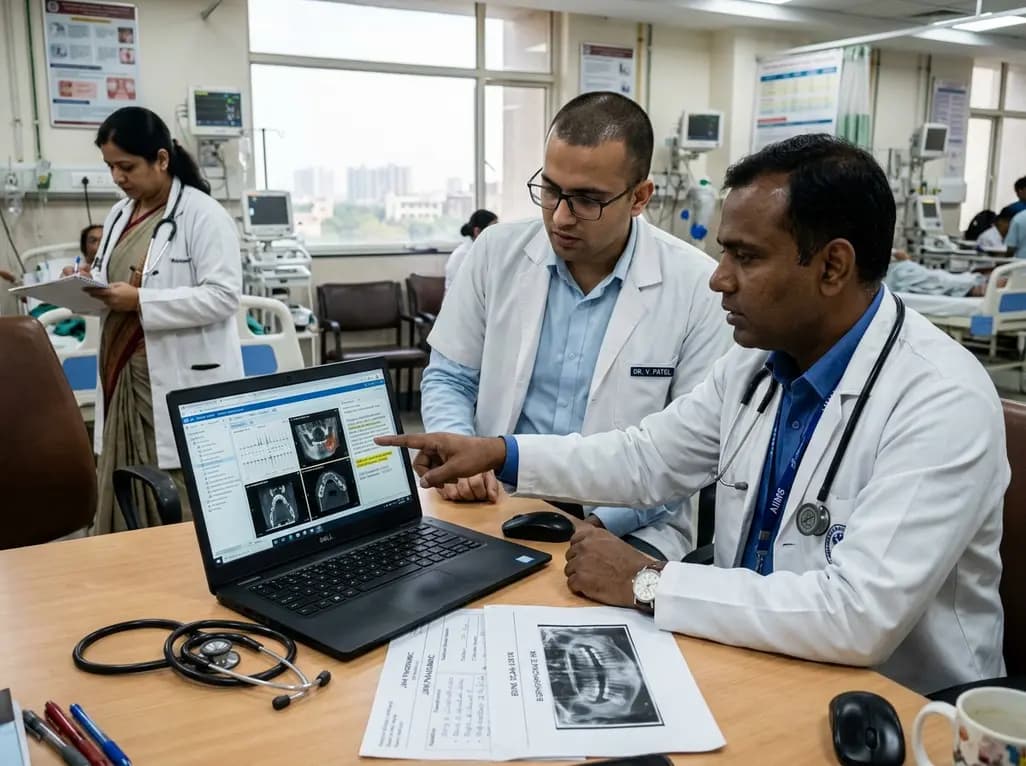
A breakthrough study leverages natural language processing to accurately identify incident medication-related osteonecrosis of the jaw and track antiresorptive drug holidays from clinical narratives in electronic health records, advancing osteoporosis pharmacovigilance and dental safety.
Today
