.webp&w=384&q=75)

Loading, please wait...
Loading, please wait...

Lateral unicompartmental knee arthroplasty provides an effective, tissue-preserving treatment for isolated lateral compartment osteoarthritis. Historically, orthopedic surgeons reserved partial knee replacements for older, sedentary patients due to concerns regarding premature wear. However, modern prosthetic designs and advanced surgical instrumentation have transformed clinical possibilities. Young, active patients presenting with lateral joint degeneration demand solutions that preserve bone stock and natural joint kinematics. Consequently, fixed-bearing lateral unicompartmental knee arthroplasty has emerged as an appealing alternative to total knee arthroplasty. By retaining both cruciate ligaments and the untouched medial compartment, this procedure preserves native proprioception and enables faster rehabilitation. Conversely, total knee arthroplasty sacrifices healthy tissues and fundamentally alters joint mechanics. In active individuals aged 55 years or younger, choosing the optimal reconstructive strategy remains pivotal. Osteotomies can address deformity but entail prolonged recovery times and inconsistent pain relief. Therefore, targeted lateral compartmental resurfacing offers a balanced, bone-conserving option for demanding patients. Recent clinical evidence demonstrates that younger recipients achieve outstanding joint stability and durable pain relief when surgeons adhere to rigorous patient selection guidelines.
Recent clinical evidence provides remarkable reassurance regarding implant longevity in young, physically active cohorts. Specifically, a consecutive series tracking 84 primary fixed-bearing lateral arthroplasties in patients aged 55 years or younger recorded a 100% lateral component revision-free survival rate at a mean follow-up of 5.3 years. Furthermore, surgeons identified zero implant-related mechanical failures, such as aseptic loosening of femoral or tibial components. This finding highlights the robust durability offered by contemporary fixed-bearing lateral designs. Cumulative reoperation-free survivorship reached 92.5% at five years, confirming impressive surgical safety. Historically, clinicians feared rapid polyethylene wear and early loosening in younger, high-demand cohorts. Nevertheless, modern fixed-bearing components reliably withstand asymmetric lateral compartment kinematics. Because the lateral meniscus exhibits greater mobility than the medial meniscus, anatomic component positioning remains essential. Additionally, secure cementation provides durable resistance against repetitive rotational forces during athletic activities. Consequently, younger recipients achieve dependable prosthetic longevity without needing early conversion to radical knee replacements. These impressive survivorship figures confirm that young age should not exclude patients from undergoing lateral unicompartmental resurfacing.
Patient-reported outcome measures demonstrate that targeted resurfacing restores outstanding functional capacity in younger working demographics. In recent clinical evaluations, patients achieved an impressive postoperative mean Oxford Knee Score of 43.8 out of 48. Furthermore, participants recorded a mean University of California, Los Angeles activity score of 6.5, indicating regular participation in demanding recreational pursuits like swimming, cycling, and fitness walking. These functional metrics reflect remarkable pain alleviation and near-physiological joint performance. Because lateral partial arthroplasty preserves both cruciate ligaments and normal patellofemoral tracking, patients retain superior knee proprioception. Consequently, individuals frequently forget their artificial joint during daily professional and sports activities. In contrast, total knee replacements often produce subtle kinematics alterations and limit deep flexion. Younger patients naturally maintain elevated expectations regarding rapid return to vocational pursuits. Therefore, preserving native tissue anatomy directly fosters superior patient satisfaction and psychological well-being. Moreover, minimally invasive approaches minimize muscle trauma, allowing individuals to resume active lifestyles swiftly. These functional gains demonstrate why joint-preservation surgeons prioritize compartment-specific reconstruction in active individuals.
Accurate coronal alignment restoration represents a crucial factor in achieving lasting clinical success after partial knee reconstruction. In the analyzed cohort, the mean hip-knee-ankle angle shifted from 4.8 degrees valgus preoperatively to 2.0 degrees valgus postoperatively. Interestingly, postoperative radiological analyses revealed higher residual valgus in knees without subsequent medial compartment disease compared to knees experiencing medial progression. Specifically, unaffected knees maintained 2.2 degrees valgus, whereas knees developing medial osteoarthritis or osteonecrosis averaged 1.5 degrees varus. This statistically significant difference underscores a fundamental biomechanical principle. Inadvertent overcorrection into varus shifts primary weight-bearing contact forces onto the untouched medial compartment. Because native medial cartilage cannot tolerate sudden increases in compressive loading, degenerative wear accelerates rapidly. Therefore, surgeons must avoid aggressive alignment correction when treating lateral valgus deformities. Arthroplasty specialists recommend preserving a slight undercorrection of two to three degrees of constitutional valgus. This deliberate alignment strategy effectively shields the preserved medial compartment from excessive mechanical stress. Robotic navigation systems and precision cutting jigs help surgeons reliably achieve these precise alignment targets.
Although lateral implant revision rates remained at zero percent, secondary surgical procedures occurred in a small minority of patients. Overall, clinicians documented seven reoperations across the cohort, producing a 7.5% five-year reoperation rate. Importantly, osteoarthritis progression in the preserved medial compartment constituted the most common etiology for subsequent surgical intervention. Four knees required an additional medial unicompartmental knee arthroplasty due to medial joint degeneration. Additionally, two patients underwent arthroscopic procedures for soft-tissue impingement, while one patient successfully received debridement, antibiotics, and implant retention for infection. Remarkably, when medial osteoarthritis developed, surgeons performed staged bi-unicompartmental arthroplasties rather than sacrificing the intact lateral implant for total knee replacement. Consequently, patients retained their native cruciate ligaments and experienced continued physiological joint mechanics. This staged reconstructive option represents an enormous clinical advantage for younger individuals facing multicompartmental wear over their lifetimes. Furthermore, addressing medial progression with an isolated medial implant preserves critical epiphyseal bone stock for potential future revisions. Thus, clinicians can effectively treat progressive disease while preserving primary lateral reconstruction integrity.
Lateral unicompartmental knee arthroplasty demonstrates exceptional survivorship in patients aged 55 years or younger. Midterm clinical investigations highlight a 100% lateral component revision-free survival rate at five years. Furthermore, patients achieve superior functional recovery, with average Oxford Knee Scores surpassing 43 points. These outcomes prove that modern fixed-bearing designs withstand demanding physical activities without mechanical loosening. Consequently, young chronological age is no longer a deterrent for partial lateral resurfacing.
Coronal limb alignment dictates load distribution across the untreated compartments of the knee joint. Overcorrecting a preoperative valgus deformity into postoperative varus shifts excessive mechanical contact stress onto the native medial cartilage. Clinical data demonstrate that knees ending in varus alignment face significantly higher risks of rapid medial osteoarthritis progression. Therefore, surgeons intentionally preserve two to three degrees of native residual valgus to safeguard the untouched medial compartment over time.
Reoperations after lateral partial resurfacing typically stem from natural osteoarthritis progression within the untreated medial compartment rather than primary lateral implant failure. When medial joint degeneration occurs, surgeons can perform an additional medial unicompartmental knee arthroplasty. This staged approach creates a bi-unicompartmental reconstruction while preserving both cruciate ligaments. Additionally, minor reoperations can involve arthroscopic soft-tissue debridement or targeted management of periprosthetic infection without removing well-fixed implants.
Disclaimer: This content is for informational and educational purposes only... Refer to the latest local and national guidelines for clinical practice.
References

Read summarized clinical updates, watch expert medical content, and earn CME certifications right from your smartphone.
Open your smartphone camera to scan and install.





A 5-year study of lateral unicompartmental knee arthroplasty in patients ≤55 years demonstrated 100% component revision-free survival and high functional scores, though residual varus alignment increased the risk of medial osteoarthritis progression.
Today
A qualitative study in Mzuzu highlights profound struggles faced by patients with NCD complications, including sanitation barriers, loss of dignity, and severe health access delays. Clinicians in resource-limited healthcare environments must address systemic hurdles through integrated, patient-centered chronic care.
Today
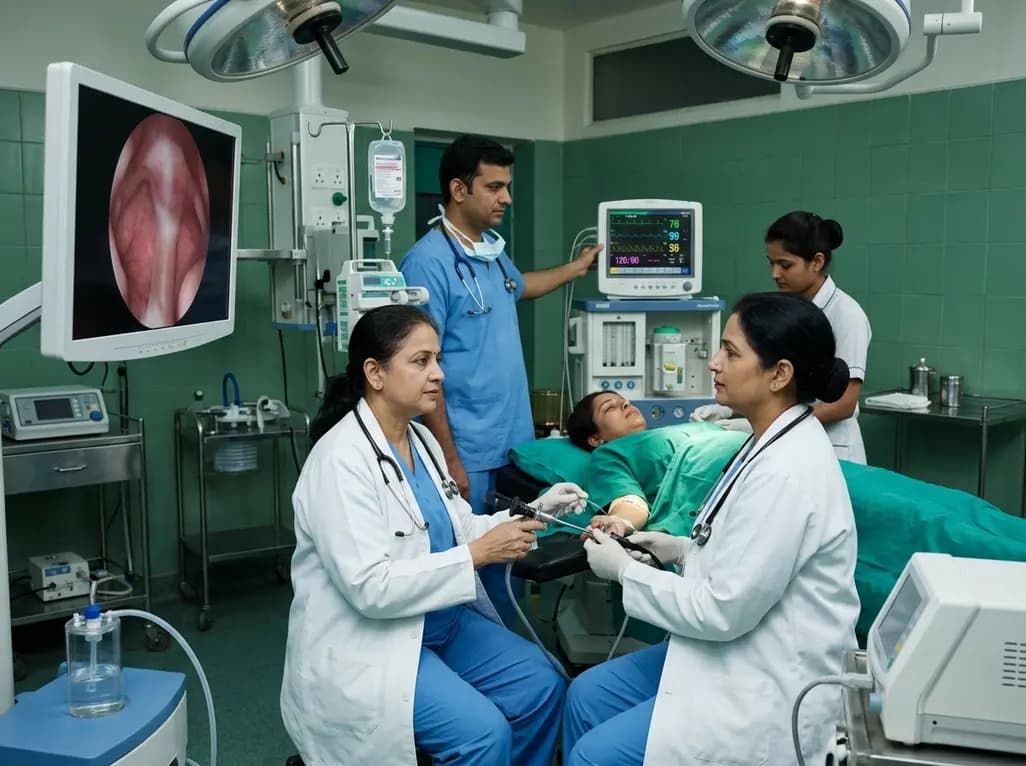
A meta-analysis of nine RCTs comparing remimazolam versus propofol in hysteroscopy reveals remimazolam significantly reduces injection pain, hypotension, and respiratory depression while maintaining comparable sedation success, recovery times, and procedural duration.
Today
Radiofrequency catheter ablation of the cavotricuspid isthmus successfully terminates typical atrial flutter. This article reviews the mechanisms driving coronary sinus electrogram changes, wavefront activation pathways, and clinical criteria to verify bidirectional block during electrophysiology studies.
Today
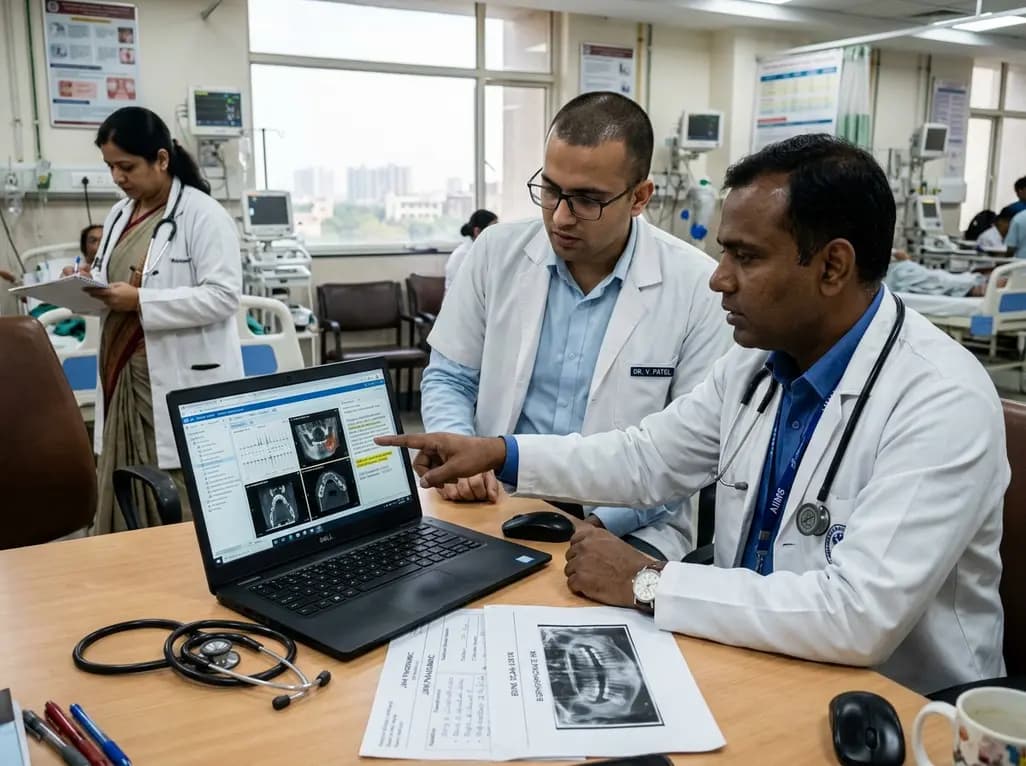
A breakthrough study leverages natural language processing to accurately identify incident medication-related osteonecrosis of the jaw and track antiresorptive drug holidays from clinical narratives in electronic health records, advancing osteoporosis pharmacovigilance and dental safety.
Today
