.webp&w=384&q=75)

Loading, please wait...
Loading, please wait...

The mammalian interstitium is a body-wide network of fluid-filled, prelymphatic spaces. Recent studies demonstrate that it exists at three distinct scales within and between organs, facilitating mammalian interstitium signaling. These spaces comprise intercellular, pericapillary, and large fascial compartments like the dermis and organ submucosae. Consequently, this anatomical concept shifts our clinical understanding of matrix composition and fluid dynamics.
Hyaluronic acid fills these spaces, but larger areas also contain complex extracellular matrices. Moreover, these matrices support varied signaling types, including mechanical and potentially electrical messages. This network acts as a rich basolateral signaling compartment for cell trafficking and molecular flow. Furthermore, the multiscale nature of these spaces raises new questions about the drivers of interstitial fluid flow.
Research identifies the interstitium as an active environment that regulates how cells move through the body. This finding is particularly relevant for understanding cancer metastasis and infectious disease spread. In addition, the structural complexity of large interstitial spaces allows for sophisticated soluble factor interactions. Therefore, physicians should view the interstitium as a continuous, functional organ system rather than isolated gaps.
The interstitium exists at three scales: intercellular (between cells), pericapillary (around small vessels), and large fascial spaces, which include the dermis, organ capsules, and vascular adventitia.
It functions as a basolateral signaling compartment. The complex extracellular matrix supports soluble factors, mechanical forces, and potentially electrical currents that carry information across organ boundaries.
Disclaimer: This content is for informational and educational purposes only. It does not constitute professional medical advice, diagnosis, or treatment. Always seek the advice of your physician or other qualified healthcare provider with any questions you may have regarding a medical condition. Refer to the latest local and national guidelines for clinical practice.
References
Wells RG et al. Interstitial Spaces: A Basolateral Source of Structure and Signals. Annu Rev Cell Dev Biol. 2026 Jun 09. doi: 10.1146/annurev-cellbio-111524-023144. PMID: 42263298.
Cenaj O et al. Evidence for continuity of interstitial spaces across tissue and organ boundaries in humans. Commun Biol. 2021;4(1):436. doi: 10.1038/s42003-021-01962-0.
Theise ND. Interstitium: A Network of Living Spaces Supports Anatomical Interconnectedness. Cell Biology News. 2024 Apr 26.

Read summarized clinical updates, watch expert medical content, and earn CME certifications right from your smartphone.
Open your smartphone camera to scan and install.





A summary of research identifying the mammalian interstitium as a body-wide network for mechanical and electrical signaling and its impact on cell trafficki...
4 months ago
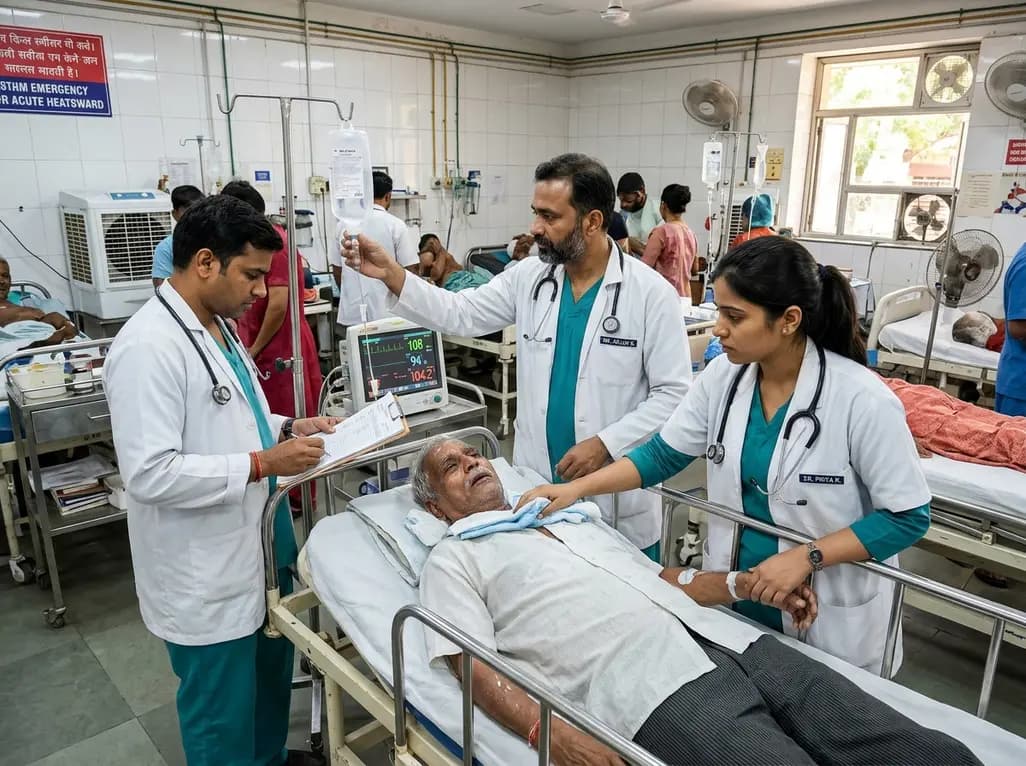
Recent epidemiological data reveals a dramatic surge in summer heat mortality driven by human-induced climate warming. This analysis explores the pathophysiological impacts on cardiac and renal systems, diagnostic dilemmas in death certification, and essential emergency cooling protocols for acute clinical care.
Today

Odisha has established India's first state-level clinical protocol specifically tailored for pregnant women with sickle cell disease. Developed with NHM and UNICEF, the framework provides structured antenatal screening, crisis mitigation, standardized referral pathways, and specialized interdisciplinary care.
Today

India is advancing preventive healthcare by integrating genomics, artificial intelligence, and quantum technologies. With the SANGAM programme sequencing one million Indian genomes, clinicians can unlock personalized therapies, detect cardiometabolic risks early, and curb the burden of diabetes and heart disease.
Today
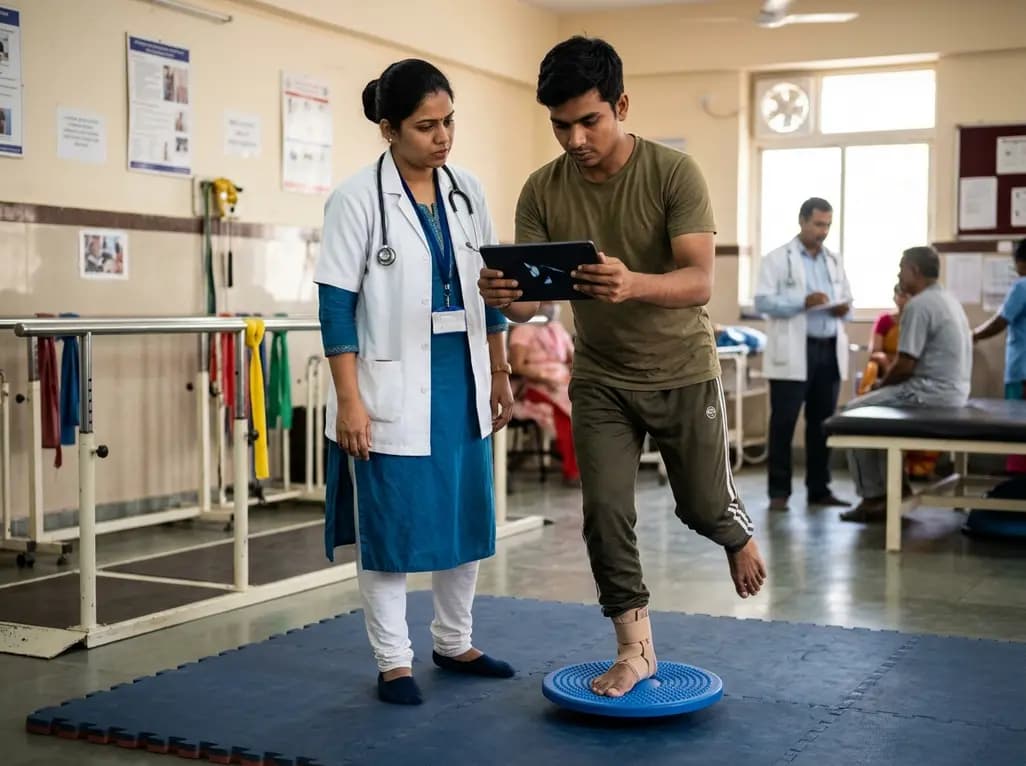
A randomized controlled trial demonstrates that an eight-week dual-task training intervention significantly improves static and dynamic postural control over standard balance exercises in individuals with chronic ankle instability, addressing critical neurocognitive deficits during athletic and daily activities.
Today

A retrospective cohort study of 7,716 ICU patients from the MIMIC-IV database demonstrates that Gradient Boosting Decision Trees significantly outperform traditional SOFA scores in predicting in-hospital mortality among patients with sepsis and diabetes, with SHAP analysis providing clinical interpretability.
Today
