.webp&w=384&q=75)

Loading, please wait...
Loading, please wait...

A malignant phyllodes tumor represents an exceptionally rare fibroepithelial neoplasm of the breast that carries substantial clinical aggressiveness. Although these lesions comprise a small fraction of primary breast tumors, distant metastatic dissemination portends an adverse clinical prognosis. Differentiating these neoplasms from other high-grade stromal malignancies presents formidable diagnostic challenges. Furthermore, recent genomic and clinicopathological investigations have provided essential insights into the biological underpinnings of advanced disease. Understanding these diagnostic criteria and molecular patterns is vital for timely oncological decision-making and optimal patient outcomes.
Historically, diagnosing high-grade fibroepithelial lesions required satisfying all adverse criteria outlined in previous diagnostic frameworks. Pathologists evaluated marked stromal hypercellularity, severe nuclear pleomorphism, stromal overgrowth, permeative tumor margins, and brisk mitotic activity. However, strict adherence to these five classical parameters often caused delayed recognition of aggressively behaving borderline lesions. Recent revisions in the 6th edition World Health Organization classification now establish that fulfilling four of the five adverse histological criteria suffices for a definitive diagnosis. Consequently, this pragmatic modification broadens diagnostic sensitivity and captures aggressive cases that previously evaded timely classification. In recent metastatic cohorts, researchers confirmed that while most tumors met all five criteria, a meaningful subset fulfilled only four parameters before developing distant metastasis. Therefore, adopting these updated criteria prevents missed diagnoses and enables timely surgical interventions. Clinicians must recognize that large tumor diameter and stromal overgrowth remain major indicators of aggressive clinical behavior. As a result, pathological evaluation provides the foundation for accurate risk stratification in routine surgical oncology.
Establishing an accurate histological diagnosis demands careful immunohistochemical evaluation because malignant phyllodes tumors frequently exhibit histological overlap with metaplastic breast carcinoma and primary breast sarcomas. Tumor cells consistently lack expression of epithelial markers, demonstrating complete negativity for pan-cytokeratin and cytokeratin 7. Similarly, non-reactive staining for CD34 and GATA3 eliminates common endothelial proliferations and conventional luminal mammary neoplasms. Conversely, TRPS1 serves as a dependable diagnostic biomarker, displaying moderate to strong diffuse nuclear positivity across metastatic cases. This finding proves particularly useful because TRPS1 confirms mammary lineage even when high-grade stromal differentiation obscures classic architecture. Additionally, p63 demonstrates focal nuclear positivity in approximately thirty percent of cases, reflecting residual epithelial-myoepithelial differentiation or stem-like tumor biology. Pathologists must interpret these stains within the broader architectural framework to avoid erroneous diagnoses. Furthermore, integrating TRPS1 with negative epithelial markers provides a reliable immunophenotypic algorithm for diagnosing metastatic deposits. Thus, robust immunohistochemical panels resolve diagnostic ambiguity and guide appropriate therapeutic regimens in complex presentations.
Comprehensive genomic profiling has uncovered critical somatic alterations that drive tumor evolution and metastatic capability. Next-generation sequencing reveals that alterations in TP53 and MED12 occur in seventy-five percent of metastatic tumors, underscoring their role in tumor initiation and progression. While MED12 alterations initiate early fibroepithelial proliferation, subsequent inactivation of TP53 triggers genomic instability and aggressive morphological transformation. Moreover, high frequencies of MUC16 and FAT1 mutations characterize metastatic cohorts, indicating disrupted cell adhesion and enhanced migratory behavior. In addition, somatic mutations in the TERT promoter, ATM, GRIN2A, and PIK3CA frequently occur in advanced cases. Alterations affecting chromatin remodelers such as KMT2C and SETD2 also contribute to epigenetic deregulation. Furthermore, clinicians often identify mutations in epigenetic regulators like DNMT3A alongside alterations in EGFR, APC, and NOTCH1. Consequently, these widespread genomic perturbations demonstrate that malignant phyllodes tumors accumulate substantial mutational diversity during metastatic progression. Therefore, molecular testing provides clinicians with invaluable insight into tumor biology, improving diagnostic precision and offering rationale for personalized oncology approaches.
Signaling pathway enrichment analyses illuminate the cooperative molecular networks that govern aggressive tumor behavior. The receptor tyrosine kinase and RAS signaling pathway exhibits universal involvement, operating across all analyzed metastatic tumors. Simultaneously, concurrent alterations frequently disrupt the TP53 and cell cycle regulatory pathways, permitting unchecked cellular proliferation and evasion of apoptosis. In addition, dysregulation within the HIPPO signaling pathway occurs in a majority of advanced cases, promoting survival advantages and resistance to contact inhibition. Amplification or transcriptional activation of MYC further accelerates metabolic reprogramming and aggressive stromal expansion. Furthermore, investigators frequently observe aberrant signaling through the NOTCH, PI3K/AKT, WNT, and TGF-beta cascades. This dense network of oncogenic pathways highlights the complex multi-step pathogenesis underlying metastatic progression. Because these pathways interact cooperatively, conventional monotherapies typically fail to achieve sustained tumor control. Consequently, identifying concurrent pathway activations offers promising avenues for synergistic targeted interventions. Therefore, unravelling these signaling cascades remains pivotal for developing rational combinations that overcome therapeutic resistance.
Metastatic dissemination in malignant phyllodes tumors carries an ominous prognosis and presents severe therapeutic hurdles. Patients typically present with large breast masses, often exceeding eight centimeters in greatest dimension, with a median age in the late fourth decade. Systemic progression occurs relatively rapidly, with median time to progression ranging around eighteen months following initial resection. The hematogenous dissemination route predominantly targets the lungs, bones, and liver, while regional lymph node involvement remains exceptionally rare. Tragically, distant recurrence leads to high mortality, as evidenced by overall survival times averaging under three years. Standard cytotoxic chemotherapy regimens adapted from soft-tissue sarcoma protocols rarely confer durable disease control. In addition, conventional breast cancer endocrine therapies and HER2-targeted agents offer no clinical benefit due to the absence of these specific receptors. Therefore, regular postoperative surveillance using cross-sectional chest and abdominal imaging is imperative during the first two years. Moreover, multidisciplinary clinical management must prioritize rapid symptom relief, palliative surgical debulking when indicated, and prompt evaluation for clinical trial participation.
Optimal management of aggressive fibroepithelial breast malignancies requires seamless coordination across surgical, pathological, and medical oncology teams. Because local recurrence significantly elevates the hazard of subsequent hematogenous spread, achieving widely clear surgical margins during primary resection remains paramount. Surgeons should ensure margin clearance of at least one centimeter without routinely performing axillary lymph node dissection. Pathologists must diligently apply the refined four-criteria framework from the 6th edition WHO guidelines to avoid underclassifying high-risk neoplasms. When metastatic disease develops, clinical teams should consider reflex next-generation sequencing to pinpoint actionable molecular alterations. For instance, detecting PIK3CA alterations, EGFR abnormalities, or NTRK fusions can open avenues for targeted inhibitor therapy or compassionate-use protocols. Furthermore, identifying programmed death-ligand 1 positivity or elevated tumor mutational burden may identify rare candidates suitable for immune checkpoint blockade. Ultimately, combining accurate histopathological grading, comprehensive molecular profiling, and vigilant surveillance creates the best foundation for addressing this devastating malignancy. Therefore, ongoing clinical research and multi-institutional data sharing remain essential to establish standardized, evidence-based management protocols.
The 6th edition WHO classification refines diagnostic sensitivity by requiring four out of five adverse histological features rather than demanding all five criteria. Consequently, pathologists can reliably identify aggressive borderline lesions that harbor genuine metastatic potential without waiting for full morphological progression. This shift directly addresses previous diagnostic delays. Therefore, surgical oncologists can initiate timely comprehensive management plans, reducing recurrence risks and preventing underestimation of highly dangerous fibroepithelial breast malignancies in daily clinical practice.
Immunohistochemistry provides critical assistance because metastatic lesions often lose conventional epithelial characteristics. Diagnostic panels reveal complete negativity for cytokeratin pan, cytokeratin 7, CD34, and GATA3, effectively excluding metastatic carcinoma. Conversely, TRPS1 exhibits strong and diffuse positivity across cases, confirming mammary stromal origin. Additionally, p63 displays focal positive expression in selected instances. Clinicians must combine these distinct phenotypic markers with detailed histological inspection to distinguish aggressive fibroepithelial tumors from primary metaplastic breast carcinomas or sarcomas.
Next-generation sequencing plays an indispensable role because metastatic lesions frequently display marked molecular heterogeneity. Genomic profiling identifies recurring somatic mutations in TP53, MED12, MUC16, and the TERT promoter alongside actionable pathway abnormalities. Consequently, comprehensive molecular testing helps clinicians uncover potential therapeutic targets within the RTK/RAS, PI3K/AKT, and cell cycle axes. As standard chemotherapy yields limited durable benefit in metastatic presentations, genomic insights facilitate personalized treatment planning and clinical trial enrollment for affected individuals.
Disclaimer: This content is for informational and educational purposes only. It is not intended to replace professional medical advice, diagnosis, or treatment. Always seek the advice of your physician or other qualified healthcare provider with any questions you may have regarding a medical condition. Refer to the latest local and national guidelines for clinical practice.
References

Read summarized clinical updates, watch expert medical content, and earn CME certifications right from your smartphone.
Open your smartphone camera to scan and install.





Malignant phyllodes tumors with distant metastasis exhibit poor prognosis. This analysis examines the 6th edition WHO diagnostic criteria, immunohistochemical profiles including TRPS1, recurrent TP53 and MED12 mutations, and therapeutic challenges in managing aggressive fibroepithelial breast neoplasms.
Today

India's antidepressant market crossed Rs 2,842 crore in 2026 even as unit sales declined. Clinicians analyze the shift toward newer drugs, widespread clonazepam combination use, social media-driven self-diagnosis, and persistent treatment gaps to assess genuine therapeutic recovery across diverse patient groups.
Today

Integrating adult genetic services into reproductive and pregnancy care substantially alters clinical management. A study reveals that diagnostic genetic evaluations directly inform maternal, fetal, and neonatal care in nearly 57% of tested patients, highlighting the value of preconception and antenatal genomics.
Today
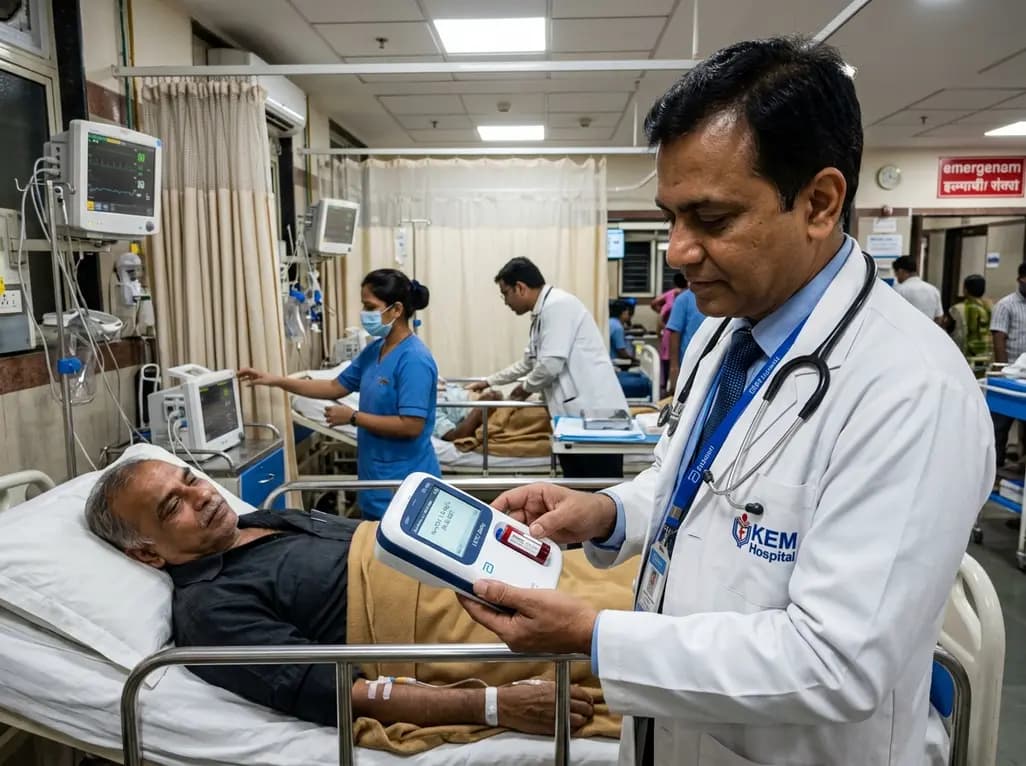
A real-world emergency department evaluation demonstrates that the Abbott i-STAT Alinity point-of-care high-sensitivity troponin I assay achieves excellent analytical precision and safely rules out myocardial infarction without false negatives, offering rapid bedside results to decongest acute care pathways.
Today

A recent scoping review highlights the efficacy, usability, and patient satisfaction of virtual reality pain management for chronic musculoskeletal pain, emphasizing psychotherapy-based VR protocols.
Today

A cross-sectional study in Nepal evaluates cardiovascular risk factors among adults working above 4,000 meters. The findings reveal unexpected rates of diabetes, hypertension, and mountain sickness, underscoring the urgent need for targeted cardiometabolic screening in high-altitude occupational cohorts.
Today
