.webp&w=384&q=75)

Loading, please wait...
Loading, please wait...

Clinicians often encounter significant diagnostic hurdles when managing patients with rare Mendelian disorders. Despite the widespread use of whole exome sequencing, many cases remain unsolved. A primary reason for this gap is the difficulty in detecting RNA splicing aberrations. Fortunately, the introduction of MAJIQ-CLIN genetic diagnosis provides an innovative approach to bridge this diagnostic divide. This tool specifically targets variants that disrupt normal gene function through aberrant splicing pathways, which standard DNA sequencing often misses.
Furthermore, the development of MAJIQ-CLIN addresses the need for efficient processing of large genomic datasets. Unlike some existing tools, it avoids the necessity of reprocessing control cohorts when researchers add new patient data. This efficiency significantly reduces computational overhead in clinical settings. Specifically, the method identifies two critical types of variations: outlier local splicing variations (oLSVs) and private local splicing variations (pLSVs). Consequently, these features allow clinicians to pinpoint causative mutations with higher confidence and speed.
Moreover, systematic evaluations using both synthetic and real-world datasets highlight the tool's superior accuracy. It outperforms many traditional methods in detecting complex splicing events across various transcript levels. Additionally, it maintains robust control over batch effects and other confounding factors that often plague genomic analysis. Therefore, MAJIQ-CLIN serves as a user-friendly and reliable asset for diagnosing previously unsolved genetic cases.
MAJIQ-CLIN identifies splicing errors in a patient's RNA that standard DNA tests often miss. By comparing patient RNA to a control group, it highlights "outlier" splicing events that may cause Mendelian diseases.
The tool is highly efficient and does not require reprocessing old data when new samples are added. It also provides better accuracy in identifying complex splicing variations, helping clinicians resolve more cases successfully.
Disclaimer: This content is for informational and educational purposes only. It is not intended as a substitute for professional medical advice, diagnosis, or treatment. Always seek the advice of your physician or other qualified healthcare provider with any questions you may have regarding a medical condition. Refer to the latest local and national guidelines for clinical practice.
References

Read summarized clinical updates, watch expert medical content, and earn CME certifications right from your smartphone.
Open your smartphone camera to scan and install.





MAJIQ-CLIN is a novel tool designed to identify RNA splicing aberrations from RNA-Seq data. It improves diagnostic rates for Mendelian diseases by detecting local splicing variations more accurately and efficiently than traditional methods.
4 months ago

Explore vital recurrent stroke predictors in lacunar stroke patients managed with intensive blood pressure lowering. This analysis examines trial findings from SPS3 to uncover residual vascular risks, metabolic factors, and targeted secondary prevention strategies for high-risk neurological patients.
Today
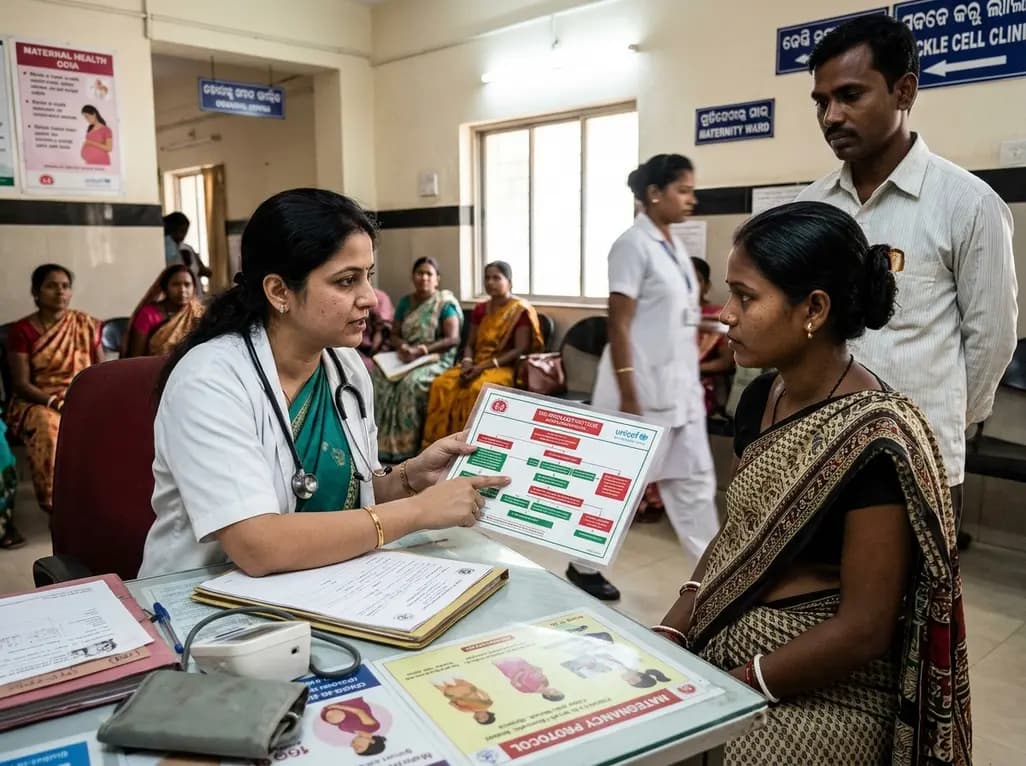
Odisha has established India's first state-level clinical protocol specifically tailored for pregnant women with sickle cell disease. Developed with NHM and UNICEF, the framework provides structured antenatal screening, crisis mitigation, standardized referral pathways, and specialized interdisciplinary care.
Today

India is advancing preventive healthcare by integrating genomics, artificial intelligence, and quantum technologies. With the SANGAM programme sequencing one million Indian genomes, clinicians can unlock personalized therapies, detect cardiometabolic risks early, and curb the burden of diabetes and heart disease.
Today

A randomized controlled trial demonstrates that an eight-week dual-task training intervention significantly improves static and dynamic postural control over standard balance exercises in individuals with chronic ankle instability, addressing critical neurocognitive deficits during athletic and daily activities.
Today

A retrospective cohort study of 7,716 ICU patients from the MIMIC-IV database demonstrates that Gradient Boosting Decision Trees significantly outperform traditional SOFA scores in predicting in-hospital mortality among patients with sepsis and diabetes, with SHAP analysis providing clinical interpretability.
Today
