.webp&w=384&q=75)

Loading, please wait...
Loading, please wait...

Post-infarction cardiac repair is a highly complex biological process orchestrated by diverse immune cell populations. Among these, macrophages play a pivotal role, transitioning through distinct macrophage polarization programs to facilitate healing. Immediately following a myocardial infarction (MI), the heart experiences an influx of proinflammatory M1 macrophages tasked with clearing debris and necrotic tissue. However, successful resolution of inflammation requires a subsequent shift toward reparative M2 states. This transition is essential for promoting angiogenesis and initiated fibrotic remodeling. Recent advancements in single-cell transcriptomics have allowed researchers to dissect these transitions with unprecedented resolution. Understanding the specific molecular signatures of these cells provides a roadmap for future regenerative therapies. In India, where the burden of ischemic heart disease remains exceptionally high, uncovering these cellular mechanisms is crucial for developing precision medicine approaches that could improve patient outcomes after a heart attack.
The study identified a unique 7-gene coexpression module that defines the reparative phase of cardiac macrophages. This module includes Spp1, Mif, Tgfb1, Arg1, Il10, Tnf, and Mrc1. These genes are not merely markers; they represent active macrophage polarization programs that coordinate the shift from injury to repair. For instance, Arg1 and Tgfb1 serve as critical nodes in this network, driving the anti-inflammatory responses necessary for myocardial stability. Researchers utilized diffusion pseudotime trajectory reconstruction to visualize how these genes fluctuate as macrophages mature from an M1-like state toward a reparative M2-like fate. This bifurcation in cellular destiny determines whether the heart will recover efficiently or undergo adverse remodeling leading to heart failure. Consequently, these findings emphasize that cardiac repair is a dynamic continuum rather than a series of static stages. By focusing on these specific genetic drivers, clinicians and researchers can better understand the heterogeneity of the immune response in the infarcted myocardium.
Interestingly, the research expanded beyond cardiology to investigate whether these macrophage polarization programs are conserved in other pathological contexts, specifically breast cancer. Tumor-associated macrophages (TAMs) in the breast cancer microenvironment often adopt an M2-like phenotype to promote tumor growth and immune evasion. By comparing murine cardiac data with human primary breast cancer datasets (GSE176078 and GSE167036), the study sought to identify universal immune programs. The analysis revealed a moderate Pearson correlation (r = 0.72) for the 7-gene module in one breast cancer dataset. However, the same result was not replicated in the second dataset, where M2-polarized macrophages were significantly absent. This discrepancy highlights the context-dependent nature of immune responses. While some genetic modules are shared across diseases, the local tissue microenvironment ultimately dictates the specific expression and function of these cells. This cross-disease comparison underscores the potential for repurposing knowledge between cardiology and oncology.
One of the most compelling findings of this transcriptomic analysis is the identification of the MIF-ACKR3 signaling axis as a primary mediator of macrophage-stromal communication. This axis, alongside SPP1-CD44 and TGFB1-TGFBR2, appears to be a shared feature of both the infarcted heart and the tumor microenvironment. Macrophage migration inhibitory factor (MIF) interacting with the atypical chemokine receptor 3 (ACKR3) suggests a computationally derived hypothesis for how macrophages influence their surroundings. In the heart, this signaling likely aids in the resolution of inflammation and the recruitment of reparative cells. In a tumor, however, the same pathway might be hijacked to support malignancy. Therefore, targeting the MIF-ACKR3 axis could represent a double-edged therapeutic opportunity. Furthermore, ligand-receptor communication analysis provides a clearer picture of how macrophages serve as central hubs in the cellular ecosystem. These computational insights offer a robust foundation for future experimental validation in animal models and clinical cohorts.
For the medical community in India, these findings offer significant translational potential in the management of cardiovascular and oncological diseases. The identification of Arg1 and Tgfb1 as key regulators within macrophage polarization programs suggests that modulating these genes could enhance post-MI recovery. If clinicians can pharmacologically encourage the transition to a reparative M2 state, they might reduce the incidence of post-infarct heart failure. Moreover, the shared pathways between cardiac repair and cancer highlight the importance of the burgeoning field of cardio-oncology. Many cancer therapies currently used in India have cardiotoxic effects; understanding shared immune signatures could help develop strategies that protect the heart while treating the tumor. Additionally, the use of single-cell RNA sequencing data sets a new standard for precision diagnostics. Moving forward, integrating these transcriptomic profiles into clinical research will be vital for developing targeted therapies that address the unique genetic landscape of Indian patients.
The 7-gene module, consisting of Spp1, Mif, Tgfb1, Arg1, Il10, Tnf, and Mrc1, acts as a molecular signature for reparative macrophages. In the context of cardiac repair, these genes coordinate the transition from a proinflammatory state to an anti-inflammatory, healing state. Identifying this module allows researchers to track the progress of healing at a cellular level and identifies potential targets for therapies designed to speed up heart recovery after an infarction.
The MIF-ACKR3 axis is a signaling pathway that facilitates communication between macrophages and other cells in the heart's microenvironment. Computationally, it has been identified as a key driver of inflammation resolution and tissue repair. By interacting with the ACKR3 receptor, the MIF ligand may help guide the behavior of stromal cells, ultimately aiding in the stabilization of the myocardial scar and preventing excessive, damaging inflammation that leads to heart failure.
Both post-infarction cardiac repair and tumor growth rely on macrophages to modulate the local environment, promote blood vessel growth, and manage tissue remodeling. While the ultimate outcomes differ—healing in the heart versus progression in cancer—the underlying biological machinery for these tasks is partially conserved. Studying these shared features allows scientists to understand the fundamental rules of immune regulation and potentially apply therapeutic strategies from oncology to cardiovascular medicine or vice-versa.
Disclaimer: This content is for informational and educational purposes only... Refer to the latest local and national guidelines for clinical practice.
References
Liu B et al. Arg1 and Tgfb1 Identify a Partially Shared Macrophage Polarization Program in Postinfarction Cardiac Repair: A Single-Cell Transcriptomic Analysis. Int J Genomics. 2026 undefined undefined. doi: undefined. PMID: 42472255.

Read summarized clinical updates, watch expert medical content, and earn CME certifications right from your smartphone.
Open your smartphone camera to scan and install.





A single-cell transcriptomic analysis identifies a 7-gene module (including Arg1 and Tgfb1) that defines macrophage polarization programs during post-infarction cardiac repair. The study highlights shared immune signaling pathways between myocardial recovery and the breast cancer tumor microenvironment.
3 months ago
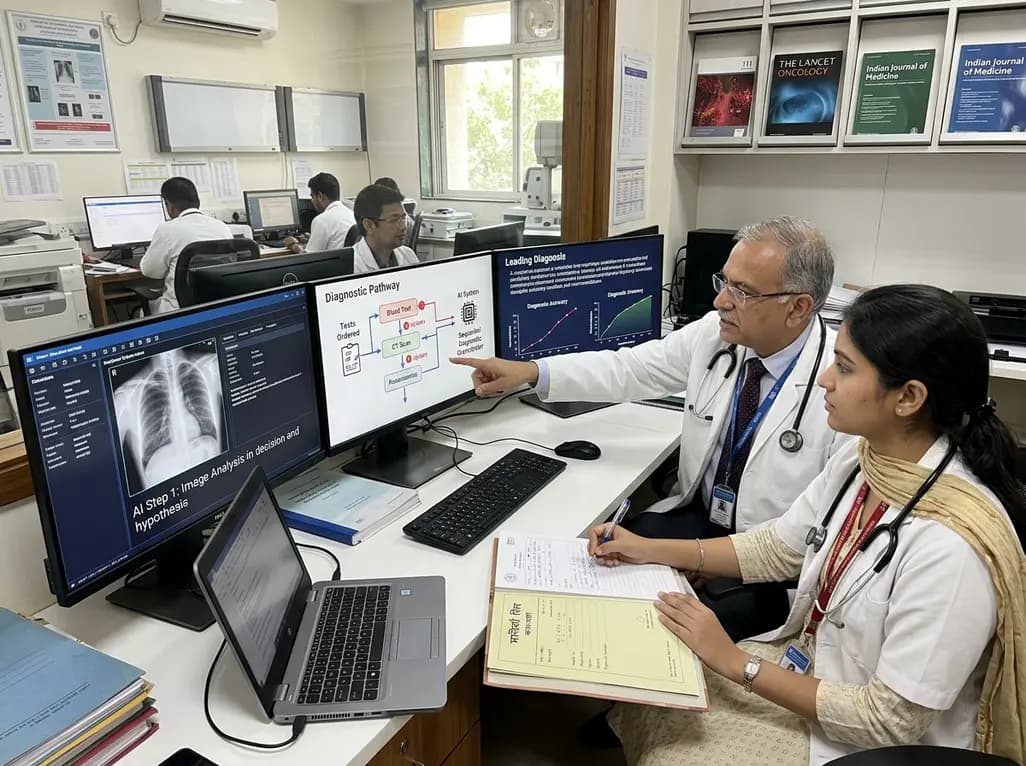
A breakthrough peer-reviewed study demonstrates that a sequential AI diagnosis system can mirror real-world clinical reasoning. By ordering stepwise tests and updating hypotheses dynamically, this multi-agent orchestrator achieved superior diagnostic accuracy while reducing investigative costs.
Today

A prenatal case highlights severe glutaric acidemia type II presenting as bilateral hyperechoic cystic kidneys at 18 weeks. Whole-exome sequencing revealed a novel homozygous ETFDH frameshift variant, demonstrating the power of rapid genetic testing in fetal renal anomalies.
Today

Review how tailored exercise programs benefit frail older patients with heart failure. Explore pathophysiological mechanisms, individualized training prescriptions, and strategies to overcome adherence barriers in clinical practice.
Yesterday

This comparative study evaluates posterior labral tears with and without glenohumeral instability, highlighting distinct demographic patterns, MRI underestimation in stable shoulders, and successful arthroscopic repair outcomes.
Yesterday

A clinical study demonstrates that early intervention with tocilizumab, either as monotherapy or bridged with corticosteroids, achieves significant proptosis reduction and resolves active inflammation in treatment-naive thyroid eye disease.
Yesterday
