.webp&w=384&q=75)

Loading, please wait...
Loading, please wait...

Modern operative suites increasingly integrate sophisticated robotic platforms to assist clinicians during intricate procedures. Consequently, objective surgical skill assessment has emerged as a vital cornerstone for improving patient safety and surgical education. Traditional credentialing approaches rely heavily on subjective mentor evaluations and retrospective grading rubrics like GEARS or OSATS. However, these manual frameworks demand substantial faculty hours and frequently introduce observer bias. To overcome these constraints, researchers deploy machine learning algorithms to automate technical evaluation. Furthermore, experts envision human-autonomy teaming as the ultimate frontier for surgical innovation. In this collaborative paradigm, intelligent machines do not merely grade past movements. Instead, they serve as active operative partners that interpret progress and offer context-aware guidance during critical steps. Nevertheless, building effective human-machine partnerships requires dependable real-time feedback mechanisms. A recent scoping review by Barati and colleagues analyzed 92 peer-reviewed studies to determine whether current algorithms meet this clinical threshold. Their exhaustive findings reveal an intriguing paradox. While computational architectures classify skill levels with remarkable precision on benchmark data, significant technical deficiencies persist. Consequently, existing models cannot yet function as interactive operative teammates.
Over the past decade, data acquisition methods for surgical evaluation have evolved considerably. Historically, investigators relied on isolated kinetic sensors or basic endoscope footage to measure technical proficiency. Today, researchers increasingly employ multimodal data pipelines that synthesize kinematics, computer vision, and operator biosignals. For example, synchronized kinematic parameters capture instrument trajectories, velocity profiles, and acceleration patterns directly from robotic consoles. Simultaneously, deep learning models analyze high-definition video feeds to track instrument-tissue interactions and detect anatomical planes. Moreover, several forward-looking groups integrate surgeon physiological signals, including eye-tracking metrics, electromyography, and heart-rate variability. These biosignals reveal cognitive workload and mental stress during high-stakes maneuvers. Consequently, multi-stream convolutional networks and temporal transformers can evaluate complex operative tasks with unprecedented granularity. In addition, deep learning architectures consistently outperform classical statistical classifiers like support vector machines across standard benchmark datasets. Therefore, algorithmic pattern recognition accurately distinguishes experienced consultants from novice trainees. However, processing these complex multimodal streams in live operating rooms presents formidable engineering challenges. Computational latency often delays feedback, preventing immediate intervention. Thus, high offline classification accuracy does not guarantee clinical intraoperative utility.
To quantify translational maturity, recent systematic investigations utilize rigorous aerospace and robotics frameworks. Specifically, the scoping review applied the NASA Technology Readiness Level framework alongside the Yang autonomy scale for medical robotics. The findings demonstrate a pronounced translational bottleneck across modern surgical literature. Remarkably, 77.2% of the evaluated studies remain confined to Technology Readiness Level 3, which designates basic proof-of-concept testing. In contrast, merely 2.2% of published projects reached Level 5 or higher, demonstrating true operational validation in relevant clinical environments. Furthermore, 96.7% of existing models operate strictly at Yang autonomy level 0. Level 0 signifies absolute manual human control where the system offers zero autonomous execution or contextual feedback. Consequently, the vast majority of current surgical algorithms function solely as retrospective diagnostic classifiers. They score completed exercises rather than collaborating during live procedures. Moreover, nearly 38% of studies lacked any form of external validation on independent patient cohorts or diverse robotic hardware. Researchers frequently validate algorithms on homogeneous public datasets such as JIGSAWS, which feature simplified dry-lab drills. As a result, algorithmic performance often deteriorates when encountering live surgical variations.
Human-autonomy teaming requires fluid, bi-directional communication between the operating surgeon and robotic software. Unfortunately, existing machine learning pipelines exhibit significant functional deficiencies that obstruct real-time collaboration. First, over 91% of current models are entirely static. These algorithms cannot adjust their scoring parameters to individual surgeon styles, learning curves, or ergonomic preferences. Therefore, they evaluate every clinician using rigid, non-adaptive rules. Second, black-box deep learning architectures lack clinical interpretability. When an algorithm flags a maneuver as suboptimal, it rarely explains why the movement was flawed. Surgeons cannot readily accept machine recommendations without transparent, explainable rationales that align with surgical principles. Third, real-time computational execution remains rare in academic prototypes. Most algorithms perform post-hoc video processing after the patient leaves the operating theater. However, effective surgical teammates must deliver instant, context-aware haptic or visual cues during delicate tissue dissection. In addition, strict data privacy regulations and proprietary robotic software architectures restrict algorithm deployment in live operating theatres. Without open application programming interfaces, developers struggle to stream real-time telemetry from commercial consoles. Consequently, these structural roadblocks keep artificial intelligence confined to academic laboratories.
The rapid expansion of robotic surgery across Indian tertiary healthcare centers highlights the urgent necessity for objective assessment. Major institutions like AIIMS and prominent corporate hospital networks now perform complex robotic procedures routinely. Furthermore, homegrown platforms like the SSI Mantra are dramatically lowering equipment costs across tier-1 and tier-2 Indian cities. Consequently, National Board of Examinations and university residency programs face soaring demand for structured robotic credentialing. Traditionally, senior surgical preceptors supervise junior trainees through direct observation. However, proctor availability remains constrained by heavy clinical workloads and uneven geographic distribution of surgical experts. Automated technical evaluations can alleviate this faculty bottleneck by providing objective feedback in simulation dry-labs. Trainees can master basic suturing, tissue handling, and knot tying before operating on human patients. Moreover, machine learning models could ensure equitable evaluation standards across diverse training institutions, eliminating personal assessor bias. Nevertheless, Indian healthcare administrators must recognize current algorithmic limitations. Since existing models lack external clinical validation on domestic surgical cohorts, educators must avoid replacing human proctors prematurely. Instead, surgical departments should integrate artificial intelligence tools as supplementary aids within standardized simulation curricula.
Human-autonomy teaming represents an advanced collaborative model where human surgeons and intelligent robotic systems work together dynamically as synchronized partners. Rather than functioning simply as a passive teleoperated tool, the autonomous system continuously monitors the operative field. Furthermore, it interprets surgical maneuvers, tracks technical precision, and offers adaptive feedback or shared guidance. Consequently, this collaborative framework enhances operative precision, mitigates clinician fatigue, and improves surgical safety during complex minimally invasive interventions.
Most current surgical algorithms remain at readiness level 3 because investigators primarily train and validate them on isolated benchtop datasets. Moreover, researchers often utilize synthetic box simulators or inanimate dry-lab drills that do not replicate actual human tissue dynamics. Additionally, deep learning models struggle with computational latency, irregular lighting, and unexpected intraoperative events in live operative environments. Without extensive prospective testing in hospital operating rooms, algorithms cannot advance toward commercial clinical integration.
Machine learning will fundamentally modernize surgical education by replacing subjective faculty grading with continuous, objective performance metrics. Trainees can practice repetitive simulated drills while algorithms provide instant, granular feedback on motion economy and tissue handling. Furthermore, residency program directors can monitor quantitative learning curves to ensure standardized technical competency before granting independent operative privileges. Consequently, automated assessment streamlines the credentialing process while establishing transparent, reproducible skill benchmarks across academic healthcare centers.
Disclaimer: This content is for informational and educational purposes only... Refer to the latest local and national guidelines for clinical practice.
References

Read summarized clinical updates, watch expert medical content, and earn CME certifications right from your smartphone.
Open your smartphone camera to scan and install.





A scoping review of 92 studies evaluates machine learning in surgical skill assessment for human-autonomy teaming. While deep learning shows high accuracy, 77.2% of models remain at proof-of-concept readiness, highlighting key translational gaps in real-time adaptivity and clinical integration.
Today
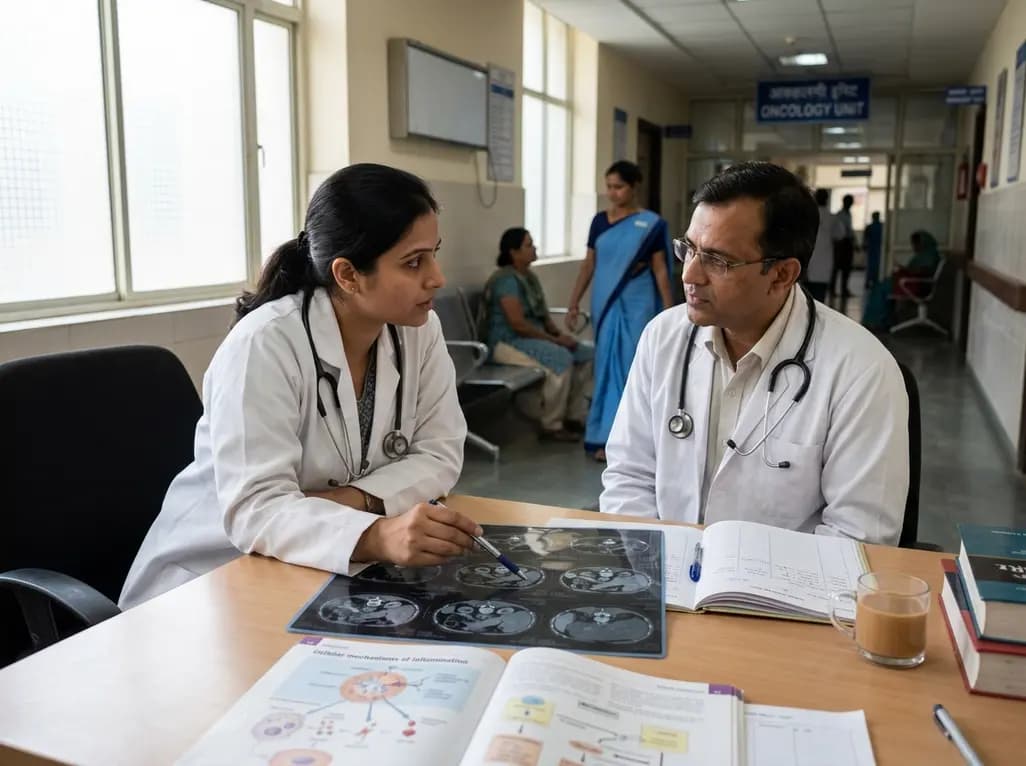
Pancreatic cancer cachexia affects over 80% of patients, driving severe muscle wasting, systemic inflammation, and treatment intolerance. This review highlights key pathophysiological drivers, exocrine insufficiency, objective CT imaging, and emerging therapies like GDF-15 inhibitors to improve clinical outcomes.
Today

A scoping review reveals how pregnancy affects phonation through laryngeal edema and reduced phonation time rather than major acoustic pitch alterations. Learn how to identify, evaluate, and manage vocal symptoms in expectant mothers.
Today

According to WHO data, average lifespan reached 73.3 years in 2023, recovering from pandemic lows. However, healthy life expectancy lags at 62.8 years due to surging noncommunicable conditions like cardiovascular disease and dementia, demanding proactive primary screening and sustained chronic care.
Today
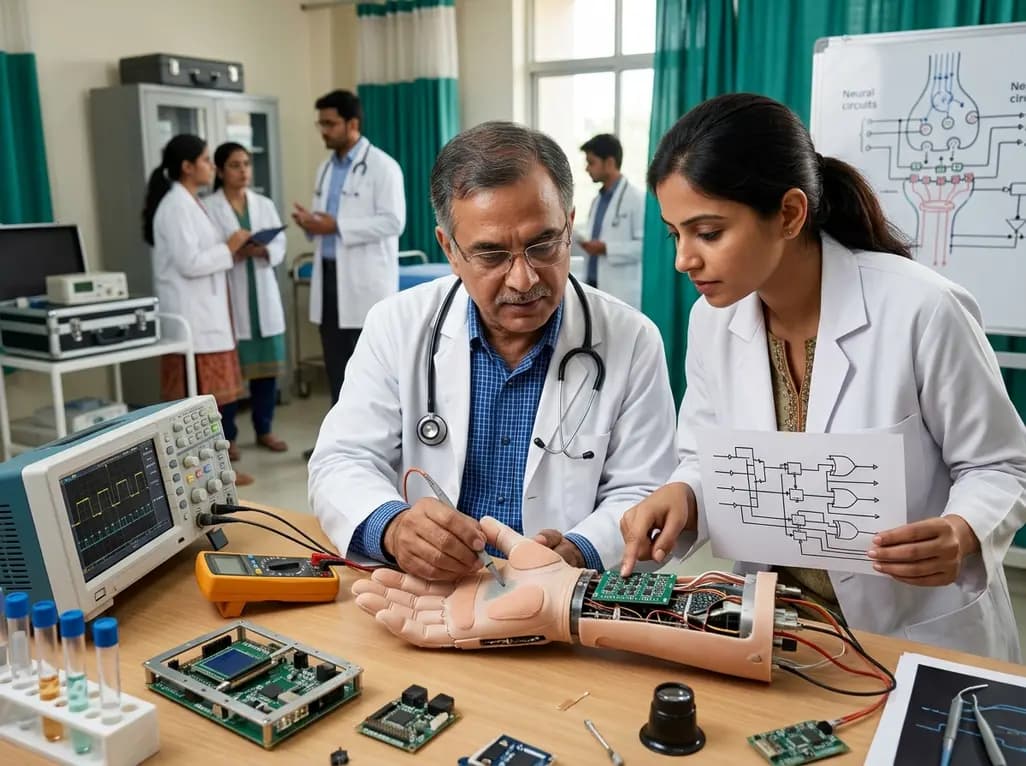
Researchers have engineered an artificial sensory-pain integrated receptor using a multi-threshold organic synaptic transistor. The system distinguishes benign touch from noxious stimuli, enabling safer, more responsive prosthetic limbs with built-in memory and simplified hardware architecture.
Today
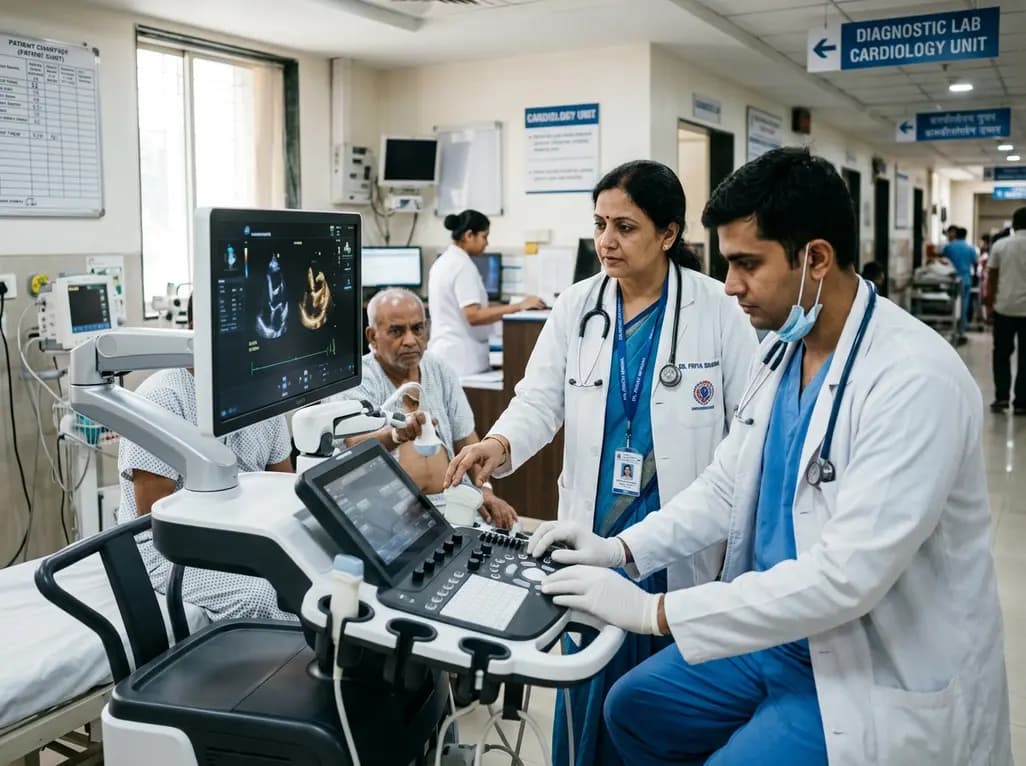
Medical robotics is transitioning beyond operative suites into diagnostics, cardiology, and endocrinology. Explore how innovations in tele-robotics, AI integration, and nanomedicine are overcoming geographical barriers and transforming precision healthcare delivery across India's evolving disease landscape.
Today
