.webp&w=384&q=75)

Loading, please wait...
Loading, please wait...

Predicting outcomes after a stroke remains a complex clinical challenge. Consequently, clinicians require precise tools to guide family counseling and resource allocation. This meta-analysis evaluates the effectiveness of stroke mortality prediction models powered by machine learning (ML). The study analyzed data from 68 studies, representing the most comprehensive review of its kind to date.
The researchers observed that ML models demonstrate significant accuracy in forecasting mortality. For out-of-hospital mortality, the models achieved a robust pooled C-index of 0.847 in external validation sets. Furthermore, random forest algorithms exhibited superior stability over time. In contrast, traditional logistic regression models showed a gradual decline in predictive power as the follow-up period extended. Therefore, modern computational methods may offer more reliable long-term prognostic insights.
Identifying high-risk populations early allows for more intensive monitoring. This study highlights that age, NIHSS scores, and stroke-related complications are the most influential variables in these models. By integrating these factors, ML tools can serve as powerful auxiliary instruments for bedside decision-making. However, the researchers also noted substantial heterogeneity among the included studies. This variability suggests that clinicians must prioritize external validation before implementing these tools in diverse healthcare settings across India.
Despite these promising results, a relatively high risk of bias exists in many current publications. Thus, while ML is a feasible tool, it does not yet replace clinical judgment. Instead, doctors should view these models as complementary to traditional assessment methods. In conclusion, machine learning significantly improves our ability to predict stroke-related deaths, paving the way for more personalized patient care.
The meta-analysis revealed that random forest models maintained sustained predictive performance over long follow-up periods. Conversely, the accuracy of standard logistic regression models tended to decline over time.
The most frequently used variables for modeling include patient age, the National Institutes of Health Stroke Scale (NIHSS) score, and the presence of stroke-related complications. These factors remain the strongest indicators of poststroke mortality risk.
Disclaimer: This content is for informational and educational purposes only. It does not constitute professional medical advice, diagnosis, or treatment. Always seek the advice of your physician or other qualified health provider with any questions you may have regarding a medical condition. Refer to the latest local and national guidelines for clinical practice.
References

Read summarized clinical updates, watch expert medical content, and earn CME certifications right from your smartphone.
Open your smartphone camera to scan and install.





A meta-analysis of 68 studies confirms that machine learning models effectively predict poststroke in-hospital and out-of-hospital mortality risks....
6 months ago
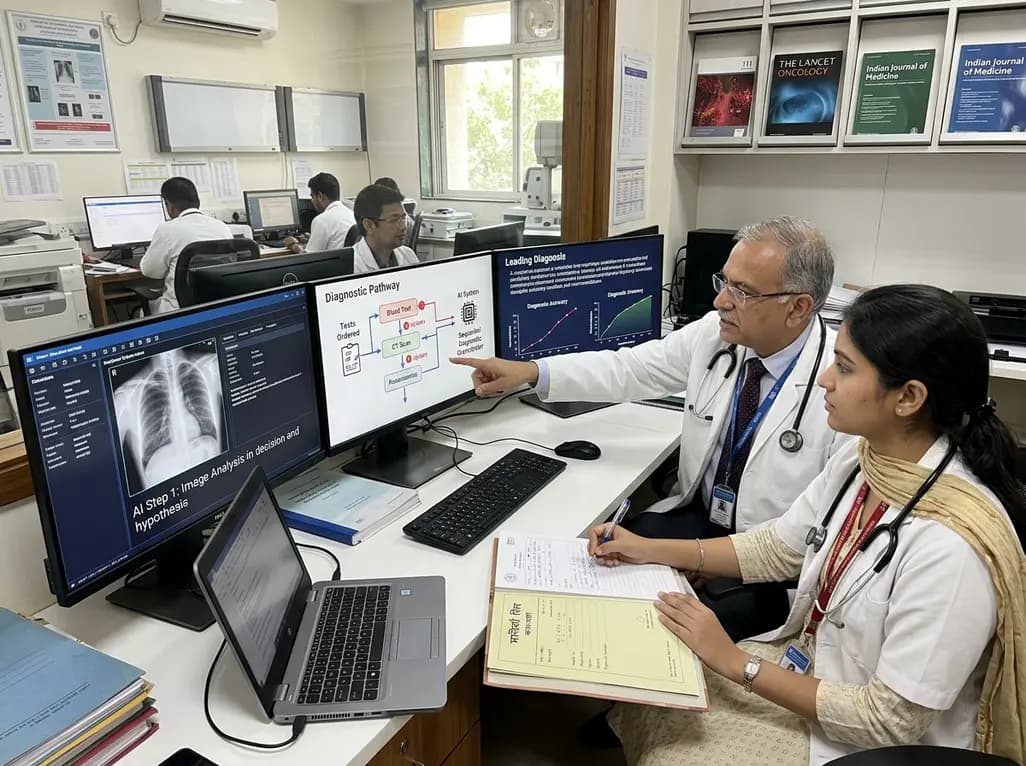
A breakthrough peer-reviewed study demonstrates that a sequential AI diagnosis system can mirror real-world clinical reasoning. By ordering stepwise tests and updating hypotheses dynamically, this multi-agent orchestrator achieved superior diagnostic accuracy while reducing investigative costs.
Today

A prenatal case highlights severe glutaric acidemia type II presenting as bilateral hyperechoic cystic kidneys at 18 weeks. Whole-exome sequencing revealed a novel homozygous ETFDH frameshift variant, demonstrating the power of rapid genetic testing in fetal renal anomalies.
Today

Review how tailored exercise programs benefit frail older patients with heart failure. Explore pathophysiological mechanisms, individualized training prescriptions, and strategies to overcome adherence barriers in clinical practice.
Yesterday

This comparative study evaluates posterior labral tears with and without glenohumeral instability, highlighting distinct demographic patterns, MRI underestimation in stable shoulders, and successful arthroscopic repair outcomes.
Yesterday

A clinical study demonstrates that early intervention with tocilizumab, either as monotherapy or bridged with corticosteroids, achieves significant proptosis reduction and resolves active inflammation in treatment-naive thyroid eye disease.
Yesterday
