.webp&w=384&q=75)

Loading, please wait...
Loading, please wait...
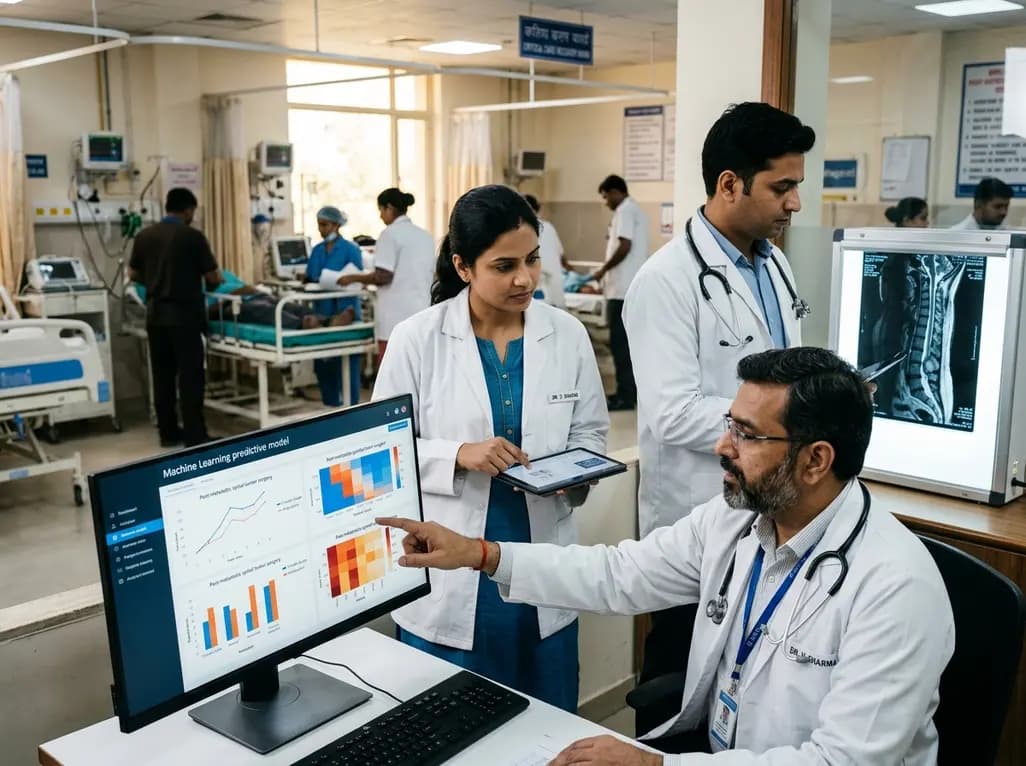
Spinal metastases represent a frequent and debilitating complication in advanced cancer, causing severe pain, mechanical instability, and progressive motor deficits. Consequently, oncologic spine surgeons increasingly perform metastatic spinal tumor surgery to restore mechanical stability, decompress neural elements, and preserve functional independence. However, traditional scoring algorithms such as the Tokuhashi and Tomita systems primarily estimate general survival rather than specific neurological recovery. Therefore, clinicians often struggle to predict whether a patient with significant paralysis will regain the capacity to walk after palliative decompression. Functional ambulation directly influences quality of life, performance status, and ongoing eligibility for systemic chemotherapy or radiation therapy. To resolve these prognostication challenges, modern clinical research harnesses computational artificial intelligence. Advanced machine learning models capture complex, non-linear relationships among heterogenous clinical variables that standard clinical scores consistently overlook. Consequently, surgeons can now utilize algorithmic decision aids to set realistic functional recovery goals, tailor aggressive rehabilitation, and counsel families more effectively before operating.
A multicenter investigation across thirty-eight institutions evaluated whether advanced machine learning algorithms could accurately predict one-month functional outcomes following spinal interventions. Specifically, investigators analyzed detailed clinical, biological, and operative records from 244 patients undergoing decompression and stabilization for metastatic spinal cord compression. The primary endpoint focused on functional ambulation, defined as Frankel classification grade D or E at one month postoperatively. Moreover, researchers utilized rigorous feature selection techniques, including the Boruta algorithm and variance inflation factor analysis, to eliminate collinear parameters and isolate true prognostic drivers. The study team compared four sophisticated supervised learning architectures: random forest, extreme gradient boosting (XGBoost), LightGBM, and CatBoost. Before surgical intervention, only 36.8% of patients maintained ambulatory status. However, surgical decompression dramatically improved mobility, increasing the ambulatory proportion to 63.1% at one month. Thus, the multicenter framework captured meaningful clinical trajectories and provided an objective basis for training algorithmic predictors across diverse surgical settings.
Across all evaluated computational models, machine learning demonstrated robust discrimination in assessing postoperative neurological outcomes. Specifically, the random forest classifier achieved the highest predictive performance, recording an impressive area under the receiver operating characteristic curve of 0.8516. Meanwhile, XGBoost followed closely with an area under the curve of 0.8351, while CatBoost delivered an area under the curve of 0.8331. LightGBM also demonstrated satisfactory prognostic capability, achieving an area under the curve of 0.8098. Furthermore, internal validation confirmed that these ensemble architectures maintained stability despite patient heterogeneity across contributing hospital centers. Tree-based ensemble methods successfully processed complex interactions between anatomical lesion levels, systemic tumor burdens, and baseline physiologic reserve. Consequently, these findings confirm that algorithmic models significantly outperform conventional clinical intuition. By providing reliable probability scores for postoperative ambulation, such computational tools empower surgical teams to identify patients who will derive the most profound functional benefit from invasive intervention.
To illuminate the inner workings of their algorithms, researchers employed SHapley Additive exPlanations analysis, which quantified the exact contribution of each clinical feature. Notably, preoperative neurological status, measured by baseline Frankel grade, emerged as the most critical determinant of postoperative ambulation. Furthermore, independent transfer ability prior to surgery provided substantial prognostic value, underscoring the vital role of overall baseline physical reserve. Systemic inflammatory markers also showed remarkable influence on neurological recovery. Elevated C-reactive protein and altered white blood cell-to-lymphocyte ratios correlated strongly with inferior neurological improvement, indicating that profound systemic inflammation impairs neural repair. Additionally, surgical timing played an indispensable role, demonstrating that prompt decompression prevents irreversible ischemic damage to compressed neural tissue. Therefore, surgeons must evaluate functional reserve and systemic biology alongside imaging. Addressing systemic inflammation and expediting surgical timing clearly maximize the likelihood of regaining independent ambulation.
In developing nations such as India, spine specialists and oncologists frequently encounter patients presenting with advanced spinal metastases and delayed neurological deficits. Consequently, machine learning models offer immense practical value by optimizing resource allocation and patient selection across tertiary cancer centers. Because advanced surgical reconstruction entails financial costs and perioperative risks, accurate recovery predictions help prevent non-beneficial aggressive procedures in frail individuals with negligible recovery potential. Conversely, identifying patients with high probabilities of regaining ambulation justifies urgent surgical intervention and multidisciplinary resource deployment. Furthermore, objective algorithmic estimates facilitate transparent, culturally sensitive communication with families regarding expected postoperative mobility. Moving forward, incorporating automated prognostic algorithms into electronic health records can streamline clinical workflows across surgical oncology departments. Ultimately, combining algorithmic precision with sound surgical judgment establishes a modern, personalized paradigm that protects patient dignity and optimizes functional survival.
The primary outcome was postoperative functional ambulation at one month, strictly defined as achieving Frankel classification grade D or grade E. Researchers evaluated 244 patients across 38 clinical centers to determine whether machine learning models could reliably predict this crucial mobility milestone after decompressive spinal metastasis surgery.
The random forest classifier demonstrated superior predictive capability, attaining the highest area under the receiver operating characteristic curve of 0.8516. Other gradient boosting models also performed reliably, including XGBoost with an area of 0.8351, CatBoost with 0.8331, and LightGBM with 0.8098, confirming ensemble learning efficacy.
Elevated inflammatory markers, including C-reactive protein and elevated white blood cell-to-lymphocyte ratios, indicate severe systemic inflammation, tumor cachexia, and compromised cellular healing. Consequently, these elevated biological indices correlate with reduced neural repair capacity, diminished physical resilience, and poorer overall functional ambulation following spinal decompression surgery.
Disclaimer: This content is for informational and educational purposes only... Refer to the latest local and national guidelines for clinical practice.
References
Maki S et al. Predicting Postoperative Neurological Outcomes in Metastatic Spinal Tumor Surgery Using Machine Learning. Spine (Phila Pa 1976). 2026 Jan 01. doi: 10.1097/BRS.0000000000005322. PMID: 40085125.
Karhade AV, Thio QCBS, Ogink PT, et al. Development of Machine Learning Algorithms for Prediction of 30-Day Mortality After Surgery for Spinal Metastasis. Neurosurgery. 2019;85(1):E83-E91.
Paul P, Ahmed AK, Bongers ME, et al. Artificial Intelligence Models for Predicting Outcomes in Spinal Metastasis: A Systematic Review and Meta-Analysis. J Clin Med. 2025;14(17):5885.

Read summarized clinical updates, watch expert medical content, and earn CME certifications right from your smartphone.
Open your smartphone camera to scan and install.





A multicenter study demonstrates that machine learning models effectively predict postoperative ambulation following metastatic spinal tumor surgery. Key determinants include baseline Frankel grade, transfer ability, inflammatory markers, and surgical timing, enhancing personalized spine oncology decisions.
last month

Novel diimide and hydrazone scaffolds, particularly compound #C4, synergistically reactivate latent HIV-1 when combined with JQ1 or PKC activators. Demonstrating donor-matched proviral transcription ex vivo and non-canonical signaling, these findings advance shock and kill strategies toward reservoir eradication.
Today

A cross-sectional study reveals that maternal RSV vaccination coverage reached only 43.7% in Argentina, with maternal vaccine knowledge being the sole independent predictor of uptake. Clinicians play a crucial role in eliminating informational and structural barriers to optimize infant health.
Today

Review how tailored exercise programs benefit frail older patients with heart failure. Explore pathophysiological mechanisms, individualized training prescriptions, and strategies to overcome adherence barriers in clinical practice.
Yesterday

This comparative study evaluates posterior labral tears with and without glenohumeral instability, highlighting distinct demographic patterns, MRI underestimation in stable shoulders, and successful arthroscopic repair outcomes.
Yesterday

A clinical study demonstrates that early intervention with tocilizumab, either as monotherapy or bridged with corticosteroids, achieves significant proptosis reduction and resolves active inflammation in treatment-naive thyroid eye disease.
Yesterday
