.webp&w=384&q=75)

Loading, please wait...
Loading, please wait...

Managing brain metastases represents a significant challenge in modern oncology, especially as systemic treatments improve and patients live longer. Currently, for large or symptomatic lesions, surgical resection followed by radiation therapy is the standard of care. This approach effectively alleviates mass effect and provides tissue for histological diagnosis. However, surgical resection alone does not provide durable local control. Consequently, clinicians often employ Gamma Knife radiosurgery (GKRS) to the remaining cavity to reduce the risk of recurrence. Despite these interventions, Gamma Knife local control prediction remains a complex task for multidisciplinary teams. The outcomes for post-resection cavities are notably more variable than those for intact, non-resected metastases. Therefore, there is an urgent clinical need for tools that can provide a quantitative risk stratification. In the Indian medical context, where patient volumes are high and specialized neuro-oncology resources may be concentrated in urban centers, such tools could optimize follow-up schedules and patient counseling. By moving beyond qualitative assessments, clinicians can embrace a more personalized approach to intracranial disease management. Recent research into computational intelligence suggests that routine clinical data hold untapped predictive potential.
Targeting a post-operative cavity with Gamma Knife radiosurgery presents unique technical hurdles compared to treating primary tumors. Specifically, the cavity volume is often dynamic and can change significantly in the weeks following surgery. Furthermore, the identification of the target volume is complicated by the presence of blood products, surgical debris, and post-operative inflammation. These factors make the definition of the target border somewhat subjective. Additionally, the risk of radiation-induced changes, such as necrosis, is a constant concern when delivering high-dose radiation to the brain. Notably, the goal of treatment is to maximize local control while minimizing neurotoxicity. While various guidelines suggest dose-volume parameters, they often fail to account for the unique biological characteristics of different tumor types. Moreover, patient-specific factors such as functional status and age play a critical role in how well the treatment is tolerated. Consequently, a static dosing protocol may not be ideal for every patient. This variability highlights why traditional statistical models often struggle to provide accurate individual forecasts. By utilizing machine learning, we can analyze the interaction between multiple variables simultaneously, offering a more nuanced view of the patient's prognosis.
In a pioneering proof-of-concept study, researchers led by Reyes JS investigated the utility of Gamma Knife local control prediction using advanced computational models. The study analyzed a robust cohort of 401 post-resection cavities treated at a single institution over a ten-year period. The primary objective was to determine if machine learning could outperform traditional prevalence-only baselines. Interestingly, the researchers compared a gradient boosting classifier with a feedforward neural network. The results were quite revealing. The gradient boosting model achieved a receiver operating characteristic area under the curve (ROC-AUC) of 0.735. In contrast, the prevalence baseline showed only chance-level discrimination with an ROC-AUC of 0.494. Furthermore, the neural network performed less effectively than the gradient boosting model, yielding an ROC-AUC of 0.672. This suggests that for structured medical datasets of this size, ensemble methods like gradient boosting may be more robust than complex deep learning architectures. The model also demonstrated acceptable calibration, which is essential for ensuring that predicted probabilities align with actual clinical outcomes. Therefore, this study provides strong evidence that machine learning can meaningfully stratify local control risk using data that is already collected during routine clinical practice.
The success of the gradient boosting model in this study relied on eight routine treatment-time features. These variables included the patient's age, sex, and pre-treatment Karnofsky Performance Status (KPS). Additionally, the model incorporated primary tumor histology, the number of metastases (single vs. multiple), the anatomical lobe, the eloquence of the brain structure, and the specific cavity volume. Notably, these are features that every neurosurgeon or oncologist in India and globally has access to during a standard consultation. For instance, high KPS scores usually correlate with better treatment tolerance, while specific histologies like melanoma or small-cell lung cancer exhibit different recurrence patterns. Furthermore, the volume of the cavity is a well-known driver of local failure. However, machine learning algorithms can identify non-linear relationships between these factors that human intuition might overlook. Specifically, the interplay between the eloquence of the location and the volume may dictate different risk profiles than volume alone. Consequently, by feeding these variables into a trained classifier, the team obtained a more accurate prediction of local control. This approach emphasizes that we do not necessarily need expensive genomic markers or complex radiomics to improve our prognostic accuracy today.
Integrating a Gamma Knife local control prediction model into multidisciplinary tumor boards could revolutionize clinical workflows. In India, where many centers manage a high throughput of patients, AI-driven decision-support systems can provide a standardized objective second opinion. For example, if the model identifies a patient as being at high risk for local recurrence at the 0.50 probability threshold, the team might opt for a more intensive imaging surveillance protocol. Conversely, for low-risk patients, the interval between scans might be safely extended, reducing the financial and psychological burden on the patient. Furthermore, this data-driven approach assists in shared decision-making, allowing clinicians to show patients quantitative estimates of their treatment success. Notably, the model's accuracy of 70.1% and sensitivity of 78.3% provide a solid foundation for risk stratification. While AI should never replace clinical judgment, it serves as a powerful adjunct that can highlight cases requiring extra attention. Additionally, the use of routine variables ensures that this technology is accessible even in settings with limited advanced diagnostic infrastructure. Therefore, the implementation of such models could lead to more equitable and efficient care across different tiers of the healthcare system.
While the findings of this proof-of-concept study are promising, several steps remain before widespread clinical adoption. Specifically, the retrospective nature of the study and its reliance on a single-center cohort mean that external validation is mandatory. Different centers may have varying surgical techniques or Gamma Knife planning styles, which could influence the model’s performance. Moreover, the study focused primarily on treatment-time variables, excluding longitudinal data that could further refine predictions. In the future, researchers hope to incorporate more detailed radiomic features or molecular markers to push the ROC-AUC even higher. However, the current model's reliance on simple, accessible data remains its greatest strength for immediate practical utility. Furthermore, prospective clinical trials are necessary to confirm if AI-guided management actually improves survival or quality of life. As the field of neuro-oncology continues to evolve, the integration of data science and clinical medicine will become increasingly seamless. Notably, the work by Reyes JS and colleagues marks a significant milestone in this journey. By proving that routine variables can predict local control, they have paved the way for more intelligent, personalized radiosurgery planning.
Post-resection cavities are dynamic targets compared to intact brain metastases. The cavity volume can fluctuate after surgery, and surgical debris often obscures the true tumor margins. These factors, combined with varying tumor histologies and patient functional statuses, make outcomes highly variable and difficult to predict using traditional methods alone.
Gradient boosting is an ensemble machine learning method that builds multiple simple models to improve accuracy. In this study, it outperformed neural networks because it is often more effective at handling structured, tabular clinical data with smaller sample sizes, whereas deep learning typically requires much larger datasets to achieve superior performance.
Yes, because the models use eight routine clinical variables—such as age, KPS, and tumor volume—that are already collected in standard practice. This makes the tool highly accessible for Indian clinicians, though the specific software models currently require further external validation before they can be officially integrated into routine software.
Disclaimer: This content is for informational and educational purposes only. It does not constitute professional medical advice, diagnosis, or treatment. Always seek the advice of your physician or other qualified healthcare provider with any questions you may have regarding a medical condition. Refer to the latest local and national guidelines for clinical practice.
References
Reyes JS et al. Machine learning prediction of local control after Gamma Knife radiosurgery to post-resection cavities from brain metastases: a proof-of-concept study. J Neurooncol. 2026 Jul 10. doi: 10.1007/s11060-026-05703-3. PMID: 42430090.
Lunsford LD et al. Stereotactic Radiosurgery for Patients with Brain Metastases. Progress in Neurological Surgery. 2019;34:108-115.
Soliman H et al. Stereotactic Radiosurgery for Postoperative Metastatic Brain Cavities. Journal of Clinical Oncology. 2017;35(20):2220-2225.

Read summarized clinical updates, watch expert medical content, and earn CME certifications right from your smartphone.
Open your smartphone camera to scan and install.





A new study evaluates machine learning models to predict local control after Gamma Knife radiosurgery for brain metastasis resection cavities, finding that gradient boosting classifiers outperform traditional and neural network models using routine clinical features available at the time of treatment.
3 months ago

A retrospective cohort study of 7,716 ICU patients from the MIMIC-IV database demonstrates that Gradient Boosting Decision Trees significantly outperform traditional SOFA scores in predicting in-hospital mortality among patients with sepsis and diabetes, with SHAP analysis providing clinical interpretability.
Today
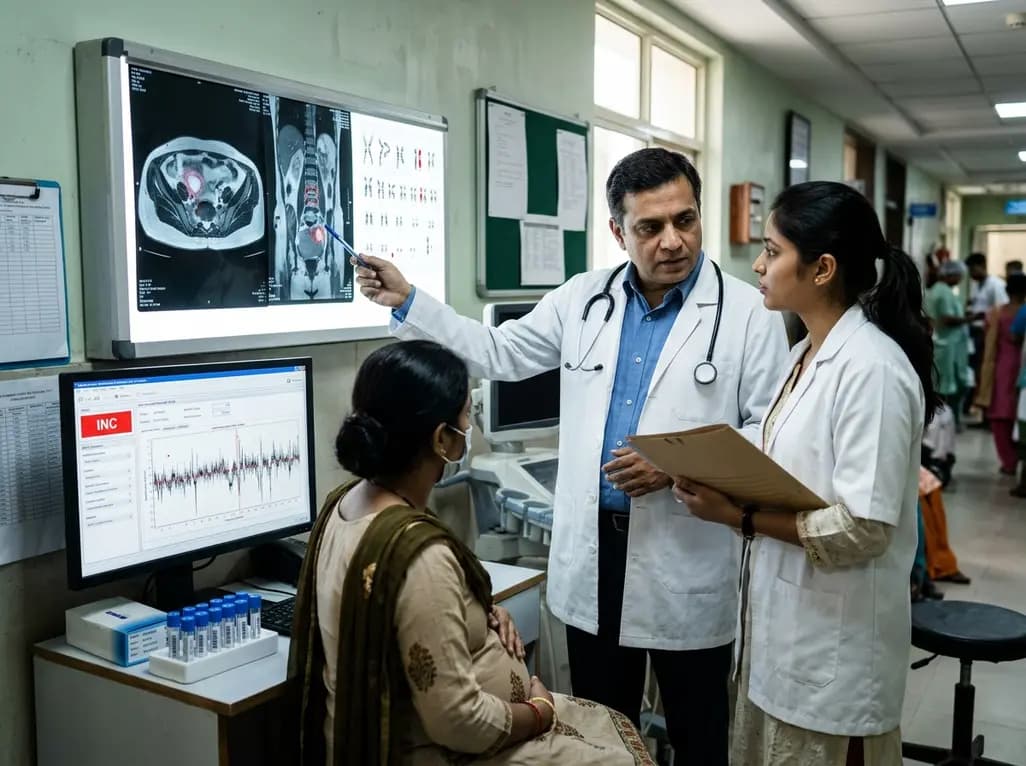
Occult maternal malignancy accounts for 3.82% of persistent unreportable NIPT results with genomic noise. Multiple chromosomal aberrations, notably on chromosome 18, warrant thorough oncological evaluation and whole-body MRI to ensure timely maternal diagnosis while preserving fetal care.
Today

This article reviews the forensic and clinical complexities of acute myocarditis arising on left ventricular hypertrophy in children, highlighting early diagnostic red flags and multidisciplinary postmortem autopsy protocols.
Today

This comparative study evaluates posterior labral tears with and without glenohumeral instability, highlighting distinct demographic patterns, MRI underestimation in stable shoulders, and successful arthroscopic repair outcomes.
Yesterday

A clinical study demonstrates that early intervention with tocilizumab, either as monotherapy or bridged with corticosteroids, achieves significant proptosis reduction and resolves active inflammation in treatment-naive thyroid eye disease.
Yesterday
