.webp&w=384&q=75)

Loading, please wait...
Loading, please wait...

Lung cancer remains India’s deadliest malignancy [1]. Currently, clinicians diagnose approximately 80% to 85% of cases at an advanced stage [1]. Indeed, early detection is challenging because traditional screening programs rely heavily on age and smoking history. Consequently, many high-risk individuals, such as non-smokers exposed to severe air pollution, miss the window for early intervention. However, a groundbreaking study in Cell presents a transformative approach to lung cancer risk prediction using a 14-protein blood signature.
In this landmark study, researchers analyzed blood plasma proteins from more than 48,000 UK Biobank participants. Specifically, they used machine learning algorithms to evaluate these samples alongside patient health records. As a result, the team identified 14 key proteins that predict lung cancer risk years before diagnosis. Additionally, the model incorporates age, chronic lung disease, and smoking history for more accurate prediction.
To validate their findings, researchers tested this model across eight international cohorts containing over 2,000 lung cancer cases. Interestingly, both smokers and non-smokers exposed to particulate air pollution showed elevated levels of this protein signature. Therefore, this test holds profound implications for India [1]. Currently, escalating air pollution represents a major public health emergency [1]. Furthermore, biological analyses revealed that the protein signature does not actually originate from the tumor. Instead, it captures an altered inflammatory lung environment that precedes cancer development.
Currently, clinicians view this blood test as a risk-assessment tool rather than a definitive screening test [1]. Thus, individuals flagged as high-risk can undergo targeted screening, such as low-dose CT scans, much earlier. Additionally, this signature could help identify candidates who might benefit from preventive anti-inflammatory therapies, such as IL-1β blockers. However, medical experts emphasize that these signatures require validation in Indian populations before routine clinical use [1].
Q1: Can this blood test replace traditional CT scans for lung cancer screening?
No, this test functions as a risk-assessment tool rather than a diagnostic screener [1]. Specifically, it identifies individuals at high risk of developing lung cancer in the future, who can then undergo definitive screening like CT scans [1].
Q2: Why is this prediction tool especially relevant for India?
Currently, India experiences a rapid rise in lung cancer cases, often detected at late stages [1]. Since the protein signature identifies risk linked to air pollution, it can help protect non-smokers exposed to high particulate matter [1].
Q3: Does the 14-protein signature come directly from the lung tumor?
No, researchers discovered that these proteins originate from lung epithelial and myeloid cells. Consequently, the signature reflects a pre-existing state of lung inflammation rather than a marker shed by an active tumor.
Disclaimer: This content is for informational and educational purposes only. It does not constitute medical advice or replace professional judgment. Refer to the latest local and national guidelines for clinical practice.
References

Read summarized clinical updates, watch expert medical content, and earn CME certifications right from your smartphone.
Open your smartphone camera to scan and install.





Researchers have identified a 14-protein blood signature that forecasts lung cancer risk years early, offering a powerful new tool for targeted prevention....
4 months ago

Novel glucose-responsive mPEG-PSA nanocarriers deliver insulin aspart on demand, achieving dual postprandial and basal glycemic control without hypoglycemia in diabetic models. This biomaterial breakthrough offers promising clinical implications for physiologic diabetes management.
Today
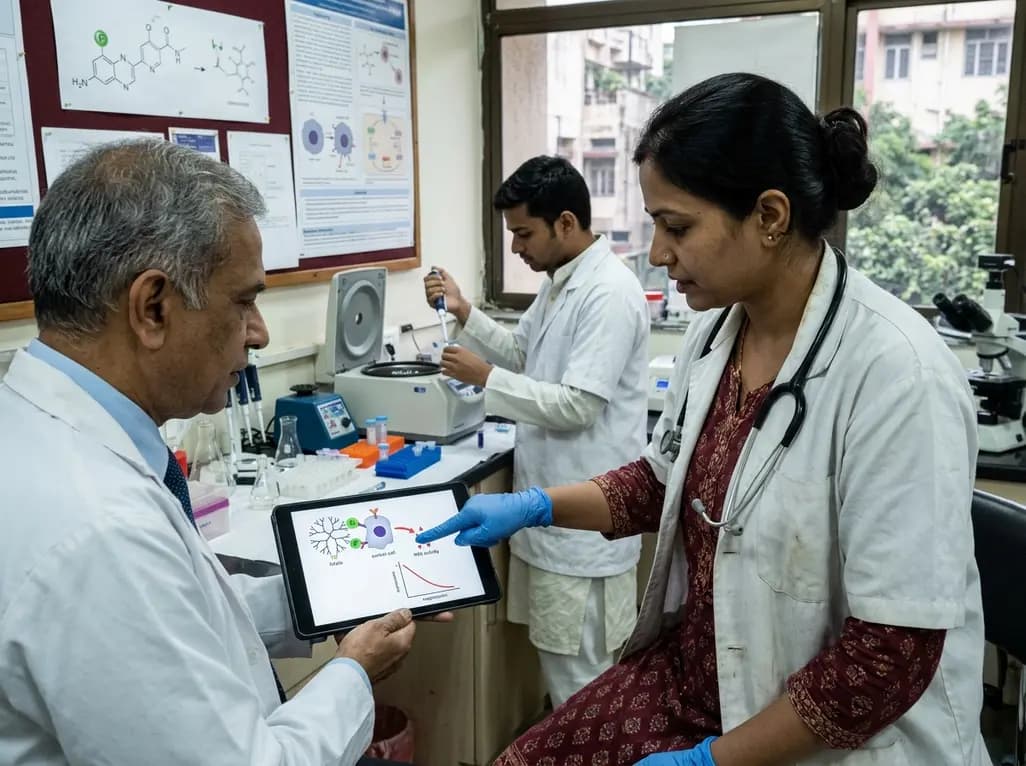
A novel folate-conjugated tecto-dendrimer nanoplatform successfully delivers siRNA to achieve targeted HK2 silencing, disrupting ovarian cancer glycolysis and suppressing lactate output.
Today
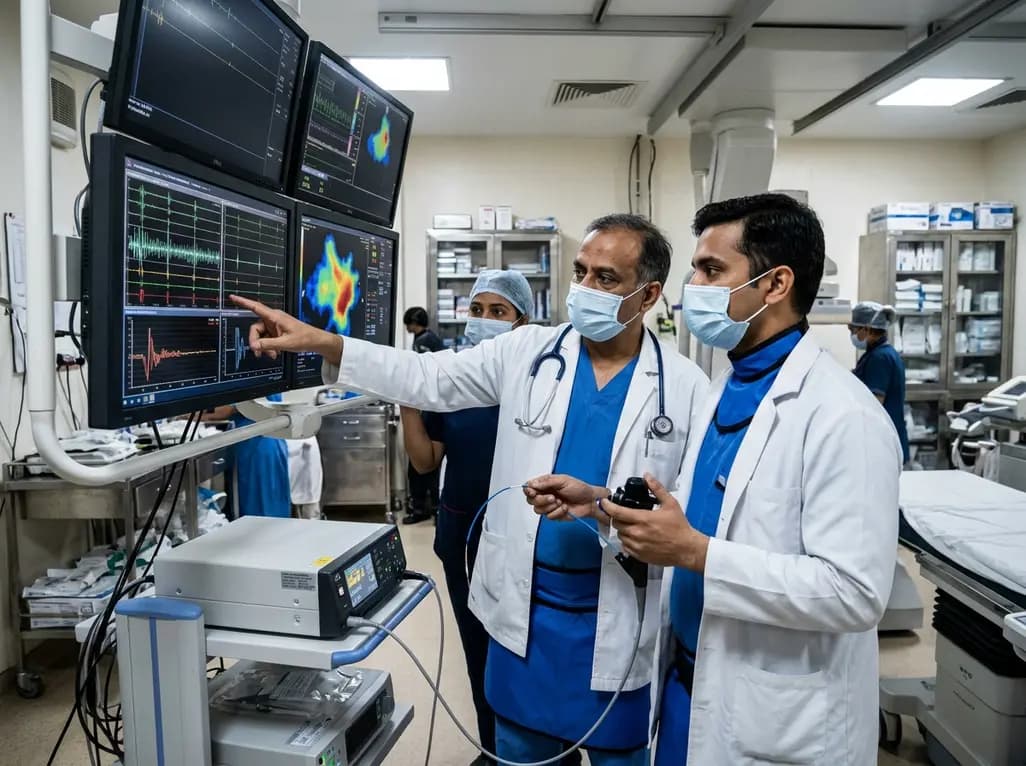
A comparative non-contact study reveals that high-power radiofrequency delivery with the QDOT MICRO catheter induces an artifactual contact force rise. Electrophysiologists must understand this power-dependent thermal and electrical phenomenon to avoid inadvertent catheter withdrawal and ineffective ablation.
Today

A novel proof-of-concept study presents a six-degree-of-freedom articulated manikin neck equipped with linear potentiometers. The system provides real-time kinematic motion feedback during cervical immobilisation, delivering sub-degree tracking accuracy to improve pre-hospital trauma training and patient safety.
Today

A retrospective comparative cohort study evaluated genitourinary safety in HFpEF between dapagliflozin and empagliflozin over six months. Rates of symptomatic UTI and asymptomatic bacteriuria showed no statistically significant differences, supporting comparable safety profiles across both SGLT2 inhibitors.
Today
