.webp&w=384&q=75)

Loading, please wait...
Loading, please wait...

Researchers recently investigated how various lung cancer mortality factors influence outcomes across 159 counties in Georgia, USA. This cross-sectional ecological study specifically assessed environmental, socioeconomic, and health-related determinants. Because spatial patterns often vary, the team focused on how gender and geography shape these associations.
The study utilized Geographically Weighted Regression to map complex spatial variations. Consequently, the findings revealed that radon serves as a more consistent predictor of mortality than particulate matter or ozone. Specifically, radon exposure linked significantly to higher mortality among males in urban and suburban sectors. In contrast, air pollutants like ozone showed significant effects primarily in specific rural counties. Therefore, environmental policies must account for these local variations in exposure risks.
Socioeconomic status also played a critical role in determining outcomes. For instance, higher household vulnerability increased mortality risks for both men and women in rural areas. However, higher minority populations and increased housing density correlated with lower risks for males in northern urban counties. Moreover, health factors like chronic disease prevalence and smoking remained the strongest predictors of elevated mortality rates. Researchers noted that chronic diseases showed more spatially consistent effects among females than males.
Furthermore, access to preventive care showed distinct gender patterns. For females, annual checkups emerged as a significant factor in reducing mortality, particularly in affluent urban regions. This suggests that the effectiveness of preventive care varies substantially based on socioeconomic context and gender. Because health factors exerted the most consistent effects across the state, localized public health strategies are vital for reducing the burden of disease.
Radon acts as a more consistent factor for elevated mortality rates across various counties, particularly among males in urban areas. While air pollutants like PM2.5 and ozone are significant, their impact often remains limited to specific rural regions rather than showing a statewide trend.
Risk factors differ significantly by gender. For example, regular annual checkups show a stronger association with reduced mortality in females. Conversely, certain socioeconomic and household vulnerabilities impact male mortality rates more profoundly in urban-suburban settings compared to rural ones.
Disclaimer: This content is for informational and educational purposes only. It does not constitute medical advice or a professional opinion. Readers should consult with a qualified healthcare professional for any medical concerns. Refer to the latest local and national guidelines for clinical practice.
References
1. Tu J et al. Spatial Variations and Gender Differences in the Associations Between Lung Cancer Mortality Rate and Contextual Factors: A County-Level Cross-Sectional Ecological Analysis. J Prev (2022). 2026 Feb 28. doi: 10.1007/s10935-026-00900-2. PMID: 41762417.
2. American Lung Association. State of Lung Cancer - Georgia Report 2025.
3. U.S. Environmental Protection Agency (EPA). Health Risk of Radon: Information for Healthcare Providers.

Read summarized clinical updates, watch expert medical content, and earn CME certifications right from your smartphone.
Open your smartphone camera to scan and install.





Research highlights how radon, socioeconomic vulnerability, and health factors drive gender-specific variations in lung cancer mortality across Georgia....
7 months ago

Explore vital recurrent stroke predictors in lacunar stroke patients managed with intensive blood pressure lowering. This analysis examines trial findings from SPS3 to uncover residual vascular risks, metabolic factors, and targeted secondary prevention strategies for high-risk neurological patients.
Today
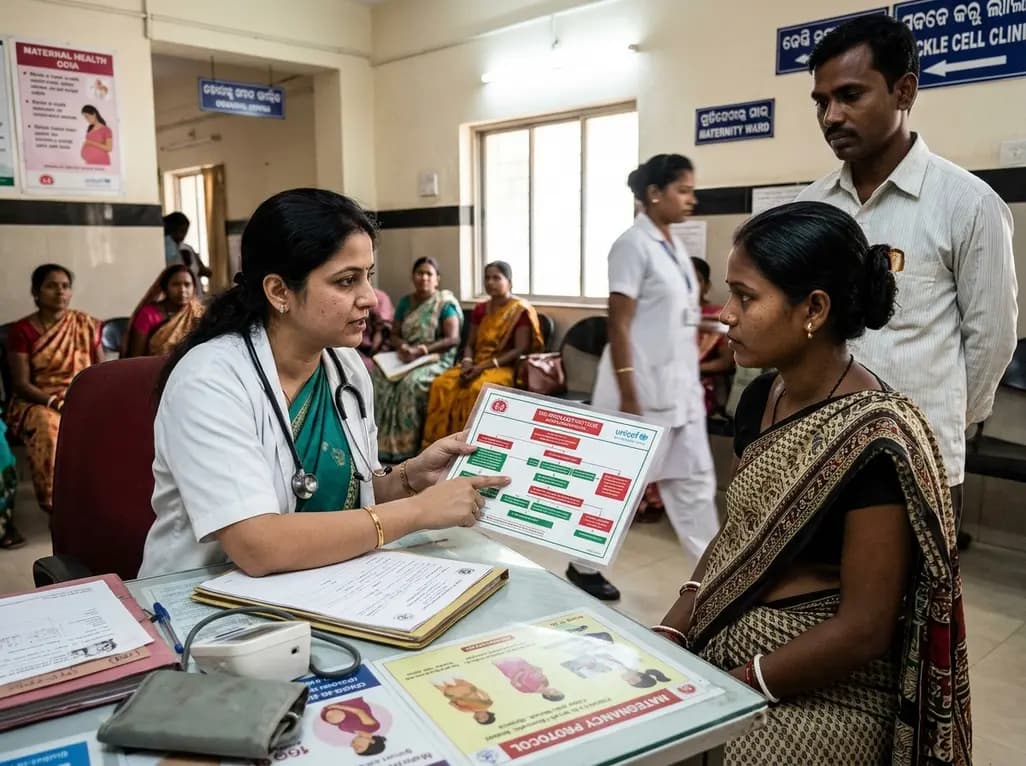
Odisha has established India's first state-level clinical protocol specifically tailored for pregnant women with sickle cell disease. Developed with NHM and UNICEF, the framework provides structured antenatal screening, crisis mitigation, standardized referral pathways, and specialized interdisciplinary care.
Today

The Directorate General of Health Services directs Indian states to halt the hazardous reuse and reprocessing of single-use medical devices. Discover regulatory implications under the Drugs and Cosmetics Act, critical infection risks, legal liabilities, and operational changes required across clinical specialties.
Today

Mitochondria-targeted nanoparticles self-assembled from EGCG and L-glutamic acid effectively restore mitochondrial homeostasis, suppress synovial inflammation, and attenuate chondrocyte senescence in osteoarthritis, offering a promising disease-modifying nanotherapy.
Today

India is advancing preventive healthcare by integrating genomics, artificial intelligence, and quantum technologies. With the SANGAM programme sequencing one million Indian genomes, clinicians can unlock personalized therapies, detect cardiometabolic risks early, and curb the burden of diabetes and heart disease.
Today
