.webp&w=384&q=75)

Loading, please wait...
Loading, please wait...
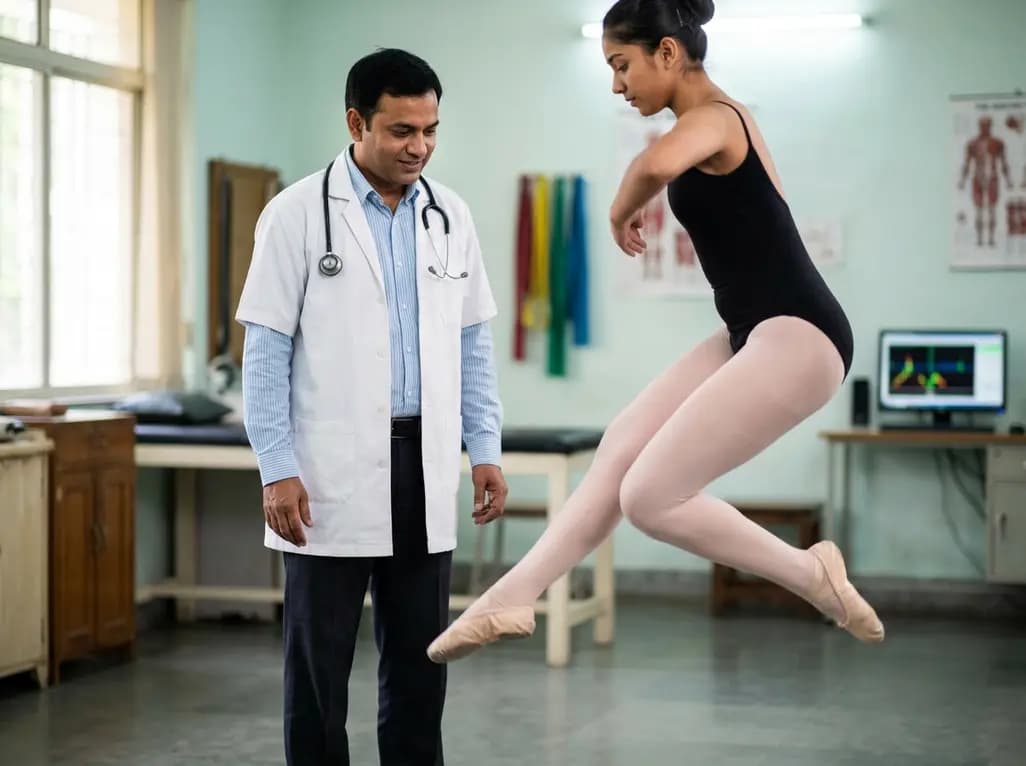
Understanding lower limb coordination variability is essential for optimizing performance and reducing injury risk in high-impact activities like ballet. A recent biomechanical study investigated how skill level and musical tempo influence inter-joint coordination during the Temps Levé Sauté. This fundamental jump requires precise timing and control. Consequently, researchers focused on hip-knee and knee-ankle relationships across propulsion, flight, and landing phases to identify patterns of motor control.
The study analyzed sixteen dancers at 80, 100, and 120 bpm. Interestingly, both skilled and less-skilled dancers showed increased variability at the slowest tempo of 80 bpm during the propulsion and landing phases. This suggests that maintaining control becomes more challenging when dancers must slow down their natural rhythm. However, during the flight phase, faster tempos actually led to higher variability. Therefore, extreme tempos likely place unique demands on a dancer's neuromotor adaptability.
Skilled dancers demonstrated significantly lower lower limb coordination variability during the landing phase compared to less-experienced peers. This refined control serves as a protective mechanism against impact-related injuries. Specifically, the interaction between proficiency and tempo highlights the need for tailored training strategies. Clinicians and trainers should emphasize phase-specific coordination control to help dancers adapt across various performance conditions. Furthermore, reducing variability during landing may lower the risk of chronic joint stress in amateur athletes.
Skilled dancers exhibit more consistent hip-knee coordination during the landing phase. This consistency likely helps in better shock absorption and stability, reducing the risk of musculoskeletal injuries compared to less-experienced dancers.
Slower tempos require longer periods of muscular tension and balance. Consequently, this increases the difficulty of maintaining steady inter-joint relationships during the transition from propulsion to landing.
Disclaimer: This content is for informational and educational purposes only. It does not constitute professional medical advice, diagnosis, or treatment. Always seek the advice of your physician or other qualified healthcare provider with any questions you may have regarding a medical condition. Refer to the latest local and national guidelines for clinical practice.
References
Park H et al. Lower Limb Coordination Variability in Temps Levé Sauté: Effects of Skill Level and Tempo. Percept Mot Skills. 2026 Jun 05. doi: 10.1177/00315125261456858. PMID: 42246185.
Hamill J, Palmer C, Van Emmerik RE. Coordinative variability and overuse injury. Sports Med Arthrosc Rehabil Ther Technol. 2012;4(1):45. doi: 10.1186/1758-2555-4-45.
Ghahramani M et al. An Analysis of Lower Limb Coordination Variability in Unilateral Tasks in Healthy Adults: A Possible Prognostic Tool. Frontiers in Bioengineering and Biotechnology. 2022. doi: 10.3389/fbioe.2022.885329.

Read summarized clinical updates, watch expert medical content, and earn CME certifications right from your smartphone.
Open your smartphone camera to scan and install.





A study on ballet jumps reveals how skill levels and musical tempos affect lower limb coordination variability, with implications for clinical injury preven...
4 months ago

A recent study demonstrates that spinal oxygen sensors do not require mitochondrial electron transport to trigger sympathetic excitation during acute hypoxia, revealing new insights into how mitochondrial oxidative stress modulates autonomic tone in cardiovascular and neurological diseases.
Today

Demanding exhaustive hormonal profiling can inadvertently discourage clinical studies involving females. Methodological standards must align with the specific scientific question to expand, not restrict, equitable evidence for women.
Today

The Directorate General of Health Services directs Indian states to halt the hazardous reuse and reprocessing of single-use medical devices. Discover regulatory implications under the Drugs and Cosmetics Act, critical infection risks, legal liabilities, and operational changes required across clinical specialties.
Today

A novel calcium polyphosphate coacervate enables injectable bone implants with in situ hierarchical porosity via phase separation and gas foaming, significantly enhancing cell proliferation, energy metabolism, and osteogenic differentiation for minimally invasive bone defect repair.
Today

Following regulatory scrutiny from FSSAI regarding promotional representations and lean muscle preservation claims, Dr. Reddy's Laboratories and Nestlé Health Science are currently reviewing the branding and marketing strategy for their joint nutritional supplement Celevida GLP+.
Today
