.webp&w=384&q=75)

Loading, please wait...
Loading, please wait...

Hospitalized patients often struggle with bowel cleansing before a colonoscopy. However, a new multicenter randomized trial offers a more effective solution. Researchers compared three different volumes of polyethylene glycol (PEG) in hospitalized adults. Specifically, they looked at very low-volume (1-liter), low-volume (2-liter), and high-volume (4-liter) regimens. The results demonstrate that 1L PEG-ascorbate bowel preparation significantly improves high-quality cleansing rates compared to traditional methods.
In the study, researchers randomly assigned 665 patients to different split-dose regimens. Although all groups achieved similar rates of adequate cleansing, the 1-liter group excelled in high-quality results. Specifically, high-quality overall cleansing occurred in 46.9% of the 1-liter group. In contrast, the 2-liter and 4-liter groups reached only 35.3% and 37.4%, respectively. Furthermore, the 1-liter regimen proved more effective for the right colon.
Patient preference also favored the lower volume. Despite more frequent vomiting and thirst, 84.2% of the 1-liter group expressed a willingness to repeat the prep. Consequently, clinicians should consider very low-volume PEG-ascorbate for hospitalized adults. This approach balances clinical efficacy with patient acceptance. Therefore, it may reduce the need for repeat procedures due to poor visualization. Importantly, the study excluded patients with active gastrointestinal bleeding or unstable conditions.
Yes, the 1L PEG-ascorbate regimen achieved similar rates of adequate bowel cleansing as the 4L regimen. However, it significantly outperformed the high-volume option in achieving high-quality cleansing, especially in the right colon.
The 1L PEG-ascorbate regimen was associated with more frequent vomiting and thirst compared to higher-volume options. Despite these side effects, patients reported a higher overall willingness to repeat the preparation due to its lower volume.
High-quality cleansing in the right colon is critical because this area is often the most difficult to clean. Better visualization improves the detection of flat adenomas and other lesions, leading to more accurate colonoscopy results.
Disclaimer: This content is for informational and educational purposes only. It does not constitute medical advice or establish a doctor-patient relationship. Professional medical guidance should always be sought for specific health concerns. Refer to the latest local and national guidelines for clinical practice.
References
Frazzoni L et al. Low-Volume Polyethylene Glycol for Bowel Preparation in Hospitalized Adults : A Multicenter Randomized Trial. Ann Intern Med. 2026 May 05. doi: 10.7326/ANNALS-25-05005. PMID: 42081822.
Machlab S et al. Real-world effectiveness and safety of 1L polyethylene glycol and ascorbic acid for bowel preparation in patients aged 80 years or older. Endosc Int Open. 2026; 14: a25259938. doi: 10.1055/a-2525-9938.
Park J et al. Updated bowel preparation regimens for colonoscopy: benefits and drawbacks. Clin Endosc. 2025 Dec 18. doi: 10.5946/ce.2025.001.

Read summarized clinical updates, watch expert medical content, and earn CME certifications right from your smartphone.
Open your smartphone camera to scan and install.





A multicenter trial reveals that 1L PEG-ascorbate provides superior high-quality bowel cleansing for hospitalized adults compared to traditional volumes....
5 months ago

Novel glucose-responsive mPEG-PSA nanocarriers deliver insulin aspart on demand, achieving dual postprandial and basal glycemic control without hypoglycemia in diabetic models. This biomaterial breakthrough offers promising clinical implications for physiologic diabetes management.
Today

A novel folate-conjugated tecto-dendrimer nanoplatform successfully delivers siRNA to achieve targeted HK2 silencing, disrupting ovarian cancer glycolysis and suppressing lactate output.
Today
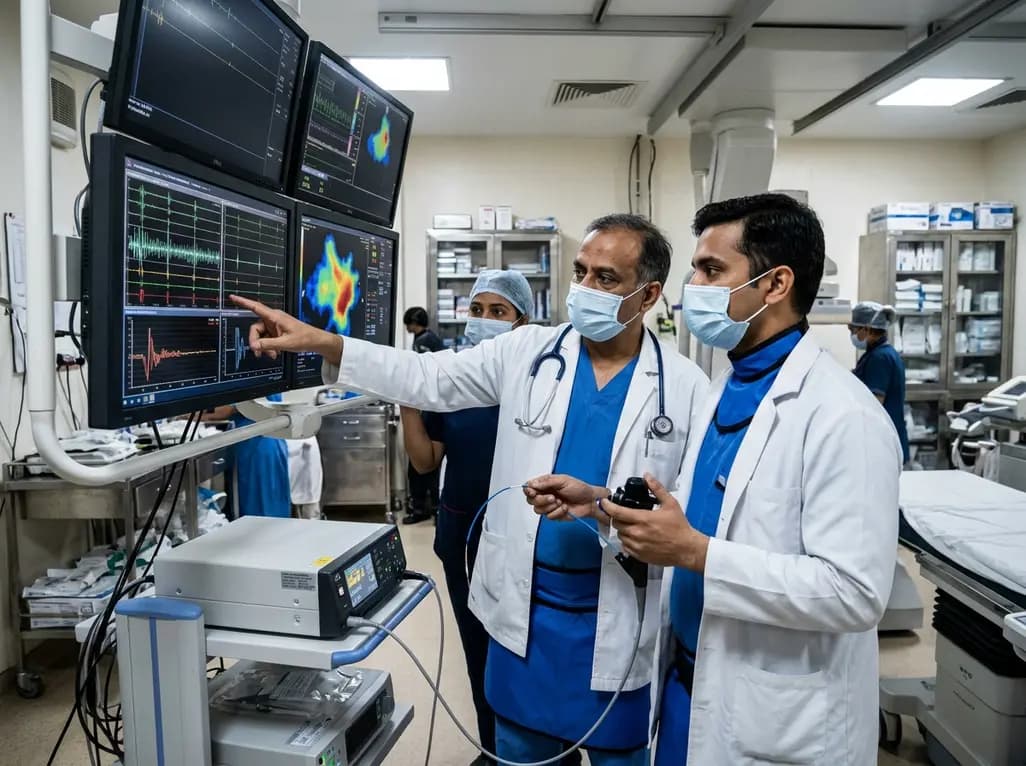
A comparative non-contact study reveals that high-power radiofrequency delivery with the QDOT MICRO catheter induces an artifactual contact force rise. Electrophysiologists must understand this power-dependent thermal and electrical phenomenon to avoid inadvertent catheter withdrawal and ineffective ablation.
Today
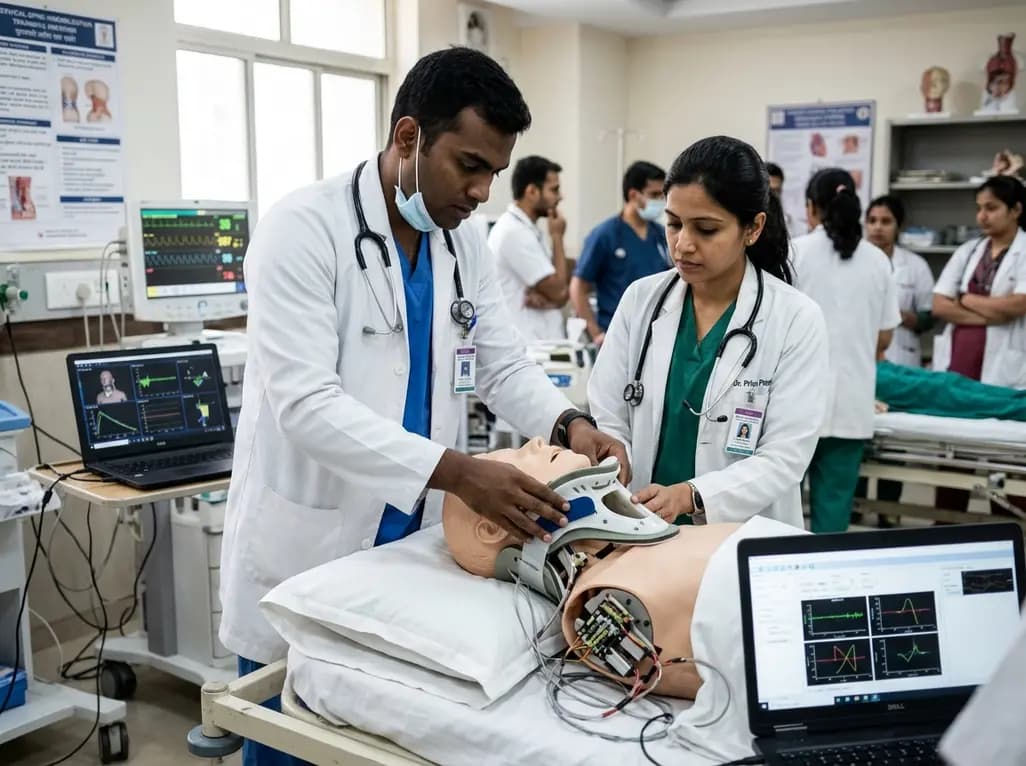
A novel proof-of-concept study presents a six-degree-of-freedom articulated manikin neck equipped with linear potentiometers. The system provides real-time kinematic motion feedback during cervical immobilisation, delivering sub-degree tracking accuracy to improve pre-hospital trauma training and patient safety.
Today

A retrospective comparative cohort study evaluated genitourinary safety in HFpEF between dapagliflozin and empagliflozin over six months. Rates of symptomatic UTI and asymptomatic bacteriuria showed no statistically significant differences, supporting comparable safety profiles across both SGLT2 inhibitors.
Today
