.webp&w=384&q=75)

Loading, please wait...
Loading, please wait...

Poor-grade aneurysmal subarachnoid hemorrhage (aSAH) represents one of the most demanding scenarios in neurosurgery and neurocritical care. While modern medical advances have improved survival for many, patients presenting with World Federation of Neurosurgical Societies (WFNS) grades IV and V still face daunting odds. Understanding poor-grade aSAH outcomes is therefore vital for clinicians aiming to refine management protocols and improve patient prognosis.
A significant multicenter study conducted across northern China recently provided new insights into these challenges. Researchers followed 1,339 patients for an average of 26 months. This extensive follow-up revealed a high long-term mortality rate of 51.1%. Furthermore, approximately 21.4% of the survivors remained dependent. These figures highlight the persistent severity of the condition, even with current intensive care standards.
The research identified several critical risk factors for mortality. Specifically, patients aged 65 years or older and those with a history of stroke faced higher risks. Additionally, a WFNS grade of V significantly worsened the prognosis. Conversely, the study noted that endovascular treatment served as a protective factor compared to traditional surgical methods. However, conservative management without active aneurysm repair led to the poorest results.
Functional recovery is just as important as survival in clinical practice. The study found that WFNS grade V and the presence of middle cerebral artery aneurysms were independent risk factors for dependency. Consequently, healthcare providers must consider these anatomical and clinical markers when counseling families about long-term expectations. Active intervention remains crucial, as the data strongly suggests that avoiding treatment significantly increases the likelihood of death or permanent disability.
Furthermore, while mortality has trended downward in recent years, the clinical burden remains substantial. Clinicians should prioritize early stabilization and definitive aneurysm treatment whenever possible. This proactive approach offers the best chance to mitigate the high risks associated with these severe neurological events. Therefore, a multidisciplinary strategy involving neurosurgeons, neurologists, and intensivists is essential for optimizing care.
The main risk factors for mortality include advanced age (65 years or older), a previous history of stroke, and a WFNS grade of V upon admission.
The study indicates that endovascular treatment may act as a protective factor compared to surgical treatment, although both are far superior to conservative management for improving long-term survival.
Disclaimer: This content is for informational and educational purposes only. It does not constitute professional medical advice, diagnosis, or treatment. Always seek the advice of your physician or other qualified healthcare provider with any questions you may have regarding a medical condition. Refer to the latest local and national guidelines for clinical practice.
References

Read summarized clinical updates, watch expert medical content, and earn CME certifications right from your smartphone.
Open your smartphone camera to scan and install.





A multicenter study identifies high long-term mortality (51.1%) in poor-grade aSAH patients, emphasizing the need for active treatment and risk factor manag...
8 months ago
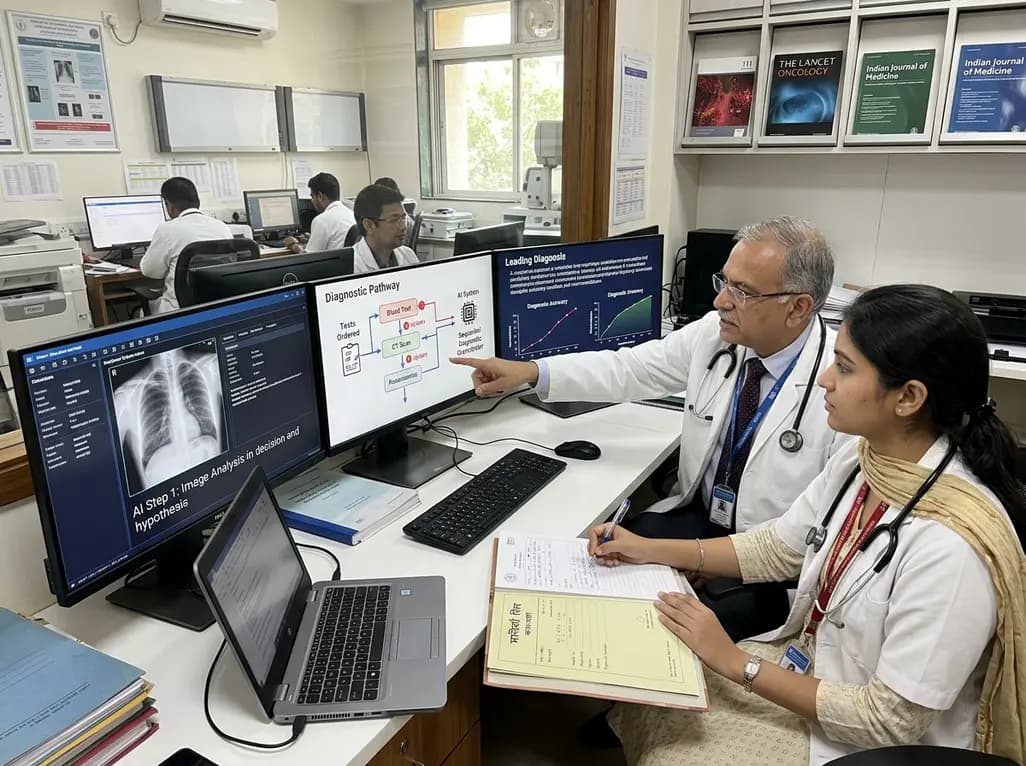
A breakthrough peer-reviewed study demonstrates that a sequential AI diagnosis system can mirror real-world clinical reasoning. By ordering stepwise tests and updating hypotheses dynamically, this multi-agent orchestrator achieved superior diagnostic accuracy while reducing investigative costs.
Today

A prenatal case highlights severe glutaric acidemia type II presenting as bilateral hyperechoic cystic kidneys at 18 weeks. Whole-exome sequencing revealed a novel homozygous ETFDH frameshift variant, demonstrating the power of rapid genetic testing in fetal renal anomalies.
Today

Review how tailored exercise programs benefit frail older patients with heart failure. Explore pathophysiological mechanisms, individualized training prescriptions, and strategies to overcome adherence barriers in clinical practice.
Yesterday

This comparative study evaluates posterior labral tears with and without glenohumeral instability, highlighting distinct demographic patterns, MRI underestimation in stable shoulders, and successful arthroscopic repair outcomes.
Yesterday

A clinical study demonstrates that early intervention with tocilizumab, either as monotherapy or bridged with corticosteroids, achieves significant proptosis reduction and resolves active inflammation in treatment-naive thyroid eye disease.
Yesterday
