.webp&w=384&q=75)

Loading, please wait...
Loading, please wait...
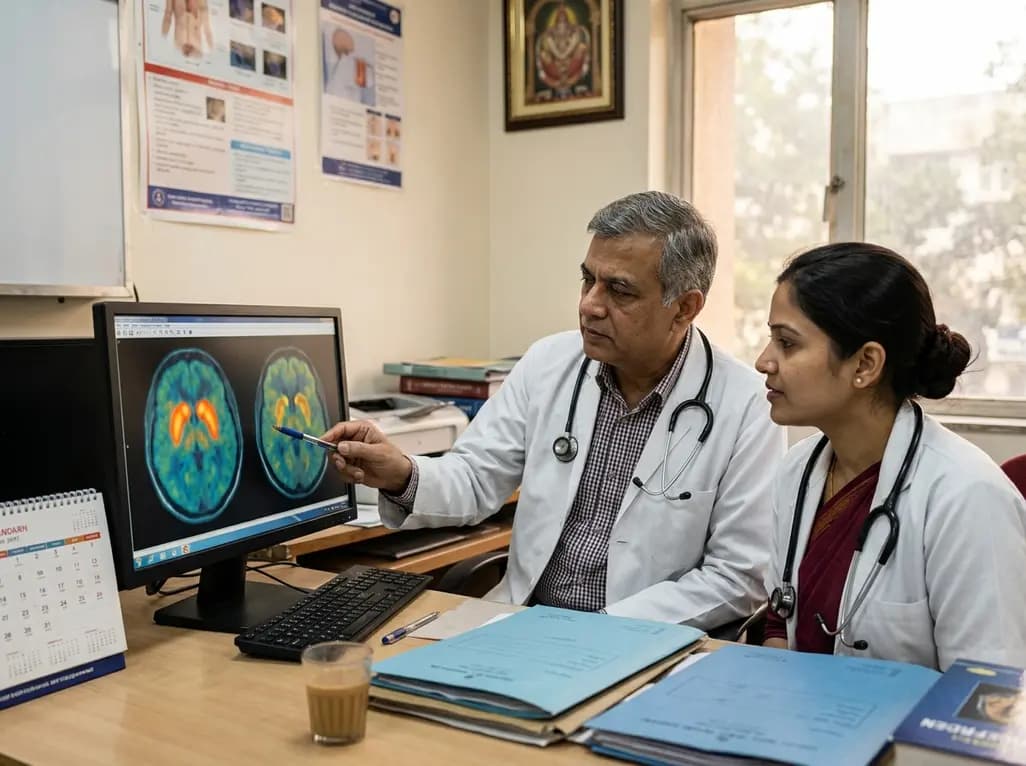
Clinicians worldwide continue to grapple with the complex, persistent neuropsychiatric symptoms of post-acute sequelae of COVID-19. Recently, a groundbreaking neuroimaging study has provided the strongest evidence yet linking these lingering issues to physical damage within the central nervous system. Specifically, researchers discovered that long COVID dopamine neurons may undergo significant injury during or after the acute infection phase. Consequently, this damage offers a biological explanation for debilitating symptoms such as profound fatigue, slowed physical movement, and persistent cognitive challenges. This landmark study, published in eBioMedicine, signals a major shift in treating long-lasting post-viral syndromes.
In this study, Canadian researchers at the Centre for Addiction and Mental Health utilized sophisticated imaging techniques. They performed positron emission tomography (PET) scans on twenty-four patients suffering from long COVID. Additionally, they evaluated forty-three healthy individuals to serve as a control group. The scientific team focused on measuring a well-established biological marker of dopamine neuron integrity. Specifically, they targeted vesicular monoamine transporter 2, which reflects the health of dopamine nerve terminals.
The PET scans revealed a stark contrast between the two cohorts. Compared to the healthy group, patients with long COVID demonstrated significantly lower levels of this critical imaging marker. Therefore, this finding indicates a marked reduction in dopamine nerve ending density across the striatum. The striatum is a vital deep-brain structure that coordinates motivation, physical movement, and cognitive processing. Historically, clinicians attributed long COVID symptoms purely to psychological distress or systemic fatigue. However, these objective brain imaging results prove that a localized neurological deficit exists. This structural change explains why patients struggle to regain their baseline cognitive and physical capacities.
Interestingly, the research team discovered that the structural damage was not uniform. Instead, the reduction in dopamine terminal density varied by specific anatomical regions within the striatum. These distinct regional deficits mapped directly onto the specific clinical presentations of the patients. For example, lower marker levels in the ventral striatum strongly correlated with a profound loss of motivation. This region is a central hub in the reward pathway of the human brain.
Furthermore, researchers observed that reduced markers in the dorsal putamen predicted slowed movement speed. This particular region normally regulates motor control and physical execution. Finally, a loss of dopamine markers in the caudate putamen correlated with memory difficulties and executive dysfunction. Thus, this spatial mapping elegantly explains why long COVID presents with such a heterogeneous mix of symptoms. Some patients present primarily with physical motor slowing, resembling mild parkinsonian features. Other patients suffer primarily from cognitive issues or severe apathy. By establishing these precise anatomical correlates, this study demystifies the diverse clinical manifestations of long COVID.
For several years, the scientific community focused almost exclusively on systemic inflammation and immune system dysregulation. While these factors certainly play a role, they do not fully explain the persistent nature of neurological deficits. This new study represents a monumental paradigm shift by showing direct injury to long COVID dopamine neurons. Consequently, this indicates that the condition is, at least in part, a primary disorder of the brain's dopaminergic system.
Furthermore, previous therapeutic clinical trials rarely targeted dopamine-producing pathways. Most investigations instead evaluated immunosuppressive drugs or anti-inflammatory agents with limited success. This novel research suggests that persistent brain inflammation may directly injure vulnerable dopamine terminals. Because dopamine regulates essential daily functions, protecting these neurons is absolutely critical. Clinicians must now view long COVID not just as a systemic inflammatory state, but as a distinct neurodegenerative-like process. This realization will likely alter how neurologists and psychiatrists approach the management of post-viral syndromes. It emphasizes the urgent need to look beyond general anti-inflammatory treatments and focus on targeted neuronal protection and restoration.
Fortunately, identifying dopamine system dysfunction opens immediate avenues for therapeutic intervention. Because we already possess numerous approved medications that enhance dopaminergic transmission, clinical translation could occur rapidly. Senior author Dr. Jeffrey Meyer suggested that repurposing existing medications could be a highly promising strategy. For instance, clinicians might consider using dopamine precursors like levodopa to directly replenish neurotransmitter levels.
Additionally, clinicians already widely utilize these medications to manage Parkinson's disease. Therefore, healthcare providers exceptionally well understand their safety profiles and dosing regimens. By leveraging this established pharmacological knowledge, researchers can bypass early-stage safety trials and initiate efficacy studies. Indeed, researchers are already planning clinical trials to test these dopaminergic agents in long COVID cohorts. If these trials prove successful, they will provide clinicians with concrete, evidence-based tools to combat brain fog and motor slowing. Ultimately, this pharmacological approach could restore quality of life to millions of suffering individuals worldwide.
This study has profound implications that extend far beyond long COVID. It strongly reinforces the hypothesis that viral pathogens can trigger lasting neurodegenerative changes. Historically, infections like the Spanish flu left patients with severe, chronic neurological syndromes. Now, we are witnessing a similar phenomenon on a global scale with the coronavirus. This research provides a clear biological framework that validates the subjective complaints of patients.
Moreover, the objective evidence of dopamine nerve terminal loss may reduce the clinical skepticism surrounding long COVID. For years, many patients felt dismissed by healthcare providers who could not find structural brain damage on standard MRIs. However, PET imaging has successfully revealed the microscopic injuries that standard scans miss. In the future, specialized neuroimaging might help clinicians stratify patients based on their specific dopaminergic deficits. Consequently, this stratification will allow for highly personalized treatment plans tailored to individual symptom profiles. Medical educators must integrate these neurobiological findings into clinical training curricula. By doing so, they will prepare the next generation of physicians to diagnose and manage complex post-infectious neurological diseases effectively.
Q1: How does long COVID affect dopamine-producing neurons in the brain?
Recent PET imaging studies show that long COVID patients have significantly lower levels of vesicular monoamine transporter 2, a key marker of dopamine neuron integrity, across the striatum. This reduction indicates a lower density of dopamine-releasing nerve terminals. Consequently, this structural damage impairs the brain's ability to transmit dopamine, directly resulting in common neurological symptoms like chronic fatigue, physical motor slowing, and persistent cognitive challenges.
Q2: Which brain regions are associated with specific long COVID symptoms?
The study revealed that dopamine nerve terminal loss in specific regions of the striatum correlates with distinct clinical symptoms. Specifically, a reduction in the ventral striatum is strongly linked to a profound loss of motivation. Furthermore, marker loss in the dorsal putamen correlates with slowed physical movement. Finally, damage within the caudate putamen directly correlates with memory difficulties and executive cognitive dysfunction.
Q3: What potential treatment strategies are researchers proposing based on these findings?
Because long COVID involves clear dopaminergic injury, researchers propose repurposing existing medications that enhance dopamine system function. These strategies include using dopamine precursors like levodopa to replenish neurotransmitter levels or employing inhibitors of dopamine metabolism to prolong dopamine activity. Clinicians hope that these established neurological medications, which have well-known safety profiles, can soon be validated in clinical trials to relieve persistent brain fog and motor slowing.
Disclaimer: This content is for informational and educational purposes only. It does not constitute medical advice or replace professional judgment. Refer to the latest local and national guidelines for clinical practice.
References

Read summarized clinical updates, watch expert medical content, and earn CME certifications right from your smartphone.
Open your smartphone camera to scan and install.





A landmark neuroimaging study reveals that long COVID symptoms such as brain fog, fatigue, and motor slowing are directly linked to dopamine system injury. Learn how advanced brain scans show reduced dopamine nerve terminal density and how this discovery opens the door to repurposing Parkinson's medications.
3 months ago

Review how tailored exercise programs benefit frail older patients with heart failure. Explore pathophysiological mechanisms, individualized training prescriptions, and strategies to overcome adherence barriers in clinical practice.
Today

Leucine Rich Bio has introduced South Asia's first comprehensive vaginal microbiome test, BugSpeaks. By profiling microbial dysbiosis, pathogens, and antimicrobial resistance, this next-generation diagnostic platform provides clinicians with deeper insights into recurrent infections, fertility, and reproductive health.
Today

In high-risk pulmonary embolism complicated by severe anemia and active uterine bleeding, systemic thrombolysis is contraindicated. Large-bore aspiration thrombectomy provides rapid hemodynamic rescue without fibrinolysis, supported by inferior vena cava filter placement and multidisciplinary critical care.
Today

This comparative study evaluates posterior labral tears with and without glenohumeral instability, highlighting distinct demographic patterns, MRI underestimation in stable shoulders, and successful arthroscopic repair outcomes.
Today

A clinical study demonstrates that early intervention with tocilizumab, either as monotherapy or bridged with corticosteroids, achieves significant proptosis reduction and resolves active inflammation in treatment-naive thyroid eye disease.
Today
