.webp&w=384&q=75)

Loading, please wait...
Loading, please wait...

Understanding the Liubao tea chemical composition is essential for evaluating its quality and potential health benefits. Recent research has utilized advanced ultra-performance liquid chromatography-tandem mass spectrometry (UPLC-MS/MS) to map the intricate biochemical transformations that occur during its production. Specifically, the study analyzed tea materials, Mao tea, and fermented tea stored for varying durations to identify shifts in metabolite profiles.
Researchers identified 189 differential metabolites across different processing stages. Flavonoids and phenolics were the primary compounds affected. Interestingly, as fermentation intensified, catechin derivatives and phenolic esters significantly decreased. Conversely, the concentrations of alkaloids, terpenoids, and amino acid derivatives increased. These transitions fundamentally alter the sensory attributes of the tea, resulting in superior aroma and taste scores for older, fermented batches.
The study also compared samples from 2010 and 2015. It found 99 differential metabolites in fermented tea, indicating that aging significantly modulates the final chemical signature. Twelve shared metabolites between both years emerged as potential biomarkers for aging. Furthermore, pathway enrichment revealed that flavonoid transformation and purine metabolism are the central biological processes driving this evolution. Consequently, these findings provide a scientific basis for optimizing the fermentation process and ensuring consistent quality.
Fermentation is the primary driver of chemical conversion in Liubao tea. It causes substantial shifts in flavonoids and phenolic profiles, which shape the tea's characteristic taste and aroma.
Aging further modulates the metabolite composition. Samples from 2010 scored higher in sensory evaluations than those from 2015, highlighting how prolonged storage refines the chemical profile.
Disclaimer: This content is for informational and educational purposes only. It does not constitute medical advice, diagnosis, or treatment. Always seek the advice of a qualified healthcare provider with any questions regarding a medical condition. Refer to the latest local and national guidelines for clinical practice.
References

Read summarized clinical updates, watch expert medical content, and earn CME certifications right from your smartphone.
Open your smartphone camera to scan and install.





A metabolomic study reveals how fermentation and aging transform Liubao tea, identifying 189 metabolites that define its unique chemical profile....
7 months ago
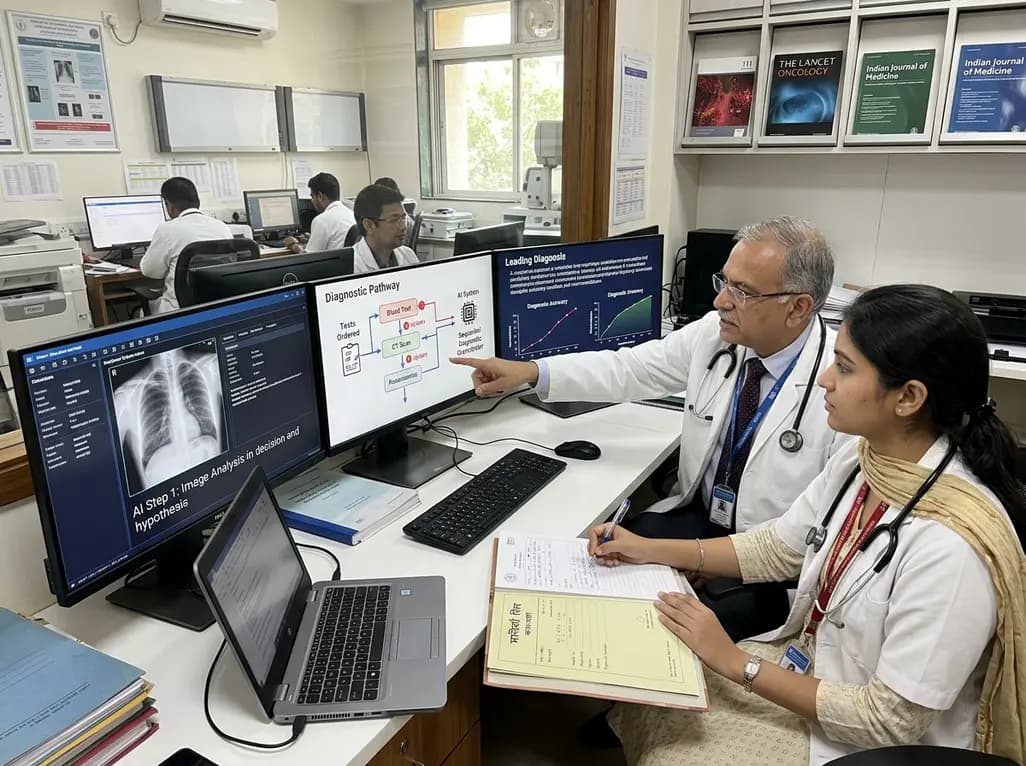
A breakthrough peer-reviewed study demonstrates that a sequential AI diagnosis system can mirror real-world clinical reasoning. By ordering stepwise tests and updating hypotheses dynamically, this multi-agent orchestrator achieved superior diagnostic accuracy while reducing investigative costs.
Today

A prenatal case highlights severe glutaric acidemia type II presenting as bilateral hyperechoic cystic kidneys at 18 weeks. Whole-exome sequencing revealed a novel homozygous ETFDH frameshift variant, demonstrating the power of rapid genetic testing in fetal renal anomalies.
Today

Review how tailored exercise programs benefit frail older patients with heart failure. Explore pathophysiological mechanisms, individualized training prescriptions, and strategies to overcome adherence barriers in clinical practice.
Yesterday

This comparative study evaluates posterior labral tears with and without glenohumeral instability, highlighting distinct demographic patterns, MRI underestimation in stable shoulders, and successful arthroscopic repair outcomes.
Yesterday

A clinical study demonstrates that early intervention with tocilizumab, either as monotherapy or bridged with corticosteroids, achieves significant proptosis reduction and resolves active inflammation in treatment-naive thyroid eye disease.
Yesterday
