.webp&w=384&q=75)

Loading, please wait...
Loading, please wait...

Understanding developmental language disorder literacy is essential for pediatricians and specialists managing neurodevelopmental delays in school-aged children. Developmental language disorder (DLD) affects approximately 7% of children, yet it often remains an under-recognized barrier to academic success. A recent longitudinal study has provided critical insights into how early oral language and cognitive variables predict reading and writing skills two years later.
Furthermore, the research highlights that children with DLD consistently struggle across all literacy domains. Specifically, these children show significant gaps in decoding, reading comprehension, spelling, and text generation compared to their typically developing peers. These findings emphasize that language difficulties do not resolve on their own but rather evolve into complex literacy challenges as children progress through primary school.
Researchers identified specific cognitive and linguistic markers that serve as longitudinal predictors of literacy outcomes. For instance, phonological awareness and expressive vocabulary were the primary predictors for decoding. Additionally, phonological awareness, combined with the ability to follow directions, significantly influenced reading comprehension levels.
Moreover, writing skills also rely heavily on these foundational language abilities. Specifically, nonword repetition and phonological awareness were found to predict spelling accuracy. Meanwhile, nonword repetition and word association skills played a crucial role in text generation. Consequently, clinicians should look for these specific deficits during early assessments to identify children at risk for long-term literacy failure.
The findings underscore the persistent nature of oral language difficulties. Therefore, interventions must extend well beyond the preschool years. Specifically, strengthening phonological awareness remains a vital goal for literacy development throughout the primary school years. Early identification and targeted support in oral language are essential to mitigate the academic impact of DLD.
Children with DLD often struggle with reading comprehension due to deficits in phonological awareness and their limited ability to follow complex verbal directions. These oral language gaps make it difficult for them to integrate information and derive meaning from written texts.
Writing abilities, such as spelling and text generation, are largely predicted by nonword repetition skills. Spelling is further influenced by phonological awareness, while text generation is linked to word association abilities.
Yes, phonological awareness remains a crucial predictor of literacy skills throughout late primary school. Consistent intervention to strengthen these skills is necessary for children with DLD to improve their decoding and spelling outcomes.
Disclaimer: This content is for informational and educational purposes only. It does not constitute medical advice or establish a doctor-patient relationship. Refer to the latest local and national guidelines for clinical practice.
References
1. Andreu L et al. Longitudinal determinants of reading and writing abilities in late primary school in children with developmental language disorder. Int J Speech Lang Pathol. 2026 Apr 28. doi: 10.1080/17549507.2026.2655872. PMID: 42047174.
2. Graham L et al. A systematic review of the academic achievement of primary and secondary school-aged students with developmental language disorder. PMC. 2021;9(2):120-135.
3. McGregor KK. Developmental Language Disorder: Its impact on literacy and beyond. Reading Rockets. 2023.

Read summarized clinical updates, watch expert medical content, and earn CME certifications right from your smartphone.
Open your smartphone camera to scan and install.





Longitudinal study shows that oral language skills significantly predict reading and writing outcomes in children with developmental language disorder (DLD)...
5 months ago

Explore vital recurrent stroke predictors in lacunar stroke patients managed with intensive blood pressure lowering. This analysis examines trial findings from SPS3 to uncover residual vascular risks, metabolic factors, and targeted secondary prevention strategies for high-risk neurological patients.
Today
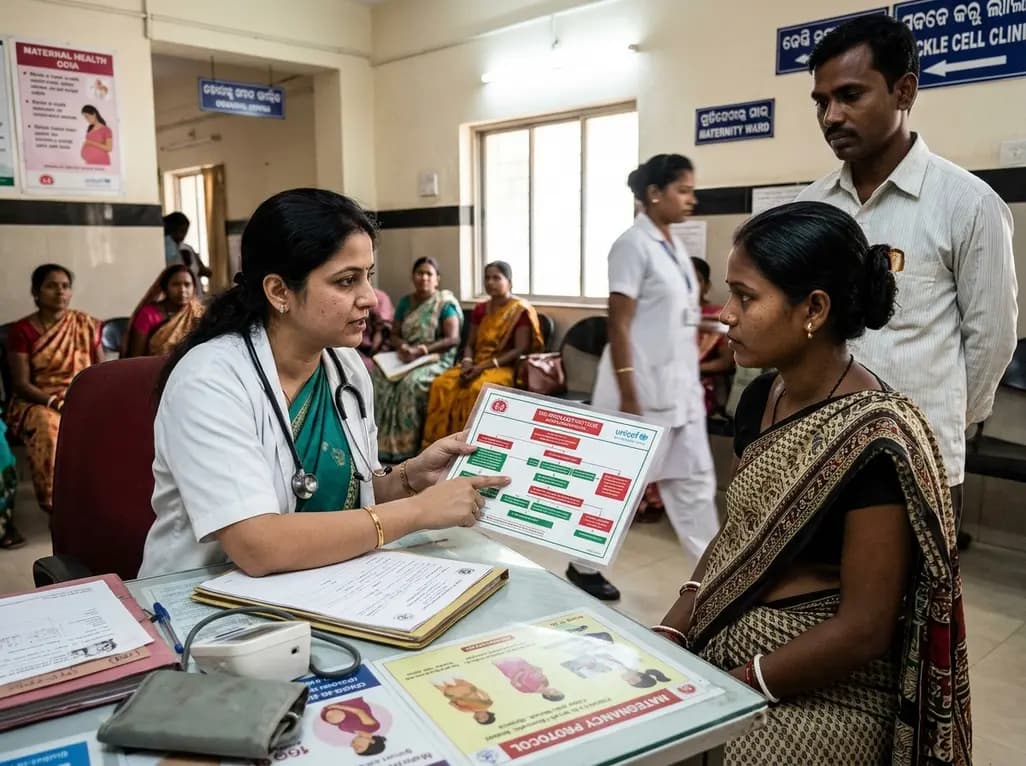
Odisha has established India's first state-level clinical protocol specifically tailored for pregnant women with sickle cell disease. Developed with NHM and UNICEF, the framework provides structured antenatal screening, crisis mitigation, standardized referral pathways, and specialized interdisciplinary care.
Today

The Directorate General of Health Services directs Indian states to halt the hazardous reuse and reprocessing of single-use medical devices. Discover regulatory implications under the Drugs and Cosmetics Act, critical infection risks, legal liabilities, and operational changes required across clinical specialties.
Today

A randomized controlled trial demonstrates that an eight-week dual-task training intervention significantly improves static and dynamic postural control over standard balance exercises in individuals with chronic ankle instability, addressing critical neurocognitive deficits during athletic and daily activities.
Today

India is advancing preventive healthcare by integrating genomics, artificial intelligence, and quantum technologies. With the SANGAM programme sequencing one million Indian genomes, clinicians can unlock personalized therapies, detect cardiometabolic risks early, and curb the burden of diabetes and heart disease.
Today
