.webp&w=384&q=75)

Loading, please wait...
Loading, please wait...
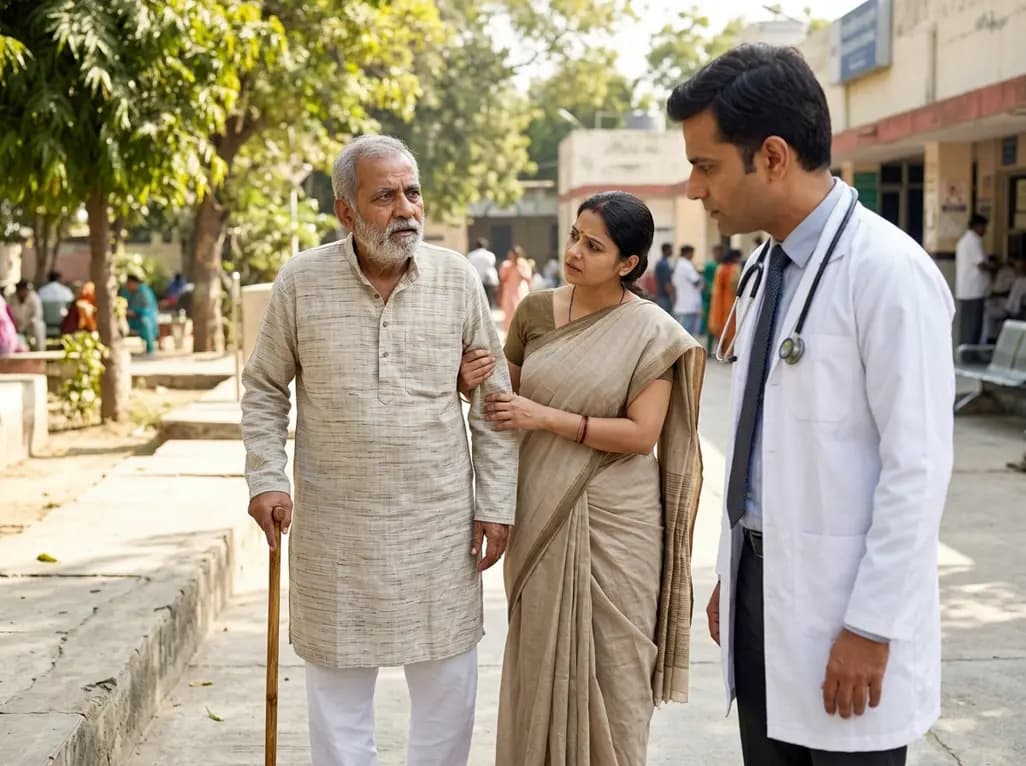
As the global population ages, maintaining emotional well-being and functional independence has become a central priority for geriatric medicine. Life satisfaction is a critical subjective indicator of health outcomes, reflecting how an individual perceives their quality of life across various domains. However, for those experiencing cognitive decline, achieving and maintaining high levels of satisfaction can be challenging. Recent research highlights that life satisfaction in MCI (Mild Cognitive Impairment) is influenced by complex interactions between physical movement and cognitive processing. While we often associate physical activity with improved mood, the specific nuances of how cognitive impairment modifies this relationship have remained under-explored until recently. Specifically, doctors must consider how a patient's ability to navigate their environment—known as life-space mobility—contributes to their overall mental state. Understanding these dynamics is essential for clinicians who aim to provide holistic care for the elderly, particularly in regions like India where the burden of neurodegenerative conditions is rapidly increasing. By identifying the factors that sustain happiness in the face of cognitive challenges, healthcare providers can better tailor their interventions to support long-term functional and emotional resilience in their aging patients.
To investigate these relationships, researchers utilized a massive dataset from the National Center for Geriatrics and Gerontology-Study of Geriatric Syndromes (NCGG-SGS). This cross-sectional study included 14,009 community-dwelling older adults with a mean age of approximately 71.9 years. The sheer scale of the study provides significant statistical power, allowing for a deep dive into the prevalence of MCI and its impact on daily living. Researchers assessed life satisfaction using the standardized Life Satisfaction Scale, while life-space mobility was quantified through the activity mobility index (AMI). The AMI is a robust measure that captures how frequently and how far individuals move within their environment, ranging from their own home to distant cities. The study employed multiple regression analyses to examine whether MCI status functioned as a moderator in the relationship between mobility and satisfaction. By adjusting for various potential covariates, such as age, gender, and underlying health conditions, the researchers aimed to isolate the specific interaction between cognitive health and physical navigation. This rigorous approach ensures that the findings are applicable to a broad spectrum of older adults living in community settings.
The study found that approximately 19.5% of the participants met the criteria for mild cognitive impairment, a figure that underscores the prevalence of early-stage cognitive issues in the community. Crucially, the results demonstrated a direct correlation between cognitive status and subjective well-being. Participants diagnosed with MCI reported significantly lower life satisfaction compared to those without cognitive deficits. This finding is particularly relevant for life satisfaction in MCI because it suggests that cognitive decline itself may act as a direct stressor or a barrier to achieving emotional fulfillment. In the clinical context, this means that even before the onset of overt dementia, patients are already experiencing a decline in their perceived quality of life. For practitioners in India, where mental health awareness in the elderly is still developing, these findings highlight the need for early screening and psychological support. Cognitive impairment often brings about feelings of frustration, social withdrawal, and a loss of confidence in one's abilities, all of which contribute to the observed decrease in satisfaction scores. Recognizing these early signs is the first step toward implementing effective geriatric interventions.
Life-space mobility represents more than just the physical act of walking; it encompasses an individual's engagement with their environment and social world. The study results confirmed that higher life-space mobility, as measured by the AMI, is strongly associated with higher life satisfaction across the entire cohort. When older adults are able to move freely from their bedrooms to the community and beyond, they gain access to social interactions, essential services, and recreational activities. This mobility fosters a sense of autonomy and purpose, which are foundational pillars of geriatric health. However, the study also revealed a significant interaction effect: the relationship between life-space mobility and life satisfaction was not uniform across all participants. While mobility generally boosts mood, the "benefit" or the strength of this association was notably weaker for those with MCI. This suggests that for a person with cognitive impairment, simply being mobile may not be enough to ensure high life satisfaction. The cognitive load required to navigate complex environments or the anxiety associated with potential disorientation might dampen the emotional rewards typically derived from being active in the community.
The core finding of this research—that MCI modifies the association between mobility and satisfaction—demands closer clinical scrutiny. Why does life satisfaction in MCI not respond as robustly to increased mobility? One possibility is that individuals with cognitive deficits face greater psychological barriers when venturing into larger life spaces. They may experience "wayfinding" difficulties or increased fear of falling, which turns a potentially enjoyable outing into a source of stress. Furthermore, the quality of social interactions during these excursions might differ; a person with MCI might struggle with complex social cues or conversations, leading to a sense of isolation even when physically present in a community space. Consequently, the traditional advice of "staying active" may need to be refined for this population. It is not just about the distance traveled, but the quality and safety of the experience. For healthcare providers, this means that interventions to improve mobility must be coupled with cognitive aids and social support to ensure that the patient actually derives emotional benefit from their movements. Addressing these nuances is vital for maximizing the therapeutic impact of geriatric rehabilitation programs.
For physicians and geriatricians in India, these findings offer a clear roadmap for improving patient outcomes. As the elderly population in India continues to grow, we must shift toward a more integrated model of care that addresses both physical and cognitive health simultaneously. First, clinicians should incorporate life-space mobility assessments into their routine geriatric evaluations, as these tools provide a more realistic view of a patient’s daily functioning than simple gait tests. Second, when managing patients with MCI, it is important to recognize that their lower life satisfaction may stem from a reduced ability to enjoy their physical environment. Therefore, interventions should focus on "safe mobility," such as providing structured community programs, simplifying navigation in the home, and encouraging the use of assistive technologies that reduce the cognitive burden of travel. Moreover, counseling for both the patient and their caregivers can help manage the emotional impact of cognitive decline. By fostering environments that are both physically accessible and cognitively supportive, we can help bridge the gap in life satisfaction for those living with MCI, ensuring they lead more fulfilling lives.
Life-space mobility refers to the spatial area in which a person moves in their daily life, ranging from their home to the wider community and beyond. It measures the frequency and independence of movement across different zones. Higher mobility is generally linked to better social engagement, physical health, and emotional well-being. It is a more comprehensive measure of functional independence than traditional tests that focus solely on walking speed or muscle strength.
While movement usually increases happiness, MCI can introduce anxiety, confusion, and fear of getting lost. For these individuals, navigating the community requires significant cognitive effort, which can be exhausting rather than rewarding. Additionally, they may experience social difficulties or a lack of confidence during their outings. Because of these challenges, the emotional "boost" that people typically get from being active and mobile is significantly diminished in those with early cognitive decline.
Doctors should focus on multidimensional interventions that combine physical activity with cognitive and social support. Instead of just recommending exercise, clinicians can suggest structured social activities that provide a safe and supportive environment for movement. Reducing environmental barriers at home and using simple navigation aids can also help. Most importantly, early screening for both cognitive health and mobility issues allows for personalized care plans that address the unique emotional needs of the elderly.
Disclaimer: This content is for informational and educational purposes only and does not constitute professional medical advice, diagnosis, or treatment. Always seek the advice of your physician or other qualified health provider with any questions you may have regarding a medical condition. Refer to the latest local and national guidelines for clinical practice.
References
Sakimoto F et al. Self-Reported Life Satisfaction and Life-Space Mobility in Older Adults With Mild Cognitive Impairment: A Cross-Sectional Study. J Am Med Dir Assoc. 2026 Jul 07. doi: undefined. PMID: 42413155.
Doi T, Tsutsumimoto K, Makino K, et al. Combined social frailty and life-space activities associated with risk of disability: a prospective cohort study. J Frailty Aging. 2024;13(2):184-188.
World Health Organization. Global action plan on the public health response to dementia 2017-2025. Geneva: World Health Organization; 2017.

Read summarized clinical updates, watch expert medical content, and earn CME certifications right from your smartphone.
Open your smartphone camera to scan and install.





A cross-sectional study of 14,009 older adults reveals that while life-space mobility typically boosts life satisfaction, this positive effect is significantly weakened in individuals with mild cognitive impairment (MCI). Doctors should focus on integrated cognitive and physical interventions.
3 months ago

A breakthrough study evaluated H5N1 transmission efficiency across mammalian isolates. Researchers discovered that human-derived D1.1 harboring the PB2 D701N mutation spread efficiently in ferrets, unlike strains carrying PB2 E627K. This finding highlights critical genetic markers for zoonotic surveillance.
Today

A comparative cohort study evaluates vNOTES vs TLH hysterectomy for benign conditions, demonstrating shorter operative duration, faster return to daily activities, and equivalent female sexual function scores without increased dyspareunia.
Today

Review how tailored exercise programs benefit frail older patients with heart failure. Explore pathophysiological mechanisms, individualized training prescriptions, and strategies to overcome adherence barriers in clinical practice.
Yesterday

This comparative study evaluates posterior labral tears with and without glenohumeral instability, highlighting distinct demographic patterns, MRI underestimation in stable shoulders, and successful arthroscopic repair outcomes.
Yesterday

A clinical study demonstrates that early intervention with tocilizumab, either as monotherapy or bridged with corticosteroids, achieves significant proptosis reduction and resolves active inflammation in treatment-naive thyroid eye disease.
Today
