.webp&w=384&q=75)

Loading, please wait...
Loading, please wait...

Preserving cellular integrity and fluid balance represents a fundamental challenge in geriatric medicine and preventive care. Clinicians increasingly look toward bioelectrical impedance analysis as a swift, non-invasive method to evaluate muscle quality and physiological reserves. Recent nationwide evidence reveals that leisure-time physical activity plays an essential role in optimizing these cellular parameters among middle-aged and older adults. Specifically, regular recreational exercise correlates with a higher phase angle and a reduced extracellular water-to-total body water ratio. Consequently, understanding how distinct activity domains influence bioelectrical properties can help physicians tailor effective exercise prescriptions and identify early cellular decline before overt functional impairment emerges.
Phase angle derived from bioelectrical impedance analysis serves as a robust proxy for cell membrane permeability, cellular mass, and metabolic vitality. In healthy tissue, intact cell membranes act as biological capacitors, delaying voltage and producing a higher phase angle. Conversely, advancing age, chronic low-grade inflammation, and muscular wasting attenuate membrane capacitance, yielding a diminished phase angle. Along with phase angle, the extracellular water-to-total body water ratio provides vital information about fluid compartmentalization. As skeletal muscle degrades, intracellular fluid volume contracts while extracellular edema and interstitial fluid expand. Therefore, an elevated ratio of extracellular to total body water often signals cellular damage, malnutrition, or incipient sarcopenia.
Furthermore, these bioelectrical alterations frequently precede measurable losses in gross muscle circumference or functional mobility. When physicians evaluate aging patients, monitoring these indices allows for earlier detection of frailty. Standard clinical evaluations often overlook subclinical cellular shifts. Fortunately, multi-frequency bioelectrical impedance devices make it simple to track these cellular parameters during outpatient assessments. By assessing both capacitive reactance and fluid distribution, clinicians can determine physiological age far more accurately than chronological age alone.
A rigorous cross-sectional study analyzed 5,211 community-dwelling adults aged 50 years and older using data from the Global Physical Activity Questionnaire. The investigators categorized physical exertion into leisure-time, occupational, and transport-related domains. Subsequently, they evaluated each domain against phase angle and extracellular fluid parameters measured through bioelectrical impedance analysis. The results demonstrated clear, dose-dependent associations between recreational exercise and improved cellular markers. Specifically, engaging in 150 to 299 minutes per week of moderate-to-vigorous leisure-time physical activity was associated with a 0.08-degree higher phase angle compared to inactivity.
Moreover, individuals who engaged in 300 minutes or more each week achieved a 0.13-degree higher phase angle. Parallel improvements emerged in body fluid distribution. Participants completing 150 to 299 minutes of weekly recreational activity exhibited a 0.11 percentage point lower extracellular water-to-total body water ratio. Those who exceeded 300 minutes per week achieved a 0.15 percentage point reduction. In contrast, transport-related movement yielded modest benefits only at high volumes exceeding 300 minutes weekly, where it reduced the water ratio by 0.07 percentage points. Thus, recreational pursuits showed the most consistent cellular advantages across all evaluated metrics.
Interestingly, occupational physical activity exhibited no significant favorable associations with either phase angle or fluid balance ratios. This divergence mirrors the well-documented physical activity paradox in cardiovascular and metabolic epidemiology. While recreational sports provide restorative intervals, workplace exertion frequently involves sustained static loading, heavy repetitive lifting, awkward postures, and inadequate recovery time. In addition, manual occupational tasks often generate chronic musculoskeletal strain and elevate systemic inflammation without promoting cardiorespiratory adaptation or muscular hypertrophy.
Consequently, clinicians cannot treat all daily movement as therapeutically equivalent. When evaluating an aging worker who engages in heavy manual labor, physicians must not assume optimal cellular health. Indeed, high occupational strain without sufficient restorative leisure exercise may accelerate cellular exhaustion and membrane degradation. Therefore, healthcare providers must inquire specifically about leisure-time physical activity rather than relying solely on overall daily step counts or job descriptions. Recognizing this crucial distinction allows primary care physicians to deliver realistic lifestyle guidance. Even physically exhausted laborers can benefit from targeted, low-impact recreational exercise and intentional mobility training.
Several interconnected biological mechanisms explain why recreational physical exertion enhances cellular bioelectrical properties. First, aerobic and resistance activities stimulate mitochondrial biogenesis and improve mitochondrial oxidative phosphorylation within skeletal myocytes. Enhanced energy production supports active sodium-potassium adenosine triphosphatase pumps across the sarcolemma. Consequently, cells maintain proper intracellular electrolyte concentrations and osmotic gradients, which directly preserves intracellular fluid volume and membrane polarization. Second, structured exercise suppresses circulating pro-inflammatory cytokines such as interleukin-6 and tumor necrosis factor-alpha.
Because chronic systemic inflammation increases capillary permeability and expands interstitial space, reducing inflammation preserves an optimal extracellular water-to-total body water ratio. Furthermore, mechanical loading from purposeful leisure pursuits triggers muscle protein synthesis via intracellular signalling pathways. This hypertrophy increases overall cell volume and capacitance, directly raising the measured phase angle. In addition, physical recreation enhances vascular endothelial function and tissue perfusion, ensuring prompt clearance of metabolic byproducts. Ultimately, these cellular adaptations work synergistically to resist age-related cellular apoptosis, fluid redistribution, and functional sarcopenia.
In clinical practice, incorporating bioelectrical markers into routine screening could significantly improve the prevention of sarcopenia and frailty. Modern geriatric medicine requires sensitive objective tools that identify vulnerability before catastrophic falls or disabling weakness take place. Because phase angle reflects both muscle mass and cellular quality, it serves as a reliable prognostic marker for clinical outcomes. Clinicians can utilize multi-frequency impedance analyzers during routine annual check-ups to track directional trends in cellular health.
Additionally, tracking the extracellular water-to-total body water ratio helps physicians identify occult fluid retention or subclinical cellular wasting. When a patient exhibits a declining phase angle alongside an increasing extracellular water proportion, clinicians should promptly initiate tailored exercise rehabilitation. Rather than recommending vague increases in general movement, practitioners should prescribe structured moderate-to-vigorous leisure-time physical activity. Moreover, combining this objective bioelectrical data with standard functional assessments, such as gait speed and handgrip strength, creates an exceptionally robust geriatric assessment framework. Consequently, healthcare providers can intervene proactively, arresting frailty trajectories and preserving functional independence for their aging patients.
To translate these findings into effective care, physicians should prescribe at least 150 to 300 minutes of moderate-to-vigorous leisure-time physical activity weekly. Suitable recreational activities include brisk walking, cycling, lap swimming, recreational badminton, and resistance training. Clinicians must advise patients to divide this time across multiple days to prevent excessive fatigue and optimize cellular recovery. Furthermore, incorporating progressive resistance exercises twice weekly promotes myocyte hypertrophy, which directly expands intracellular fluid and elevates phase angle. Providers should emphasize that incidental workplace stress cannot replace joyful, structured recreation.
Phase angle reflects cell membrane integrity by measuring electrical reactance and resistance when a mild alternating current passes through tissues. Intact cell membranes behave as electrical capacitors, momentarily delaying current flow and creating a higher phase angle. When cells suffer injury, malnutrition, or age-related degeneration, membrane permeability increases and capacitance falls. Therefore, a higher phase angle signifies robust cell membranes, abundant cellular mass, and superior metabolic health in aging adults.
Occupational physical activity often involves prolonged static postures, heavy lifting without adequate rest, and repetitive biomechanical strain. These conditions promote systemic inflammation, oxidative stress, and muscular fatigue rather than cardiorespiratory fitness or cellular remodeling. In contrast, leisure-time exercise provides controlled cardiovascular loading, tailored intensity, and restorative recovery periods. Consequently, recreational exercise stimulates positive cellular adaptations and optimizes fluid distribution, whereas workplace physical strain fails to produce comparable cellular benefits.
Clinicians can integrate bioelectrical impedance analysis during outpatient geriatric evaluations and annual preventive health check-ups. Practitioners should measure phase angle and the extracellular water-to-total body water ratio to screen for subclinical muscle wasting, inflammation, and cellular dehydration. When bioelectrical parameters decline, physicians can prescribe targeted leisure-time physical activity and nutritional support. Tracking longitudinal changes over subsequent visits allows clinicians to evaluate exercise efficacy and detect early functional decline.
Disclaimer: This content is for informational and educational purposes only. It is not intended to substitute for professional medical advice, diagnosis, or treatment. Refer to the latest local and national guidelines for clinical practice.
References

Read summarized clinical updates, watch expert medical content, and earn CME certifications right from your smartphone.
Open your smartphone camera to scan and install.





A nationwide study reveals that leisure-time physical activity enhances phase angle and optimizes the extracellular water-to-total body water ratio in older adults, whereas occupational activity shows no benefit. These bioelectrical markers offer crucial insights for sarcopenia screening and geriatric care.
Today
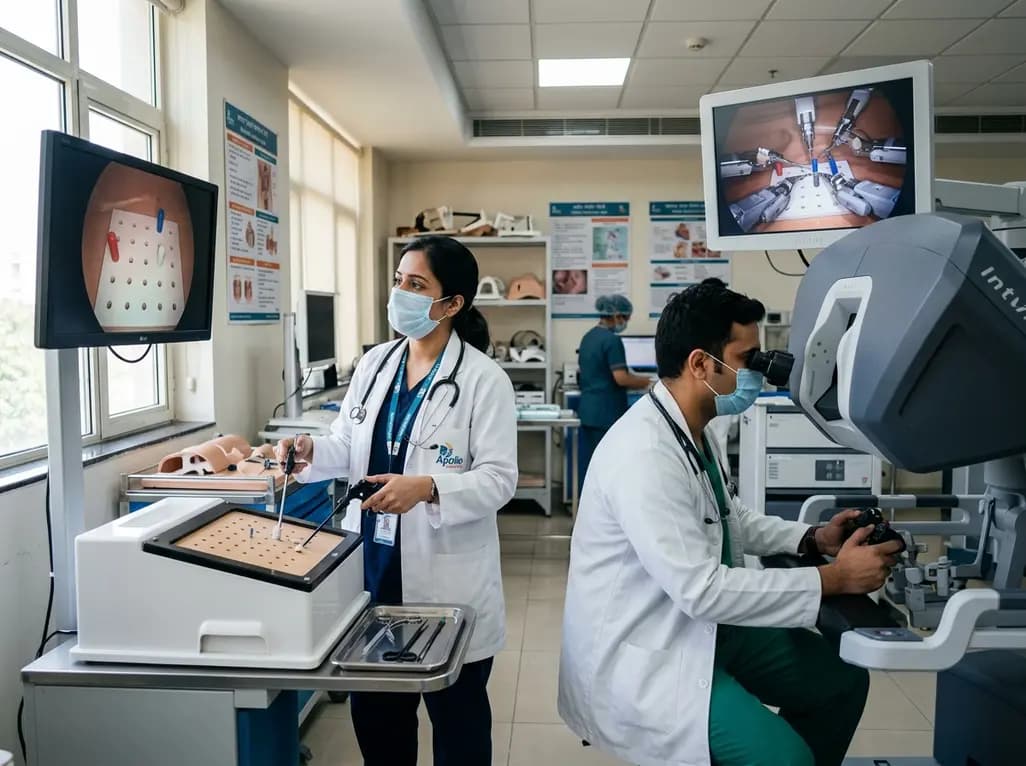
A randomized crossover study demonstrates that conventional and robotic laparoscopy require distinct neuropsychological and psychomotor skills. While trainees master conventional laparoscopy faster, robotic proficiency demands individualized, adaptive curricula tailored to specific learner profiles.
Today
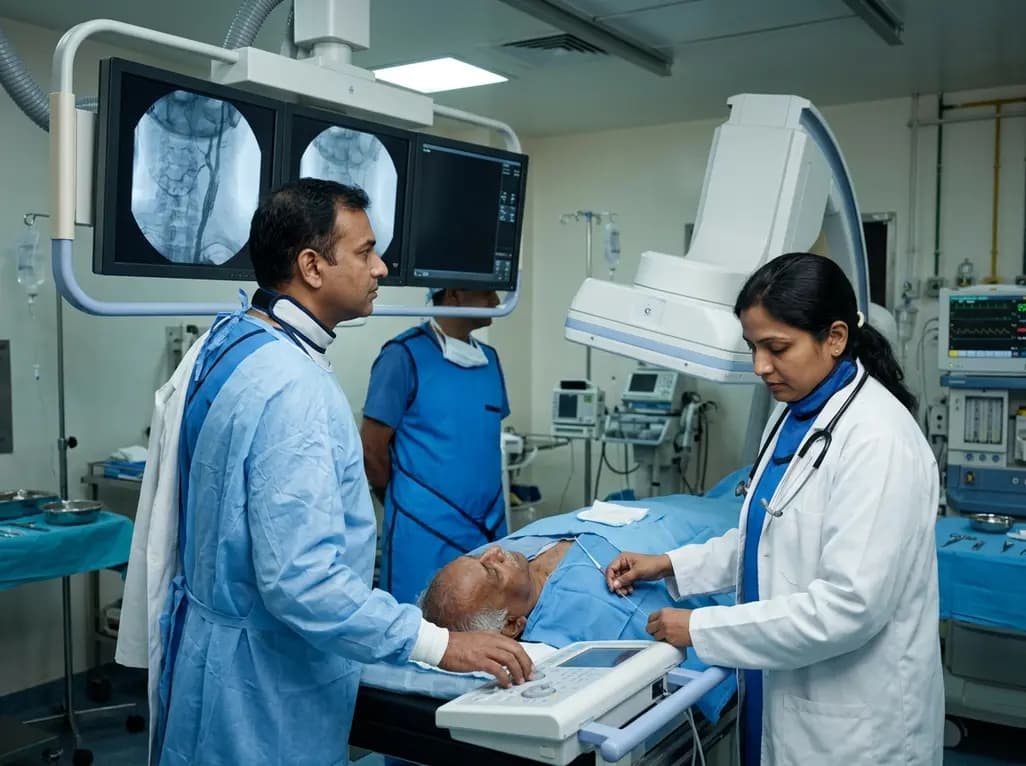
A retrospective study of 109 patients undergoing elective carotid artery stenting evaluated radiation exposure on biplane flat-panel systems. Standardized workflows and dedicated low-dose protocols provide crucial baseline data to establish neurointerventional diagnostic reference levels and optimize patient safety.
Today
A Level I trauma center study shows a brief bedside mental health intervention boosts 30-day follow-up screening adherence by 84% in nonviolent injury patients. However, outcomes for violence survivors reveal critical care gaps, underscoring the urgent need for specialized community violence intervention programs.
Today

An Australian cohort of 34,449 adults in an unsubsidized tirzepatide digital weight loss service showed that peer-referred patients achieved significantly higher 6-month adherence (48% vs 42%) and greater weight loss (16.16% vs 14.06%) than matched non-referred peers, highlighting social support in obesity care.
Today
