.webp&w=384&q=75)

Loading, please wait...
Loading, please wait...
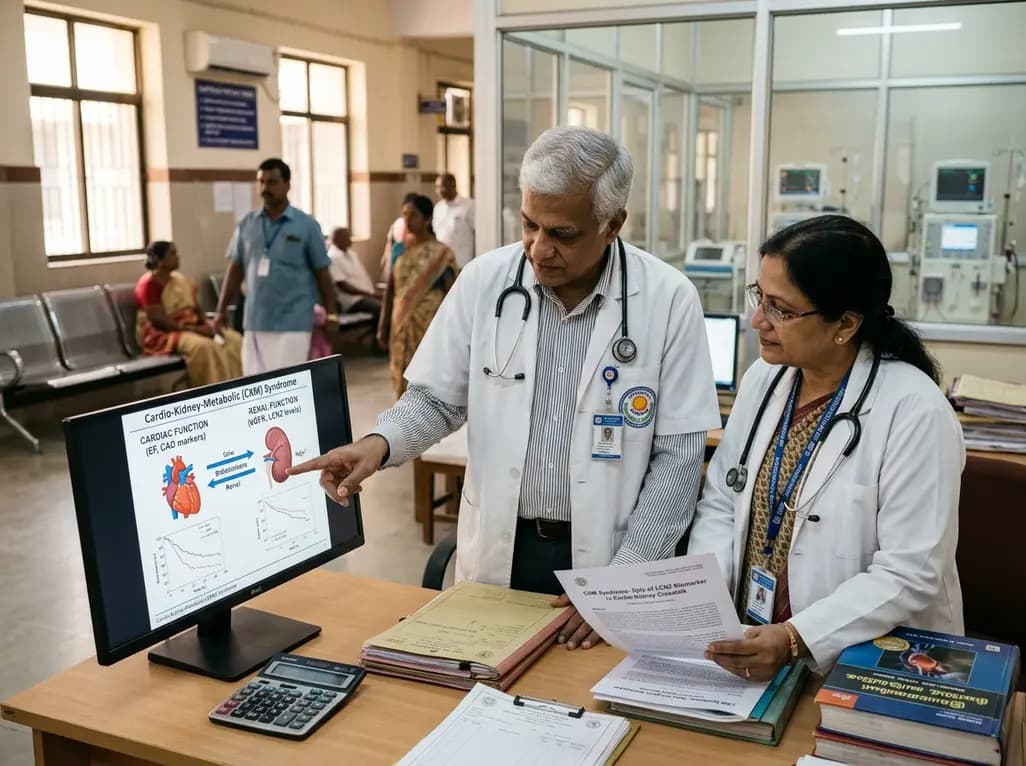
The complex interplay between metabolic dysfunction, renal impairment, and coronary atherogenesis presents a formidable clinical challenge in modern practice. In patients with type 2 diabetes mellitus, diabetic kidney disease and coronary artery disease frequently coexist, mutually accelerating morbidity and mortality. This interconnected relationship forms the core pathophysiological foundation of cardiovascular-kidney-metabolic syndrome. Although clinicians have long recognized this adverse synergy, the precise molecular drivers mediating multisystem injury have remained incompletely understood. Recent breakthrough research illuminates the critical role of the LCN2 cardio-kidney link, identifying lipocalin-2 as both an independent diagnostic biomarker and a functional mediator bridging renal microvascular disease and coronary macrovascular damage.
Lipocalin-2, also known as neutrophil gelatinase-associated lipocalin, functions as an acute-phase glycoprotein involved in innate immunity, iron homeostasis, and inflammatory signaling. Under physiological conditions, circulating levels remain low, but cellular stress rapidly upregulates its synthesis across multiple organ systems. In the setting of chronic metabolic dysregulation and sustained hyperglycemia, renal tubular epithelial cells and cardiomyocytes dramatically increase lipocalin-2 production. Consequently, elevated circulating lipocalin-2 reflects not merely localized tissue stress, but systemic inflammation driving multisystem organ injury. Furthermore, clinical investigations demonstrate that serum lipocalin-2 concentrations escalate proportionally with the severity of both diabetic nephropathy and coronary atherogenesis. Therefore, understanding this biomarker allows physicians to appreciate the bidirectional cardio-kidney link as an active, cytokine-mediated continuum rather than an isolated set of sequential complications.
Clinical trials evaluating large cohorts of patients with type 2 diabetes mellitus demonstrate consistent associations between lipocalin-2 and progressive vascular injury. Specifically, multivariable logistic regression analyses confirm that elevated serum lipocalin-2 serves as an independent predictor for the presence of diabetic kidney disease and coronary artery disease. Moreover, statistical mediation analyses demonstrate that lipocalin-2 directly accounts for a meaningful proportion of the bidirectional risk linking renal impairment to coronary events. Clinicians observe strong positive correlations between circulating lipocalin-2, urinary albumin-to-creatinine ratios, and serum B-type natriuretic peptide levels. Even after adjusting for age, body mass index, glycemic parameters, and conventional cardiovascular risk factors, lipocalin-2 retains robust prognostic independence. Consequently, measuring lipocalin-2 provides refined diagnostic clarity, identifying vulnerable individuals with asymptomatic subclinical multi-organ stress who require aggressive therapeutic intervention.
Experimental translational models provide compelling mechanistic proof supporting the clinical observations. In diabetic animal models subjected to high-fat feeding and streptozotocin induction, immunohistochemical evaluations reveal concurrent upregulation of lipocalin-2 in both myocardial tissue and renal parenchymal compartments. At the cellular level, exposing human renal tubular epithelial cells and cultured cardiomyocytes to recombinant lipocalin-2 triggers marked inflammatory activation. Specifically, lipocalin-2 stimulation induces a dose-dependent surge in the gene expression of interleukin-6 and tumor necrosis factor-alpha. These downstream pro-inflammatory cytokines perpetuate local oxidative stress, endothelial dysfunction, interstitial fibrosis, and microvascular rarefaction. Thus, lipocalin-2 acts as an active pathogenic driver that amplifies systemic inflammatory crosstalk between the heart and kidneys, accelerating parallel structural remodeling across both vital organ beds.
Integrating novel cardiorenal biomarkers into standard clinical workflows is essential for improving risk stratification across diverse patient populations. Because cardiovascular-kidney-metabolic syndrome progresses through distinct stages, early identification of systemic microvascular and macrovascular vulnerability is vital. Routine laboratory monitoring often relies on serum creatinine and estimated glomerular filtration rate, which can lag behind early structural damage. In contrast, incorporating lipocalin-2 measurement alongside established tools like high-sensitivity cardiac troponin and natriuretic peptides uncovers active cellular stress earlier in the disease trajectory. Additionally, tracking these biomarker patterns empowers clinicians to identify diabetes patients who carry concealed cardiovascular risk despite preserved baseline ejection fraction. Accordingly, comprehensive risk assessment tools incorporating inflammatory mediators facilitate proactive rather than reactive medical care.
Targeting the molecular pathways underlying cardiorenal crosstalk reinforces modern guideline-directed pharmacotherapy. Contemporary management strategies prioritize agents that confer organ protection beyond pure glycemic control. For instance, sodium-glucose cotransporter-2 inhibitors, glucagon-like peptide-1 receptor agonists, and nonsteroidal mineralocorticoid receptor antagonists exhibit profound anti-inflammatory, hemodynamic, and anti-fibrotic benefits. Evidence suggests that these cardiorenal protective regimens attenuate underlying systemic inflammation and downregulate lipocalin-2 expression. Furthermore, combining these therapies suppresses maladaptive neurohormonal activation and protects tubular and myocardial microvasculature. Therefore, adopting a unified therapeutic paradigm enables physicians to treat interconnected cardio-kidney complications simultaneously, significantly improving long-term survival and clinical outcomes in type 2 diabetes.
Lipocalin-2 is an inflammatory glycoprotein synthesized by renal tubular cells, cardiomyocytes, and adipose tissue during metabolic and ischemic stress. In cardiorenal medicine, it serves as a critical biomarker that reflects active endothelial damage, tubular injury, and systemic inflammation. Its measurement helps clinicians identify subclinical organ injury and monitor disease progression across cardiovascular and renal systems simultaneously.
LCN2 functions as an active pathological mediator by stimulating the expression of pro-inflammatory cytokines, including interleukin-6 and tumor necrosis factor-alpha, within cardiomyocytes and renal tubular cells. This sustained pro-inflammatory signaling promotes vascular endothelial dysfunction, accelerated atherosclerosis, and parenchymal fibrosis, thereby creating a bidirectional feed-forward loop that mutually exacerbates both renal and cardiac deterioration.
Cardioprotective and renoprotective therapies, including SGLT2 inhibitors, GLP-1 receptor agonists, and nonsteroidal mineralocorticoid receptor antagonists, alleviate systemic oxidative stress and metabolic inflammation. By reducing hemodynamic overload and tubular workload, these guideline-directed treatments attenuate pathological LCN2 expression. Consequently, lowering systemic inflammation translates directly into reduced rates of major adverse cardiovascular events and slowed chronic kidney disease progression.
Disclaimer: This content is for informational and educational purposes only and does not constitute medical advice, diagnosis, or treatment. Healthcare professionals should exercise their independent clinical judgment. Refer to the latest local and national guidelines for clinical practice.
References
Huang X et al. LCN2 Associated With the Bidirectional Cardio-Kidney Link in Patients With Type 2 Diabetes and Cardiovascular-Kidney-Metabolic Syndrome. Med Sci Monit. 2026 Aug 16. doi: 10.12659/MSM.953425. PMID: 42603857.
Ndumele CE, Rangaswami J, Chow SL, et al. Cardiovascular-Kidney-Metabolic Health: A Presidential Advisory From the American Heart Association. Circulation. 2023;148(20):1606-1635.
Li X, Wong SH, Leung WK, et al. Lipocalin-2 Variants and Their Relationship With Cardio-Renal Risk Factors. Front Endocrinol (Lausanne). 2021;12:781763.

Read summarized clinical updates, watch expert medical content, and earn CME certifications right from your smartphone.
Open your smartphone camera to scan and install.





Recent research highlights Lipocalin-2 (LCN2) as an independent biomarker and mediator connecting diabetic kidney disease and coronary artery disease in type 2 diabetes, offering key insights into organ crosstalk within cardiovascular-kidney-metabolic (CKM) syndrome.
last month

A study reveals that salivary cortisone correlates more strongly with serum cortisol than salivary cortisol during dynamic adrenal testing, while salivary dexamethasone accurately confirms compliance. This provides a non-invasive, precise alternative to venipuncture for diagnosing adrenal disorders.
Today

Prenatal evaluation of fetal growth restriction requires an integrated diagnostic approach. While chromosomal microarray remains fundamental, exome sequencing offers significant diagnostic yield in isolated and syndromic cases, especially when ultrasound shows skeletal anomalies or normal placental function.
Today

Evaluating disagreement among Friedewald, Martin-Hopkins, and Sampson LDL-C equations reveals diagnostic uncertainty at statin cutoffs. An interpretable regime-aware calibration model rescues patient misclassifications without extra testing costs.
Today

A randomized controlled trial compared ultrasound-guided intra-articular injections of PRP, hydrolyzed type I collagen, and hyaluronic acid in knee osteoarthritis. All therapies demonstrated significant improvements in WOMAC and pain scores at six months, supporting hydrolyzed collagen as a viable biological option.
Today

A groundbreaking review highlights mitochondrial quality control as a pivotal gating layer between metabolite signaling and regulated cell death, offering transformative therapeutic avenues across cardiology, oncology, and critical care.
Today
