

Loading, please wait...
Loading, please wait...
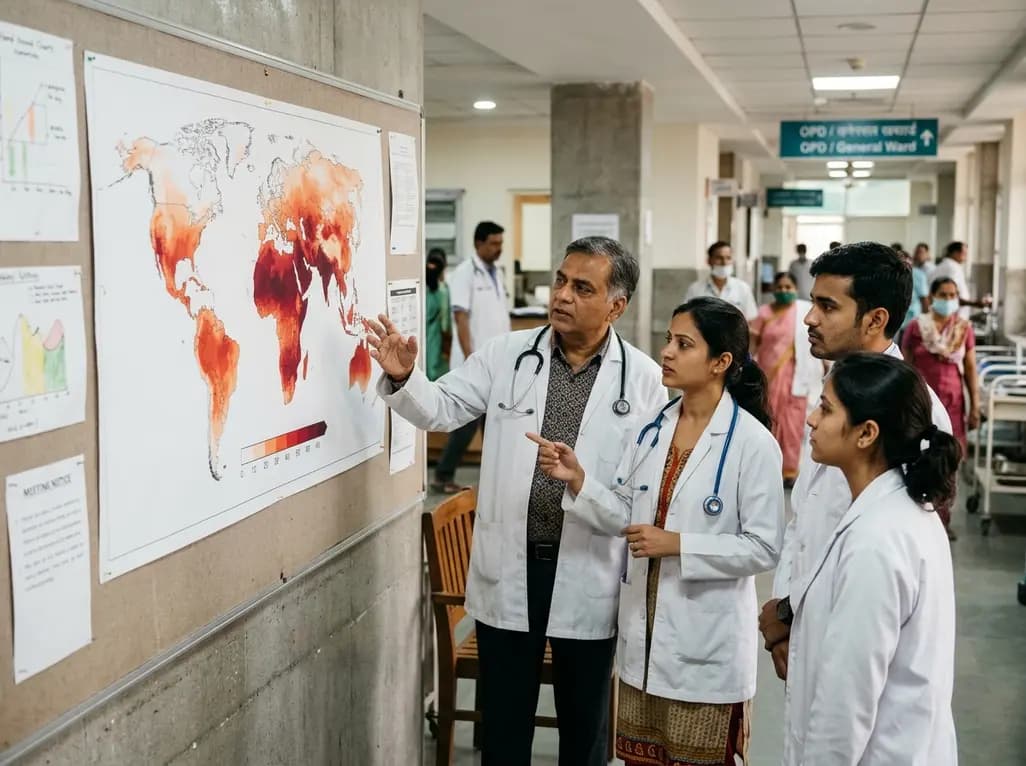
Rising environmental temperatures are pushing human physiology to hazardous limits across the globe. Consequently, international medical researchers are urging world leaders to formally recognize climate change as a global health emergency. The landmark tenth edition of the Lancet Countdown report highlights alarming health statistics. Specifically, extreme heat claimed over three million lives between 2016 and 2023. Human-induced climate disruptions directly caused more than two-thirds of these preventable mortalities. Therefore, healthcare providers and clinical institutions must understand these cascading epidemiological threats to safeguard vulnerable patient populations.
The call for a global health emergency reflects growing alarm among medical professionals worldwide. The latest assessment brought together 146 interdisciplinary scientists from 30 countries ahead of the COP31 climate conference. Their findings clearly demonstrate that climate-related hazards outpace national adaptive responses. In 2023 alone, record-shattering heatwaves resulted in approximately 710,000 fatalities globally. Crucially, human activities directly contributed to over 70 percent of that devastating toll.
Marina Romanello, executive director of the Lancet Countdown project, compared this loss to extinguishing the entire population of Wales within eight years. However, public policy remains dangerously fragmented. Many nations continue to respond reactively to recurring crises instead of building preventive systems. Therefore, designating the crisis as an official health emergency provides a critical legal and political lever.
Furthermore, an official emergency status compels governments to integrate healthcare priorities directly into decarbonization policies. Clinicians regularly witness how thermal extremes overwhelm emergency departments, trigger cardiovascular collapse, and destabilize metabolic control. Consequently, a unified declaration will direct urgent funding toward hospital preparedness and vulnerable communities. Without systemic policy changes, rising ambient heat will continually disrupt essential healthcare delivery across high-risk regions.
Thermal stress triggers profound physiological strain across multiple organ systems. Specifically, prolonged exposure to high ambient temperatures impairs normal thermoregulation, forcing extreme cutaneous vasodilation and heavy sweating. Consequently, the cardiovascular system experiences severe stress to maintain vital cardiac output. This physiological burden drastically escalates the incidence of acute myocardial infarction, sudden arrhythmia, and systemic heart failure.
Moreover, excessive perspiration causes rapid fluid depletion and severe electrolyte imbalances. As a result, clinicians frequently observe acute kidney injury among outdoor laborers and elderly patients during prolonged heatwaves. High night-time temperatures further prevent cellular recovery and cause widespread sleep deprivation. Research shows that patients in tropical countries lose substantial sleep annually due to persistently elevated evening heat.
In addition, severe drought conditions worsen respiratory health by elevating airborne dust and wildfire particulate matter. Professor Ollie Jay noted that severe droughts affected more than half of the planet's land area recently. These dry landscapes amplify ground-level ozone formation and degrade ambient air quality. Therefore, chronic obstructive pulmonary disease and bronchial asthma exacerbations surge during unmitigated heat waves. Clinicians must maintain heightened vigilance for these overlapping presentations during seasonal thermal spikes.
Climate disruptions impose staggering economic damage alongside direct clinical harm. According to recent economic analyses, heat-induced labor loss drains more than one trillion dollars annually from the global economy. Furthermore, this economic burden falls disproportionately upon lower-middle-income regions. Southeast Asia and Africa have sustained annual gross domestic product losses exceeding three percent due to declining worker productivity. In contrast, wealthy European nations suffered fractional economic impacts below one percent.
Consequently, developing nations face a widening health equity gap. Agricultural laborers, construction workers, and urban informal laborers endure unsafe wet-bulb globe temperatures daily. These workers cannot access indoor climate control or adequate shade. As a result, chronic heat strain induces progressive tubular interstitial nephropathy and systemic inflammation among rural workforces.
Additionally, resource-constrained health systems struggle to fund necessary climate-resilient infrastructure. Power grids frequently collapse under peak cooling demands, disrupting cold-chain storage for vaccines and emergency life-support equipment. Although research funding for climate-related medicine increased sevenfold to 316 million dollars, wealthy nations absorbed 84 percent of those grants. Therefore, international financial frameworks must redirect research capital and technological resources toward the regions facing the greatest morbidity.
Fossil fuel combustion remains the primary shared driver of both global warming and ambient toxic air pollution. Although clean energy investments expanded to 2.1 trillion dollars recently, fossil fuels still provide 80 percent of global energy supplies. Consequently, particulate matter and toxic combustion byproducts claim approximately 2.73 million lives every single year. Fine particulate matter penetrates deep into pulmonary alveoli and enters systemic circulation.
As a result, microscopic particulates trigger endothelial dysfunction, vascular plaque instability, and persistent pulmonary inflammation. Clinical data consistently link chronic pollutant exposure to ischemic stroke, accelerated atherosclerosis, and pediatric neurodevelopmental deficits. However, deliberate decarbonization policies deliver immediate and measurable health dividends. The Lancet study documented that 77 countries avoided roughly 323,000 annual fatalities by curbing fossil fuel emissions since 2016.
Moreover, transitioning to sustainable energy solutions prevents concurrent ground-level ozone formation during summer heat spikes. Clean municipal public transit and industrial emission standards provide rapid improvements in local air basins. Therefore, advocating for rapid decarbonization represents an essential clinical intervention rather than a distant political aspiration. Physicians must articulate these direct clinical co-benefits when communicating environmental risks to community stakeholders.
Healthcare institutions must proactively construct resilient infrastructures to withstand compounding climatic shocks. Encouragingly, 56 World Health Organization member states have upgraded their early-warning systems to anticipate dangerous meteorological events. These meteorological alert systems allow municipal hospitals to stockpile intravenous rehydration fluids and adjust clinical staffing before severe heat waves hit.
However, many health systems still lack comprehensive adaptation strategies. Hospital architecture often retains significant heat, converting clinical wards into thermal traps during severe regional blackouts. Therefore, healthcare administrators must retrofit medical centers with reflective roofing, passive cooling ventilation, and decentralized solar power microgrids. Furthermore, medical institutions should establish standardized clinical pathways for triaging heat stroke and severe dehydration.
In addition, primary care doctors play a vital role in identifying susceptible individuals before summer temperatures peak. Clinicians must review medications that interfere with normal thermoregulation, including anticholinergics, diuretics, and psychiatric neuroleptics. As a result of structured patient counseling, vulnerable individuals can implement proactive cooling measures and hydration schedules. Cohesive institutional planning transforms episodic emergency reactions into durable, sustainable protection for vulnerable populations.
Q1: Why are researchers demanding an official global health emergency declaration?
Researchers urge an emergency declaration because climate-driven health threats are accelerating much faster than international protective policies. In 2023, extreme heat claimed a record 710,000 lives, with over 70 percent directly tied to anthropogenic warming. Furthermore, three million people died from thermal stress between 2016 and 2023. Declaring an emergency forces governments to prioritize health within climate treaties and allocate critical adaptation funds.
Q2: How does severe ambient heat specifically affect the cardiovascular system?
Extreme ambient heat triggers substantial peripheral vasodilation and heavy sweating to facilitate evaporative cooling. Consequently, the cardiovascular system must significantly increase cardiac output and heart rate to maintain adequate systemic perfusion. This sudden hemodynamic strain frequently induces acute myocardial infarction, congestive heart failure exacerbations, and lethal arrhythmias, particularly in elderly patients or individuals with pre-existing vascular disease.
Q3: What immediate clinical co-benefits arise from phasing out fossil fuels?
Phasing out fossil fuels delivers swift and tangible health co-benefits by simultaneously reducing greenhouse gases and lethal ambient air pollutants. Fossil fuel emissions cause approximately 2.73 million premature deaths annually from cardiopulmonary disorders. Consequently, transitioning to renewable energy rapidly lowers atmospheric fine particulate matter, preventing hundreds of thousands of strokes, pediatric asthma attacks, and ischemic cardiac events worldwide.
Disclaimer: This content is for informational and educational purposes only. It does not constitute medical advice or replace professional judgment. Refer to the latest local and national guidelines for clinical practice.
References

Read summarized clinical updates, watch expert medical content, and earn CME certifications right from your smartphone.
Open your smartphone camera to scan and install.





A landmark Lancet report reveals that heat claimed three million lives between 2016 and 2023, with over seventy percent linked to human activity. As healthcare systems face accelerating climate impacts, international experts urge unified policy action, resilient infrastructure, and targeted research investments.
Today
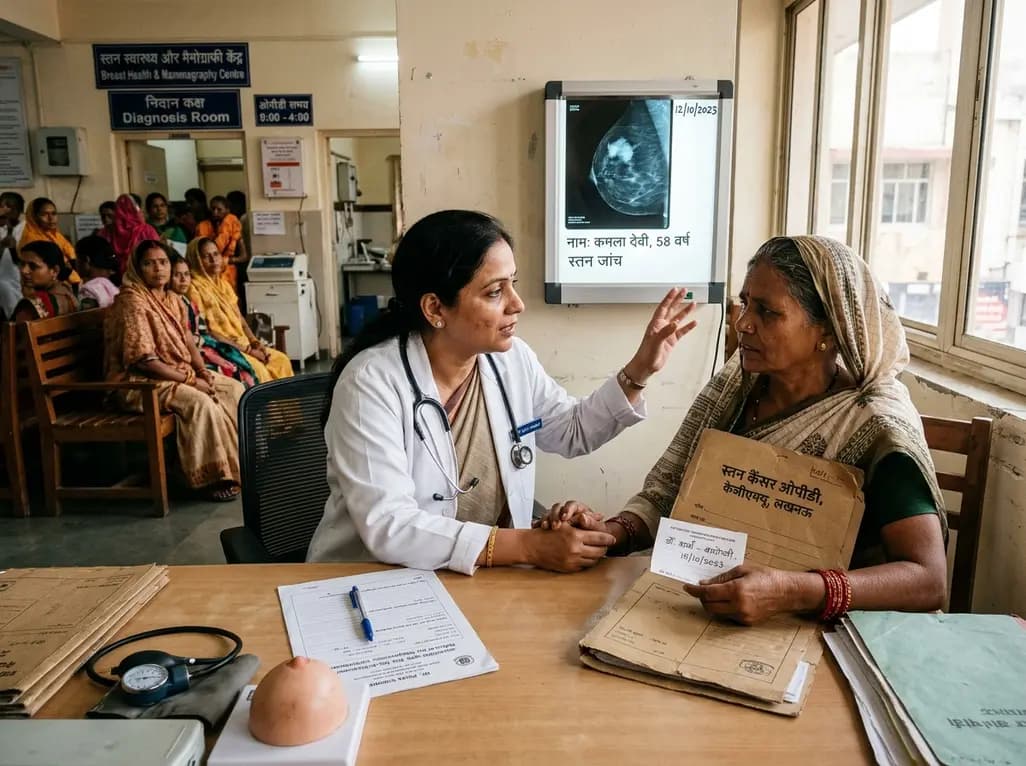
A KGMU study reveals over half of women with breast abnormalities fail to undergo diagnostic confirmation, leading to advanced-stage detection. Discover the socio-cultural barriers, clinical risks of incomplete resection, and community-level solutions needed to bridge the critical screening-to-diagnosis gap in India.
2 days back

Recent findings from the VESUVE study demonstrate that brain MRI detects intracranial lesions in over 76% of patients with infective endocarditis. Acute ischemic stroke and subarachnoid hemorrhage independently elevate six-month mortality, underscoring the critical prognostic utility of neuroimaging.
Yesterday
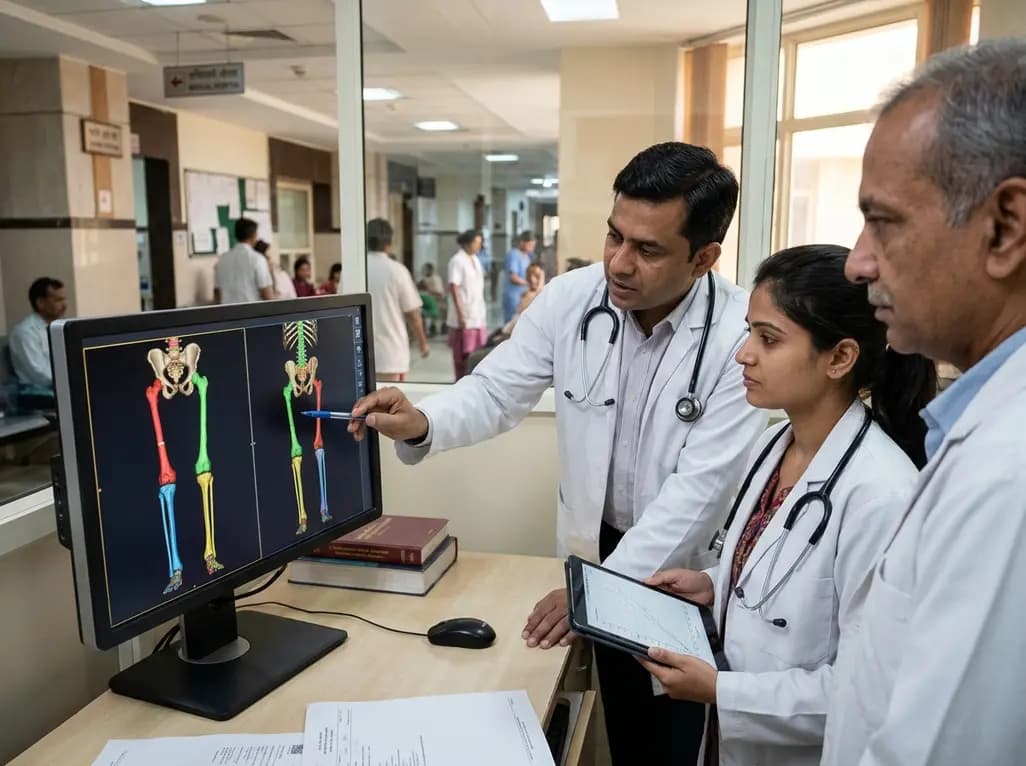
Modern 3D anthropometry reveals that pediatric leg growth ceases years before spinal elongation, exposing the clinical illusion of the classical Anderson-Green model. Learn how segmental growth dissociation improves surgical timing for epiphysiodesis in adolescent leg length discrepancy.
Yesterday

A meta-analysis of 18 studies reveals that bariatric surgery does not significantly alter circulating homocysteine levels, regardless of follow-up duration. Clinicians must maintain vigilance over post-surgical micronutrient supplementation to prevent hyperhomocysteinemia.
Yesterday
