.webp&w=384&q=75)

Loading, please wait...
Loading, please wait...

Emerging research has identified Lactobacillus paragasseri OLL2716 as a potential therapeutic agent for upper gastrointestinal dysmotility and functional dyspepsia. Prior clinical investigations have demonstrated that yogurt containing this specific probiotic strain can alleviate delayed gastric emptying. Furthermore, regular intake can improve balance within the autonomic nervous system. Despite these clinical observations, the exact cellular pathways remained incompletely understood. Ghrelin, an orexigenic peptide hormone synthesized predominantly by gastric endocrine cells, plays a fundamental physiological role in coordinating upper gut motility, stimulating gastric acid secretion, and regulating autonomic neural circuits. Consequently, investigators sought to determine whether this probiotic strain directly influences gastric ghrelin production and peptide release.
Gastric motility depends heavily on coordinated neurohormonal signaling networks between the central nervous system, enteric neurons, and mucosal endocrine cells. Within this physiological framework, ghrelin acts as a pivotal prokinetic mediator that accelerates gastric emptying and coordinates hunger-satiety transitions. In addition, ghrelin signaling exerts anti-inflammatory effects and enhances vagal nerve activity, thereby facilitating gastrointestinal homeostasis. When gastroduodenal function deteriorates, as observed in functional dyspepsia or diabetic gastroparesis, ghrelin release often becomes impaired or dysregulated. Therefore, finding interventions that safely restore endogenous ghrelin synthesis represents a promising avenue for gastroenterological care. Probiotics have gained substantial interest because they can generate bioactive metabolites and directly interface with mucosal epithelial layers. Consequently, evaluating how specific bacterial strains influence ghrelin dynamics provides critical insight into microbial-host communication along the gut-brain axis.
To examine this cellular interaction, researchers evaluated the effects of Lactobacillus paragasseri OLL2716 using the human gastric adenocarcinoma-derived cell line MKN45. Specifically, scientists exposed these gastric cells to live bacterial cells, heat-treated bacterial cells, or bacterial culture supernatants. Quantitative reverse-transcription polymerase chain reaction assays revealed that both whole bacterial cells and cell-free culture supernatants significantly elevated ghrelin messenger RNA expression. Moreover, subsequent enzyme-linked immunosorbent assays confirmed that treatment with bacterial cells directly stimulated active ghrelin peptide secretion into the extracellular environment. Because both whole cellular components and culture broth elicited positive responses, the data suggest that bacterial structural elements and secreted microbial metabolites work cooperatively. Thus, this probiotic exerts robust, multi-faceted stimulatory actions directly upon gastric mucosal cells.
Importantly, the observed endocrine stimulation was highly dependent on bacterial strain specificity rather than generic lactic acid bacteria characteristics. When researchers compared yogurt formulated with the active strain against a control yogurt containing only traditional starter cultures—namely Lactobacillus delbrueckii subsp. bulgaricus OLL1255 and Streptococcus thermophilus OLS3294—the probiotic-enriched formulation induced a significantly faster upregulation of ghrelin transcripts. Furthermore, comparative evaluations demonstrated that while the specialized probiotic strain strongly promoted ghrelin mRNA expression, the type strain of the same species failed to produce significant changes. Consequently, these findings reinforce the pharmacological principle that probiotic benefits cannot be generalized across taxonomic species. Instead, distinct strain-level metabolic machinery determines the ultimate physiological and secretory outcomes within host tissues.
To delineate the intracellular mechanism facilitating this upregulation, investigators carried out targeted pharmacological inhibition experiments within the MKN45 cellular model. The empirical data demonstrated that prostaglandin E2 signaling through its cognate EP4 receptor pathway plays an essential regulatory role in mediating ghrelin transcription. Prostaglandin E2 serves as an established mucosal protective agent and homeostatic signaling molecule throughout the gastric epithelium. Therefore, bacterial interaction with epithelial surfaces appears to activate the prostaglandin E2-EP4 cascade, thereby triggering downstream gene transcription of the ghrelin peptide. In addition, this mechanistic insight clarifies why heat-treated cells and secreted metabolites retain biological activity, as stable bacterial ligands can engage membrane receptors to stimulate endogenous eicosanoid cascades. Consequently, these results elucidate a concrete molecular bridge linking probiotic exposure to gastric peptide synthesis.
These cellular discoveries offer valuable mechanistic validation for previous clinical observations involving functional gastrointestinal disorders. Clinicians frequently encounter patients with postprandial distress syndrome, early satiety, and refractory epigastric fullness who exhibit impaired gastric accommodation. Because ghrelin stimulates phase III migrating motor complexes and accelerates gastric emptying, probiotic-driven ghrelin induction could explain why patients experience symptom relief after regular dietary supplementation. Moreover, ghrelin modulates autonomic tone by supporting parasympathetic dominance and dampening excessive sympathetic stress responses. Thus, targeted nutritional interventions that stimulate ghrelin might simultaneously alleviate physical discomfort and stress-related gastric dysfunctions. While clinical trials in diverse patient populations remain necessary, these experimental findings support the targeted use of specific probiotic formulations in comprehensive gastrointestinal care strategies.
Research demonstrates that the bacterial cells and their culture metabolites interact directly with gastric epithelial cells. This interaction activates the prostaglandin E2-EP4 intracellular signaling cascade. Consequently, this pathway upregulates ghrelin messenger RNA expression and promotes the active secretion of ghrelin peptide into the extracellular environment, thereby enhancing local endocrine signaling.
No, the experimental evidence indicates that these endocrine responses are strictly strain-specific. While the specialized probiotic strain significantly stimulated ghrelin transcription, the standard type strain of the same species showed no significant effect. Therefore, clinicians must recognize that therapeutic and physiological benefits depend entirely on specific bacterial strains rather than broader bacterial species classifications.
These findings provide a clear cellular mechanism explaining how targeted probiotic supplementation improves delayed gastric emptying, early satiety, and autonomic nervous dysfunction. Consequently, healthcare providers can better understand how specific probiotic strains may support patients suffering from functional dyspepsia, postprandial fullness, and stress-related upper gastrointestinal motility disorders.
Disclaimer: This content is for informational and educational purposes only. It is not intended to provide medical advice, diagnosis, or treatment. Healthcare professionals should exercise their clinical judgment when evaluating research studies. Refer to the latest local and national guidelines for clinical practice.
References

Read summarized clinical updates, watch expert medical content, and earn CME certifications right from your smartphone.
Open your smartphone camera to scan and install.





A study reveals that Lactobacillus paragasseri OLL2716 stimulates gastric cells to increase ghrelin expression and secretion via PGE2-EP4 signaling. This finding provides novel mechanistic insights into how specific probiotic strains improve delayed gastric emptying and modulate autonomic nervous activity.
last month

Epidemiologists and health leaders warn that active Ebola virus transmission in the Democratic Republic of Congo remains entrenched within communities. With fewer than ten percent of expected contacts monitored, public health officials urge rapid surveillance scale-up and reinforced healthcare precautions.
Today

A scoping review evaluates 116 studies on AI in women's reproductive health, finding that 83.6% carry high risk of bias. While ensemble models show promise, disparities and lack of validation hinder LMIC deployment.
Today
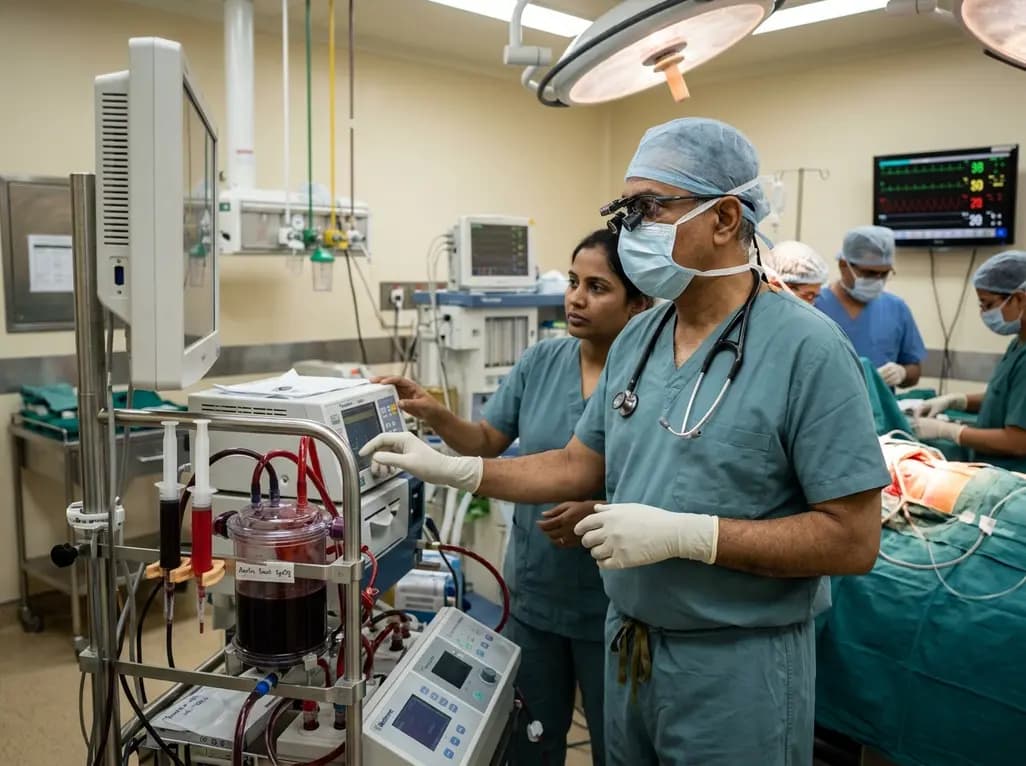
Differential oxygenation during peripheral TA-NRP can cause undetected coronary hypoxemia due to arch vessel clamping. A novel circuit with continuous aortic root monitoring detects desaturation early, facilitating left ventricular unloading and preventing allograft dysfunction and unnecessary heart discard.
Today

India faces significant opportunities to expand medical device exports to high-growth markets like Mexico, Brazil, and the UK. By addressing its trade deficit, advancing domestic component manufacturing, and aligning with global regulatory standards, the country aims to become an international healthcare hub.
Today

A post hoc analysis of the PARM-T2D study shows pemafibrate exerts baseline-dependent effects on LDL-C and particle size in type 2 diabetes and hypertriglyceridemia. It lowers triglycerides and remnants while favorably remodeling atherogenic LDL particles based on initial lipid control status.
Today
