.webp&w=384&q=75)

Loading, please wait...
Loading, please wait...

Complete atrioventricular (AV) block is a clinical emergency that necessitates prompt decision-making, particularly regarding the need for a temporary pacemaker. Identifying high-risk patients who might deteriorate is essential for critical care teams. A recent study evaluated the utility of measuring lactate levels in heart block to assess prognosis. Lactate is a known byproduct of anaerobic metabolism. It often serves as a sensitive indicator of inadequate cardiac output and poor tissue perfusion.
The retrospective evaluation involved 140 adult patients admitted to a coronary care unit. Researchers analyzed both initial and subsequent venous blood lactate measurements. According to the results, approximately 23% of patients experienced poor in-hospital outcomes. These adverse events included acute renal injury, cardiac mortality, or the urgent need for a temporary pacemaker. Furthermore, patients with poor outcomes exhibited significantly higher initial lactate levels compared to those who remained stable.
The study found that an initial lactate level exceeding 1.8 mmol/L was highly sensitive in predicting adverse events. Specifically, this threshold demonstrated over 90% sensitivity for identifying poor outcomes. Additionally, elevated lactate levels during follow-up further increased the specificity of the prediction to 85.5%. This suggests that serial monitoring can provide clinicians with a clearer picture of the patient's actual hemodynamic status. Consequently, doctors might consider temporary pacemaker insertion earlier, even in patients who appear hemodynamically stable during initial examination.
In conclusion, lactate measurements are independent determinants of in-hospital complications in patients with complete AV block. However, the study authors emphasize that these results are currently hypothesis-generating. Prospective studies are necessary to confirm if this strategy improves clinical utility in larger, diverse populations. Until then, incorporating lactate testing into standard diagnostic protocols could enhance risk stratification in cardiac emergencies.
Lactate acts as a surrogate marker for tissue hypoxia. In heart block, a low heart rate can lead to reduced cardiac output. Therefore, measuring lactate helps clinicians identify \"hidden\" hemodynamic instability before severe clinical symptoms occur.
In this specific study, an initial lactate level greater than 1.8 mmol/L was found to be a significant predictor of poor outcomes. It helped identify patients who were likely to require a temporary pacemaker or experience major complications like renal injury.
Disclaimer: This content is for informational and educational purposes only. It does not constitute professional medical advice, diagnosis, or treatment. Always seek the advice of your physician or other qualified healthcare provider with any questions you may have regarding a medical condition. Refer to the latest local and national guidelines for clinical practice.
References
1. Cengiz HB et al. Assessment of Lactate Levels as Prognostic and Predictive Markers in Patients with Complete Atrioventricular Block. Turk Kardiyol Dern Ars. 2026 Apr 15. doi: 10.5543/tkda.2026.64643. PMID: 41983339.
2. Lazzeri C, et al. Clinical significance of lactate in acute cardiac patients. World J Cardiol. 2015;7(8):483-489.
3. Zeymer U, et al. Prognostic value of lactate in patients with cardiogenic shock with and without cardiac arrest. Clin Res Cardiol. 2025 Sep 29. doi: 10.1007/s00392-025-02762-w.

Read summarized clinical updates, watch expert medical content, and earn CME certifications right from your smartphone.
Open your smartphone camera to scan and install.





A new study reveals that initial lactate levels above 1.8 mmol/L are strong predictors of poor in-hospital outcomes in patients with complete heart block....
6 months ago

Recent epidemiological data reveals a dramatic surge in summer heat mortality driven by human-induced climate warming. This analysis explores the pathophysiological impacts on cardiac and renal systems, diagnostic dilemmas in death certification, and essential emergency cooling protocols for acute clinical care.
Today
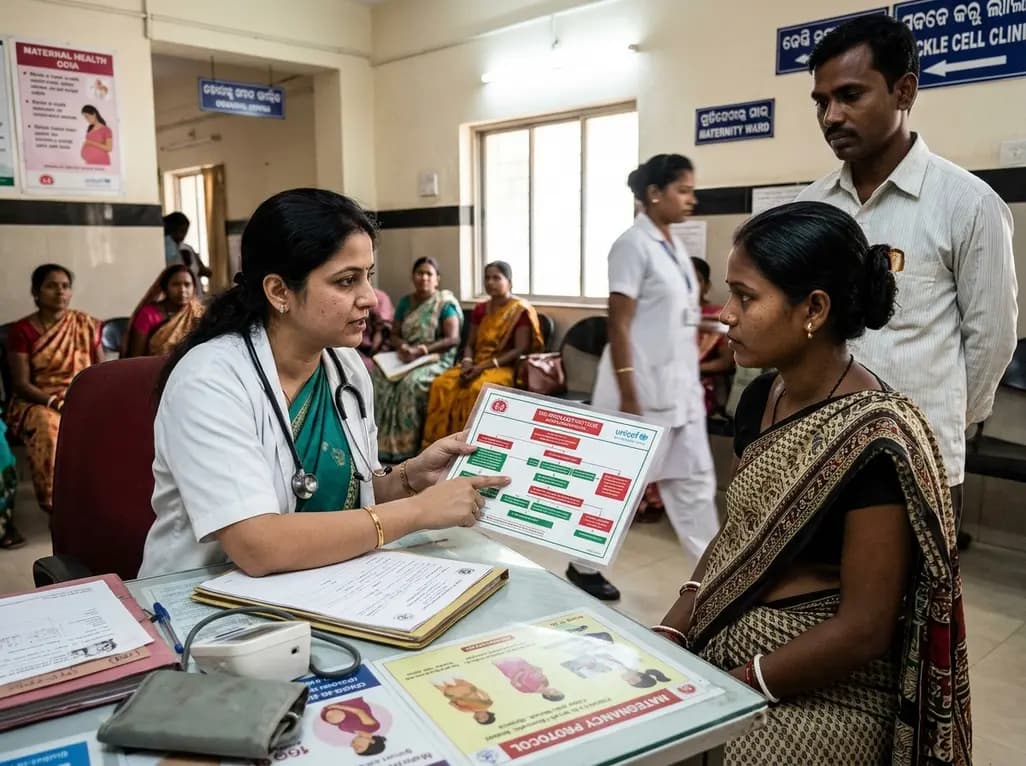
Odisha has established India's first state-level clinical protocol specifically tailored for pregnant women with sickle cell disease. Developed with NHM and UNICEF, the framework provides structured antenatal screening, crisis mitigation, standardized referral pathways, and specialized interdisciplinary care.
Today

India is advancing preventive healthcare by integrating genomics, artificial intelligence, and quantum technologies. With the SANGAM programme sequencing one million Indian genomes, clinicians can unlock personalized therapies, detect cardiometabolic risks early, and curb the burden of diabetes and heart disease.
Today

A randomized controlled trial demonstrates that an eight-week dual-task training intervention significantly improves static and dynamic postural control over standard balance exercises in individuals with chronic ankle instability, addressing critical neurocognitive deficits during athletic and daily activities.
Today

A retrospective cohort study of 7,716 ICU patients from the MIMIC-IV database demonstrates that Gradient Boosting Decision Trees significantly outperform traditional SOFA scores in predicting in-hospital mortality among patients with sepsis and diabetes, with SHAP analysis providing clinical interpretability.
Today
