.webp&w=384&q=75)

Loading, please wait...
Loading, please wait...

Aflatoxin B1 (AFB1) represents a persistent environmental threat, particularly in regions like India where food storage conditions often favor fungal growth. Chronic exposure significantly increases the risk of hepatocellular carcinoma and acute liver damage. Recent research highlights the therapeutic potential of l-Aspartic acid liver injury mitigation. This amino acid exhibits antioxidant and anti-inflammatory properties that may counteract toxin-induced hepatotoxicity through the gut-liver axis.
The study evaluated the effects of dietary l-Aspartic acid (l-Asp) supplementation on rabbits exposed to AFB1. Researchers assigned fifty rabbits to various groups, providing different concentrations of l-Asp (0.5%, 1.0%, and 1.5%) for 21 days. Significantly, the results demonstrated that l-Asp pretreatment alleviated impairments in growth performance and improved serum biochemical parameters. Furthermore, the 1.0% dosage emerged as the most effective intervention for protecting hepatic tissue from damage.
Furthermore, the treatment successfully reduced hepatic collagen fiber deposition and ameliorated damage to the ileal barrier. These findings suggest that l-Asp acts beyond simple antioxidant support. It actively restores the composition of gut microbiota and normalizes bile acid metabolism. Consequently, this intervention addresses the complex interactions within the gut-liver axis that usually exacerbate AFB1 poisoning. Notably, the normalized bile acid metabolism correlated with the regulation of key metabolic receptors.
Notably, AFB1 exposure typically disrupts intestinal homeostasis and various metabolic pathways. However, l-Asp pretreatment regulated key metabolic receptors to maintain a healthy microflora balance. Moreover, it normalized the levels of various bile acids that are often dysregulated during liver injury. Therefore, this nutritional strategy offers a multifaceted approach to protecting hepatic health from dietary toxins. This work provides a clear rationale for future studies to further elucidate these molecular mechanisms in human clinical settings.
Research indicates that l-Aspartic acid helps mitigate liver injury by reducing oxidative stress, repairing the intestinal barrier, and restoring healthy gut microflora.
The study established a 1.0% dietary supplementation of l-Aspartic acid as an effective, gut-liver axis-targeted concentration for alleviating the toxic effects of Aflatoxin B1.
Aflatoxins disrupt the gut barrier and microbiota, allowing toxins and harmful metabolites to reach the liver. Interventions like l-Aspartic acid protect the liver by first stabilizing intestinal health and bile acid metabolism.
Disclaimer: This content is for informational and educational purposes only and does not constitute medical advice or a professional relationship. Always seek the advice of a physician or other qualified health provider with any questions regarding a medical condition. Refer to the latest local and national guidelines for clinical practice.
References
Kong D et al. l-Aspartic acid alleviates aflatoxin B1-induced liver injury by regulating intestinal microflora homeostasis and bile acid metabolism. J Sci Food Agric. 2026 Mar 09. doi: 10.1002/jsfa.70557. PMID: 41803008.
Murugavel KG et al. Role of Aflatoxin B1 as A Risk for Primary Liver Cancer in India. Austin J Cancer Clin Res. 2023 Nov 15.
Li et al. Research progress in toxicological effects and mechanism of aflatoxin B1 toxin. PeerJ. 2022 Aug 04. doi: 10.7717/peerj.13850.

Read summarized clinical updates, watch expert medical content, and earn CME certifications right from your smartphone.
Open your smartphone camera to scan and install.





A study highlights how l-Aspartic acid helps mitigate liver injury caused by Aflatoxin B1 by regulating gut microflora and bile acid metabolism....
7 months ago

Recent epidemiological data reveals a dramatic surge in summer heat mortality driven by human-induced climate warming. This analysis explores the pathophysiological impacts on cardiac and renal systems, diagnostic dilemmas in death certification, and essential emergency cooling protocols for acute clinical care.
Today
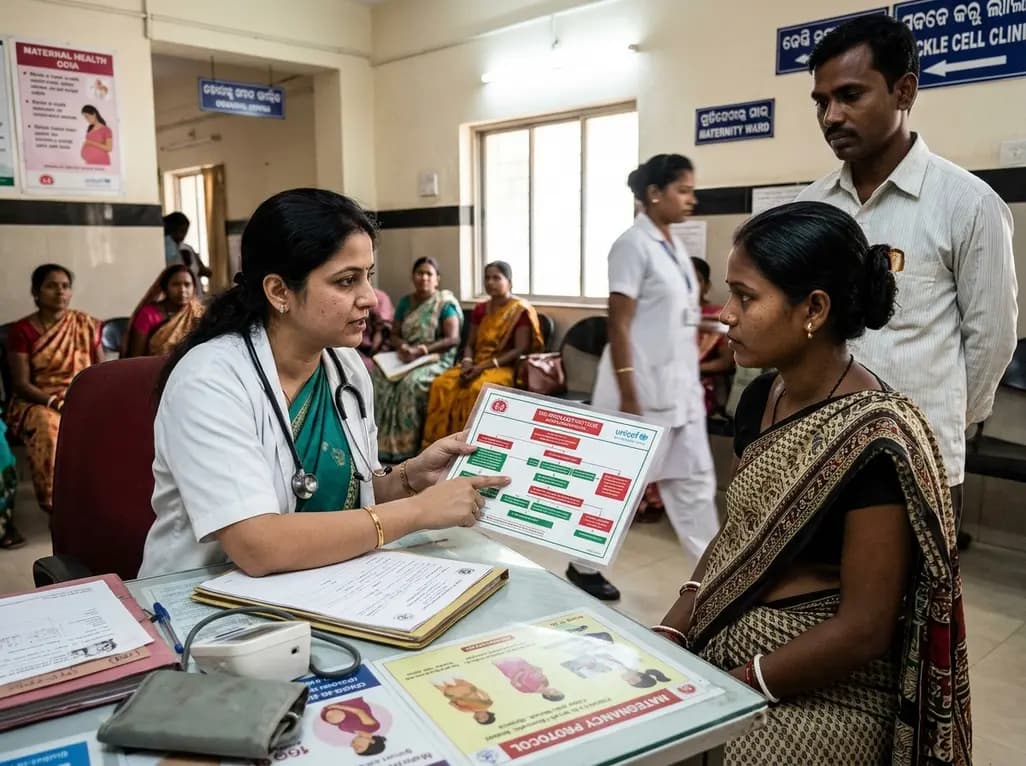
Odisha has established India's first state-level clinical protocol specifically tailored for pregnant women with sickle cell disease. Developed with NHM and UNICEF, the framework provides structured antenatal screening, crisis mitigation, standardized referral pathways, and specialized interdisciplinary care.
Today

India is advancing preventive healthcare by integrating genomics, artificial intelligence, and quantum technologies. With the SANGAM programme sequencing one million Indian genomes, clinicians can unlock personalized therapies, detect cardiometabolic risks early, and curb the burden of diabetes and heart disease.
Today

A randomized controlled trial demonstrates that an eight-week dual-task training intervention significantly improves static and dynamic postural control over standard balance exercises in individuals with chronic ankle instability, addressing critical neurocognitive deficits during athletic and daily activities.
Today

A retrospective cohort study of 7,716 ICU patients from the MIMIC-IV database demonstrates that Gradient Boosting Decision Trees significantly outperform traditional SOFA scores in predicting in-hospital mortality among patients with sepsis and diabetes, with SHAP analysis providing clinical interpretability.
Today
