.webp&w=384&q=75)

Loading, please wait...
Loading, please wait...
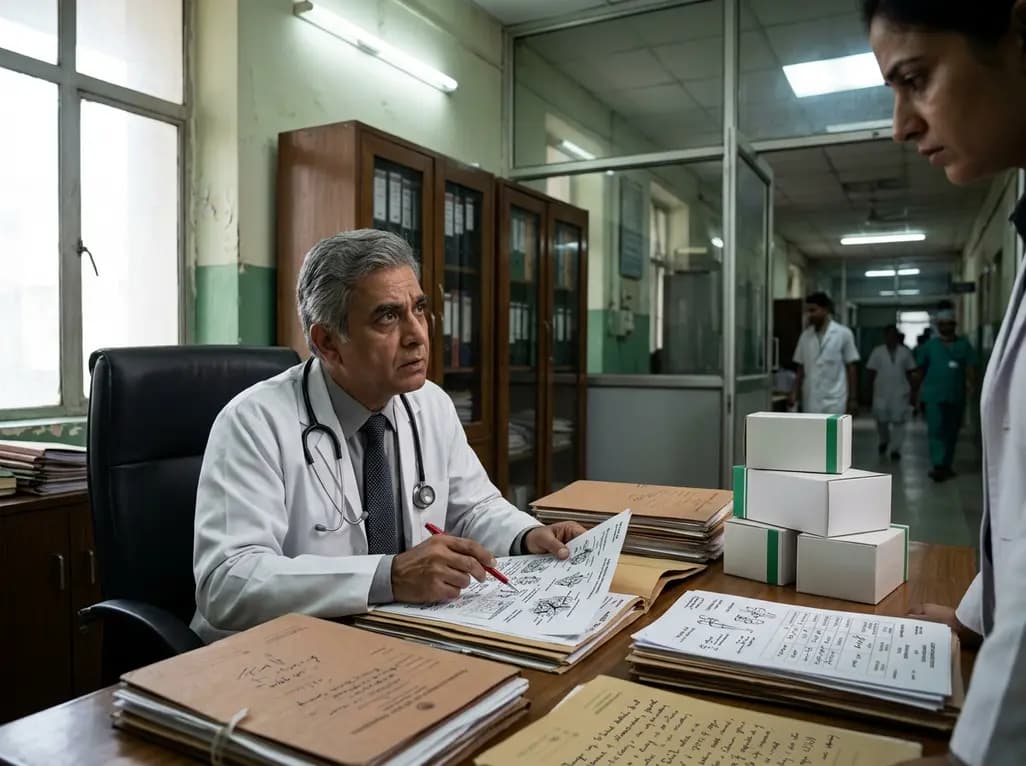
Recently, King George’s Medical University (KGMU) in Lucknow uncovered major medicine procurement irregularities worth approximately Rs 2.5 crore. Specifically, the university will file a First Information Report (FIR) against four of its employees. Indeed, this action follows a detailed probe by a five-member inquiry committee into the urology department's drug distribution. Furthermore, KGMU spokesperson Prof KK Singh confirmed that the administration will formally register the police complaint on Tuesday.
To begin with, the issue surfaced when hospital officials noticed a suspicious spike in medicine expenses. For instance, the department's monthly drug expenditure jumped from Rs 10 lakh to Rs 40 lakh in February. Subsequently, this figure climbed to Rs 45 lakh in March, which immediately triggered an internal audit. In response, Vice-Chancellor Prof Soniya Nityanand directed the establishment of an inquiry committee. Meanwhile, the university administration stopped all pending payments for the medicines under scrutiny.
During the investigation, the panel examined patient health records, distribution registers, and payment databases. Consequently, they found that staff recorded patients as consuming dosages far beyond the actual medical prescriptions. For example, records showed that patients received a highly expensive injection four to five times in a single month. However, clinicians normally administer this specific drug only once every six months. Moreover, each of these injections costs between Rs 8,000 and Rs 10,000, representing a massive financial leakage.
Additionally, the inquiry committee discovered multiple instances where staff marked medicines as administered to patients who were never even admitted. Therefore, this finding raised heavy suspicion regarding the outright theft and diversion of government funds. The committee strongly suspects that the accused staff members diverted these valuable drugs to the open market. Currently, investigators are working to determine where the diverted medicines were actually disposed of.
Importantly, the probe also flagged serious violations of standard drug management protocols. For instance, the hospital allowed a contractual employee to handle the ordering and receipt of medicines. However, official institutional guidelines strictly mandate that only authorized nursing staff can perform these sensitive duties. As a result of these findings, the panel recommended immediate criminal proceedings against the four implicated individuals. These include one regular pharmacist and three contractual staff members.
Meanwhile, the university has already removed the three contractual employees from their medicine counter duties. Furthermore, the authorities have attached these workers to the Head of Department's office and ordered them not to leave Lucknow. If the final legal probe confirms their guilt, KGMU will initiate strict recovery actions to retrieve the lost public funds.
Q1: What is the Asadhya Yojana scheme?
The Asadhya Yojana is a government welfare scheme in Uttar Pradesh that provides free medical treatment and expensive drugs to poor patients suffering from chronic and life-threatening diseases, such as cancer.
Q2: How did the KGMU administration discover the fraud?
The administration noticed that the monthly medicine expenditure in the urology department jumped drastically from Rs 10 lakh to Rs 40 lakh in February, and then to Rs 45 lakh in March. This sudden increase prompted a detailed audit.
Q3: What specific irregularities did the inquiry committee find?
The committee discovered that expensive injections costing up to Rs 10,000 were recorded as administered multiple times a month instead of the prescribed once-in-six-months dosage. Additionally, staff recorded drug administrations for patients who were never admitted to the hospital.
Disclaimer: This content is for informational and educational purposes only. It does not constitute medical advice or replace professional judgment. Refer to the latest local and national guidelines for clinical practice.
References

Read summarized clinical updates, watch expert medical content, and earn CME certifications right from your smartphone.
Open your smartphone camera to scan and install.





KGMU Lucknow has launched an investigation and will file an FIR against four staff members after uncovering a massive Rs 2.5 crore welfare drug scam....
4 months ago

As monsoon seasons elevate arboviral disease threats, Tamil Nadu has initiated an ICMR-monitored evaluation of the tetravalent dengue vaccine in Tenkasi district. Clinicians emphasize clinical monitoring, public prevention, and high-quality early pediatric care to reduce disease morbidity across endemic regions.
Today

A comparative cohort study evaluates vNOTES vs TLH hysterectomy for benign conditions, demonstrating shorter operative duration, faster return to daily activities, and equivalent female sexual function scores without increased dyspareunia.
Today

Review how tailored exercise programs benefit frail older patients with heart failure. Explore pathophysiological mechanisms, individualized training prescriptions, and strategies to overcome adherence barriers in clinical practice.
Today

This comparative study evaluates posterior labral tears with and without glenohumeral instability, highlighting distinct demographic patterns, MRI underestimation in stable shoulders, and successful arthroscopic repair outcomes.
Today

A clinical study demonstrates that early intervention with tocilizumab, either as monotherapy or bridged with corticosteroids, achieves significant proptosis reduction and resolves active inflammation in treatment-naive thyroid eye disease.
Today
