

Loading, please wait...
Loading, please wait...
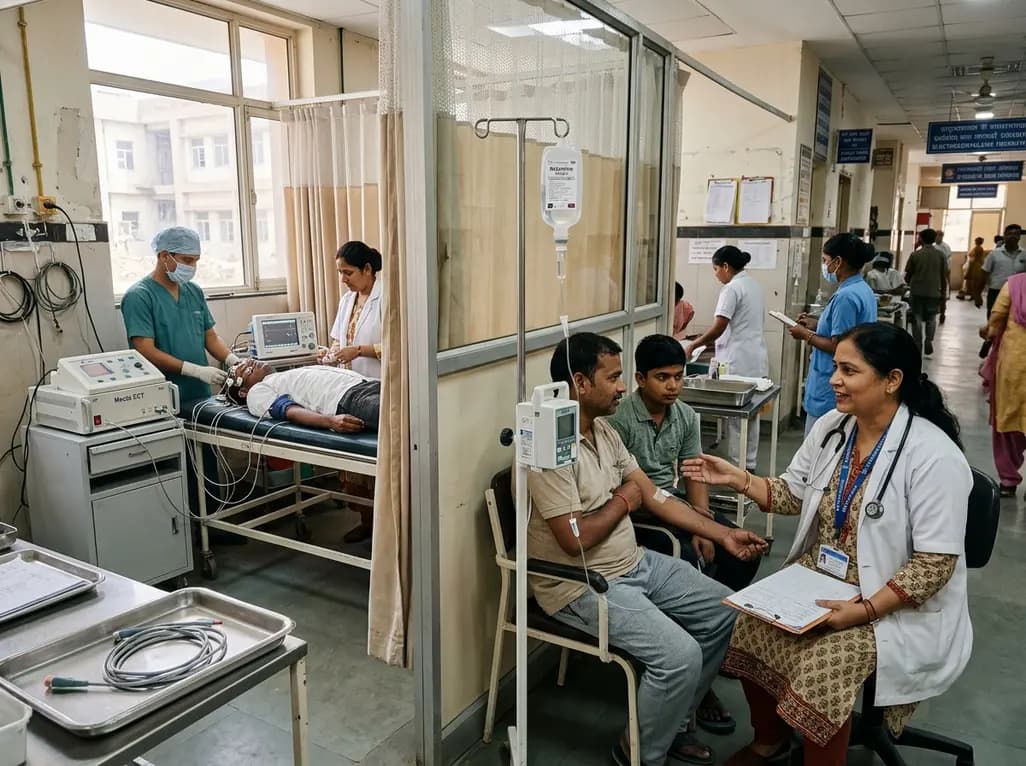
Clinicians face persistent hurdles when managing treatment-resistant depression in tertiary care. Although electroconvulsive therapy remains an established intervention for severe mood disorders, cognitive side effects often limit patient acceptance. Recently, racemic ketamine has emerged as a rapid, accessible alternative. A comprehensive health economic evaluation by Lebenbaum and colleagues provides critical data comparing these two interventions. Specifically, their decision tree model demonstrated that ketamine delivers superior quality-adjusted life-years while reducing healthcare and societal expenses. Consequently, these findings encourage clinicians to re-evaluate conventional treatment hierarchies for refractory affective illness.
Major depressive disorder imposes an immense global health burden. In fact, nearly one-third of affected individuals do not achieve remission after multiple antidepressant trials, meeting criteria for treatment-resistant depression. Historically, psychiatrists turned to electroconvulsive therapy as the definitive option for these severe cases. However, convulsive therapy requires general anesthesia, electrical seizure induction, and specialized post-treatment observation. Furthermore, persistent anterograde and retrograde amnesia frequently causes distress, leading many eligible candidates to refuse intervention.
In contrast, subanesthetic racemic ketamine offers an innovative pharmacological pathway. Ketamine antagonizes N-methyl-D-aspartate receptors and rapidly stimulates synaptogenesis in crucial cortical networks. Recent randomized comparative trials show that intravenous ketamine achieves noninferior antidepressant responses compared to electroconvulsive therapy over one month. In addition, ketamine preserves baseline cognitive function throughout the therapeutic course. Therefore, psychiatrists now regard ketamine as an appealing first-line procedural modality rather than an experimental resort.
The health economic model evaluated 29-week outcomes in adults experiencing nonpsychotic unipolar depressive episodes. Importantly, the researchers assessed clinical recovery and functional well-being through quality-adjusted life-years. Their analysis revealed that racemic ketamine generated an incremental gain of 0.024 quality-adjusted life-years over electroconvulsive therapy.
While an incremental value of 0.024 appears modest initially, it signifies substantial functional improvement across a severely debilitated population. Ketamine allowed patients to experience sustained mood elevation without post-ictal confusion or executive dysfunction. Furthermore, patients achieved faster functional reintegration into routine social and occupational domains. Multiple sensitivity analyses confirmed the stability of these health-related quality of life gains across variable patient subsets. As a result, the clinical evidence indicates that ketamine supports overall patient autonomy and functional independence more effectively than convulsive therapy.
Direct medical costs and economic sustainability heavily influence psychiatric treatment planning. The authors modeled expenditures from both formal healthcare payer and broad societal viewpoints over twenty-nine weeks. From the direct healthcare perspective, racemic ketamine saved 1,663 Canadian dollars per patient compared to electroconvulsive therapy. Moreover, societal cost calculations demonstrated an even greater financial advantage, yielding mean savings of 3,413 Canadian dollars per individual.
These fiscal savings stem from distinct operational differences. First, electroconvulsive therapy demands significant institutional resources, including operating theaters, dedicated anesthesiologists, and specialized post-anesthesia nursing care. Conversely, clinicians administer intravenous ketamine in ambulatory infusion rooms without tracheal intubation or paralytics. Additionally, societal analyses account for workplace absenteeism, lost wages, and informal caregiving demands. Because ketamine does not trigger protracted memory deficits, patients return to employment much earlier. Similarly, family members spend significantly fewer hours providing post-procedure supervision. Thus, ketamine clearly dominates electroconvulsive therapy economically by improving outcomes while simultaneously lowering systemic costs.
Tolerability remains a primary determinant of long-term adherence in psychiatric management. Electroconvulsive therapy carries well-recognized risks of transient delirium, retrograde memory loss, and delayed processing speed. Although unilateral stimulation and ultra-brief pulse widths minimize neurocognitive disruption, patient fear regarding memory loss remains widespread. Consequently, many patients discontinue therapy prematurely, triggering subsequent relapse.
In contrast, racemic ketamine displays an exceptionally favorable neurocognitive profile. During actual infusion sessions, patients occasionally report transient dissociation, mild nausea, or temporary blood pressure elevation. However, these psychotomimetic effects resolve spontaneously within two hours after infusion cessation. Crucially, longitudinal neuropsychological assessments show that ketamine leaves memory consolidation and executive functioning intact. Some clinical trials even report improved cognitive flexibility following depressive remission. Therefore, ketamine enhances patient compliance and reduces therapeutic dropouts. Furthermore, avoiding general anesthesia minimizes cardiovascular complications in medically vulnerable individuals.
These economic and clinical findings carry profound implications for psychiatric care in India. Treatment-resistant depression remains highly prevalent across Indian clinical settings, yet specialized electroconvulsive therapy units remain clustered primarily in tertiary academic hospitals. In addition, rural and semi-urban patients face significant logistical barriers, travel expenses, and intense social stigma surrounding convulsive therapy.
Conversely, racemic ketamine presents an accessible, scalable option. Ketamine is an off-patent anesthetic included on essential medicine lists throughout India, ensuring extremely low medication procurement costs. Indian psychiatrists can establish outpatient infusion suites in day-care centers without incurring the prohibitive capital expenses of operating theaters. Furthermore, the Mental Healthcare Act 2017 mandates non-discriminatory insurance coverage for mental illnesses. State health schemes and private insurers should therefore establish reimbursement packages for intravenous ketamine protocols. Such policy adoption would democratize rapid-acting psychiatric interventions, decrease caregiver burdens, and reduce productivity losses across the country.
Ketamine produces noticeable antidepressant effects within several hours following an initial intravenous infusion, reaching peak efficacy within twenty-four hours. In contrast, electroconvulsive therapy requires multiple sessions over two to three weeks to achieve comparable clinical improvements. Although both therapies demonstrate substantial overall response rates, ketamine offers a distinct kinetic advantage. Consequently, clinicians frequently select ketamine when rapid stabilization of severe symptoms or acute suicidal ideation is urgently needed.
Electroconvulsive therapy frequently induces transient retrograde amnesia, post-ictal disorientation, and executive dysfunction, which may persist for several weeks after completing a course. Conversely, racemic ketamine produces mild dissociative symptoms and perceptual disturbances that resolve within two hours after the infusion ends. Longitudinal studies confirm that ketamine preserves baseline memory consolidation and recall intact. Consequently, patients receiving ketamine can resume daily vocational and personal responsibilities without experiencing long-term cognitive interference.
Intravenous racemic ketamine is an inexpensive, off-patent drug that costs substantially less than specialized intranasal esketamine formulations. Furthermore, administering ketamine does not require general anesthesia, surgical theater access, or dedicated recovery teams. Because Indian families fund most psychiatric interventions through direct out-of-pocket spending, outpatient ketamine infusions significantly lower procedure costs. Additionally, faster recovery reduces family caregiver hours and productivity losses, making ketamine a highly sustainable option for Indian clinical practices.
Disclaimer: This content is for informational and educational purposes only and does not substitute professional medical judgment. Refer to the latest local and national guidelines for clinical practice.
References

Read summarized clinical updates, watch expert medical content, and earn CME certifications right from your smartphone.
Open your smartphone camera to scan and install.





A Canadian health economics study demonstrates that racemic ketamine yields higher quality-adjusted life-years and lower systemic costs than electroconvulsive therapy for nonpsychotic treatment-resistant depression, offering key insights for clinical practice and insurance policy.
Today
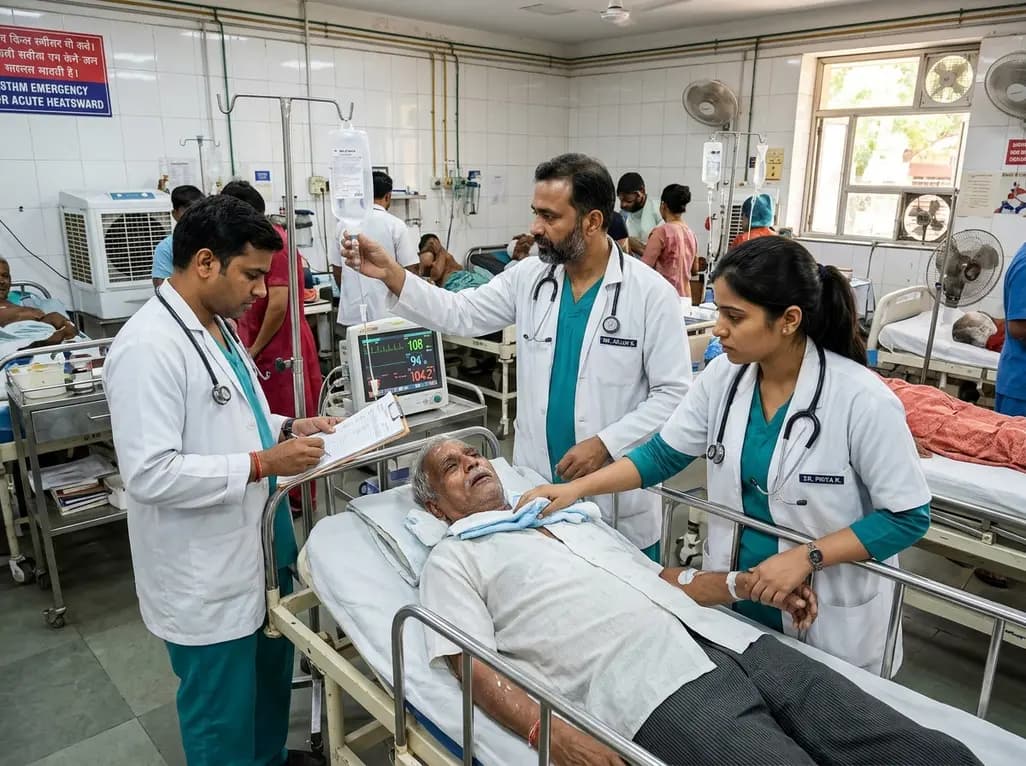
Recent epidemiological data reveals a dramatic surge in summer heat mortality driven by human-induced climate warming. This analysis explores the pathophysiological impacts on cardiac and renal systems, diagnostic dilemmas in death certification, and essential emergency cooling protocols for acute clinical care.
Today

Odisha has established India's first state-level clinical protocol specifically tailored for pregnant women with sickle cell disease. Developed with NHM and UNICEF, the framework provides structured antenatal screening, crisis mitigation, standardized referral pathways, and specialized interdisciplinary care.
Today

India is advancing preventive healthcare by integrating genomics, artificial intelligence, and quantum technologies. With the SANGAM programme sequencing one million Indian genomes, clinicians can unlock personalized therapies, detect cardiometabolic risks early, and curb the burden of diabetes and heart disease.
Today
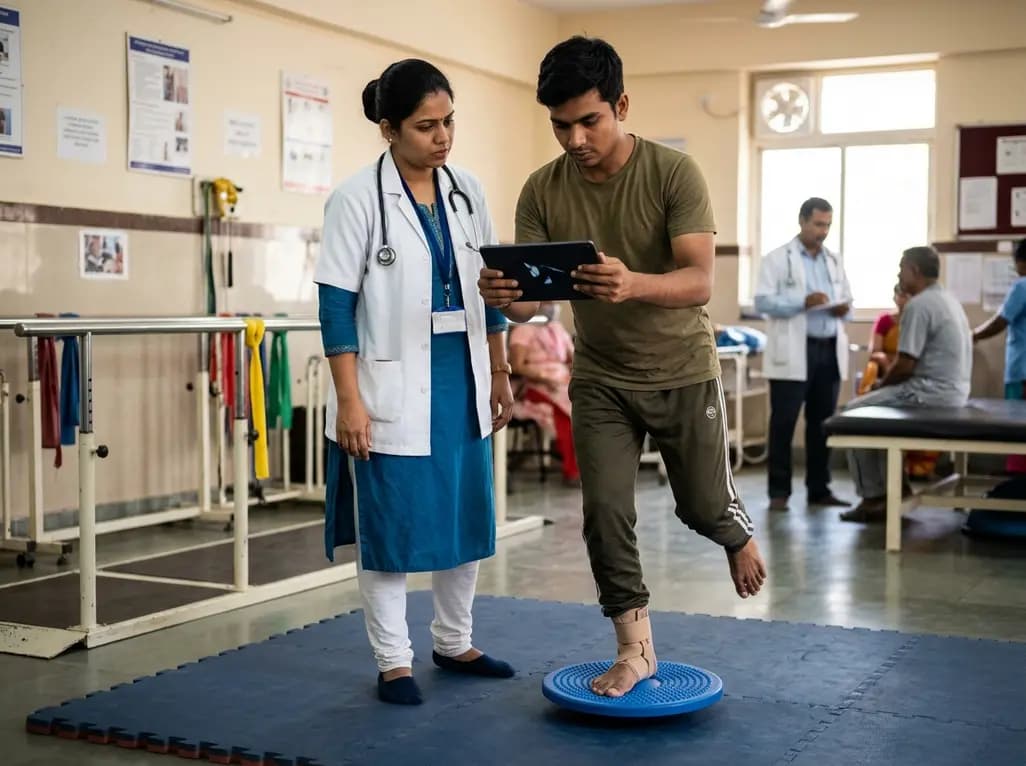
A randomized controlled trial demonstrates that an eight-week dual-task training intervention significantly improves static and dynamic postural control over standard balance exercises in individuals with chronic ankle instability, addressing critical neurocognitive deficits during athletic and daily activities.
Today
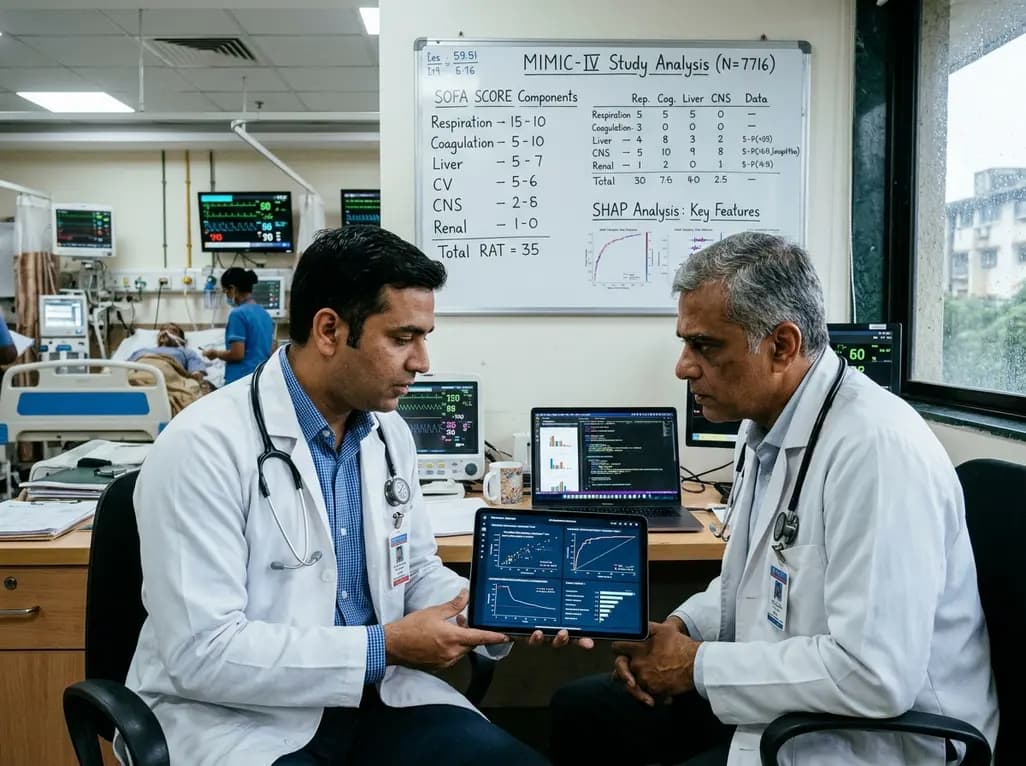
A retrospective cohort study of 7,716 ICU patients from the MIMIC-IV database demonstrates that Gradient Boosting Decision Trees significantly outperform traditional SOFA scores in predicting in-hospital mortality among patients with sepsis and diabetes, with SHAP analysis providing clinical interpretability.
Today
