.webp&w=384&q=75)

Loading, please wait...
Loading, please wait...

Aster DM Healthcare and Quality Care India Limited have launched a massive initiative to elevate regional medical infrastructure. This strategic project marks a critical milestone in India's medical development. Consequently, this collaborative venture heralds an era of unprecedented Kerala healthcare expansion. By integrating their extensive resources, the two healthcare giants aim to address growing clinical demands. This partnership focuses on enhancing the quality, availability, and reach of advanced medical treatments for patients across South India.
Following the landmark merger of Aster DM Healthcare and Quality Care India, the joint entity has committed to investing an additional ₹1,661 crore in the regional ecosystem. Furthermore, this financial infusion will add 1,315 new hospital beds across several strategic facilities in the state. Through this expansion, the combined healthcare network will operate 11 advanced hospitals with a total capacity of 4,575 beds.
Additionally, this project addresses the urgent need for specialized medical infrastructure in both urban and semi-urban pockets of Kerala. Consequently, the group plans to optimize its healthcare services by integrating advanced diagnostic tools and sophisticated treatment modalities. This substantial investment will also significantly boost local economies. Specifically, it will create nearly 7,900 new jobs for doctors, nurses, allied clinicians, and administrative staff.
Moreover, the integration aligns with the state's vision of becoming a global hub for medical tourism. Therefore, local and international patients will benefit from enhanced access to cutting-edge clinical protocols. The expansion project represents a major step forward for Aster and QCIL as they establish their dominant presence in South India's clinical market.
The strategic alliance between Aster DM Healthcare and Quality Care India Limited represents one of the largest mergers in India's clinical landscape. This synergy combines the extensive regional presence of Aster with the financial backing of global investors like Blackstone. Consequently, the consolidated group is poised to streamline its supply chain and enhance hospital operational efficiencies. This integration will also help standardise clinical outcomes and patient care protocols across all existing facilities.
Furthermore, the scale of this combined network allows for greater leverage when negotiating for high-end medical machinery and pharmaceuticals. Patients will eventually benefit from cost-effective treatments due to these scaled efficiencies. Additionally, the merger facilitates a more robust exchange of academic knowledge and clinical best practices among the medical staff. Doctors and researchers across the 11 hospitals can collaborate more closely on complex cases.
Subsequently, the combined group aims to transition toward higher-value medical specialties. By focusing on multi-organ transplants, oncology, and advanced cardiology, the hospitals can address complex tertiary and quaternary clinical needs. Therefore, this strategic amalgamation not only strengthens the financial position of the entities but also elevates the entire standard of regional healthcare delivery.
A cornerstone of this ambitious investment plan is the upcoming greenfield facility in Thiruvananthapuram. Specifically, Aster plans to build a state-of-the-art, 454-bed multi-specialty hospital in the capital city. This facility will significantly bridge the gap in advanced tertiary care accessibility within South Kerala. Currently, patients from southern districts often travel long distances to receive specialized care.
Furthermore, this upcoming hospital will feature advanced units for emergency medicine, neurosurgery, and comprehensive oncology. Consequently, the institution will serve as a critical referral hub for complex medical and surgical interventions. Additionally, the group plans to add a total of 834 beds through its organic pipeline in the state, augmenting its existing hospitals. This phased addition will ensure that medical services expand alongside growing patient volumes.
Moreover, local clinical teams will utilize next-generation diagnostic technologies to improve diagnostic accuracy. The physical expansion will also include state-of-the-art operating theatres and advanced intensive care units. Therefore, the Thiruvananthapuram facility is poised to become a landmark institution, delivering world-class medical services directly to the regional population. This strategic placement ensures that high-quality tertiary healthcare remains accessible to all segments of society.
Beyond clinical benefits, the massive capital infusion by Aster and Quality Care India will significantly stimulate regional economic development. The expansion roadmap outlines the generation of nearly 7,900 new employment opportunities across various clinical and administrative divisions. Consequently, this initiative will provide a major career boost for skilled healthcare professionals who reside in the state. Kerala is globally recognized for producing highly competent doctors, nurses, and allied medical personnel.
Furthermore, this development will help retain top-tier medical talent within the country. Historically, many local healthcare professionals migrated abroad due to limited advanced career opportunities at home. Therefore, by establishing world-class tertiary and quaternary hospitals, Aster offers highly rewarding clinical and research positions locally. This retention of expertise will inevitably strengthen the local clinical ecosystem over the long term.
Additionally, the construction and operational phases of these new hospital blocks will generate thousands of indirect jobs. Local service providers, supply chain partners, and construction firms will experience increased economic activity. Thus, the massive investment of ₹1,661 crore acts as a catalyst for overall societal and economic advancement in the region.
The clinical focus of the newly combined Aster-QCIL network revolves around upgrading existing systems to provide advanced quaternary care. Quaternary care involves highly specialized, uncommon treatments such as complex organ transplantations, advanced robotic surgeries, and experimental therapies. Consequently, the ₹1,661 crore investment will fund the acquisition of state-of-the-art medical equipment, including robotic surgical assistants and advanced radiation therapy machines.
Furthermore, the group is establishing specialized centers of excellence across its 11 hospitals in Kerala. These centers will focus specifically on interventional cardiology, pediatric cardiac surgery, and medical oncology. Additionally, the integration of advanced medical technology will support doctors in performing minimally invasive procedures with greater precision. This approach usually leads to shorter hospital stays, fewer complications, and quicker patient recovery times.
Subsequently, the group plans to integrate digital health solutions to streamline patient care pathways. For instance, advanced telemedicine platforms will connect remote clinics with central quaternary hubs. Therefore, patients in semi-urban areas can easily access expert consultations from renowned specialists. This holistic integration of technology and clinical expertise ensures that the expanded network remains at the forefront of modern medicine.
Q1: What are the primary objectives of the latest Aster-QCIL investment in Kerala?
The primary objectives focus on expanding regional medical capacity by investing ₹1,661 crore to add 1,315 new hospital beds. Furthermore, this initiative aims to create nearly 7,900 employment opportunities for medical professionals. The expanded network will focus on delivering advanced tertiary and quaternary care services across 11 hospitals in Kerala. Consequently, this development will improve local access to specialized treatments and boost the regional healthcare economy.
Q2: How will the upcoming Thiruvananthapuram facility benefit patients in South Kerala?
The upcoming 454-bed Aster Hospital in Thiruvananthapuram will address critical gaps in advanced clinical care. Specifically, this facility will offer cutting-edge oncology, neurosurgery, and emergency medicine services locally. Consequently, patients in the southern districts will no longer need to travel long distances for complex tertiary treatments. Additionally, the hospital will feature state-of-the-art diagnostic technologies, ensuring highly accurate diagnoses and superior clinical outcomes for the community.
Q3: How does the merger with Quality Care India strengthen Aster's market position?
The merger integrates Aster's established regional clinical network with Quality Care India's operational strengths, backed by global investment firms like Blackstone. Consequently, this consolidation establishes one of India’s largest healthcare chains with an expanded bed capacity. The synergy enables the group to optimize supply chains, standardise clinical protocols, and invest heavily in advanced medical technology, thereby enhancing its competitive edge in the Indian healthcare market.
Disclaimer: This content is for informational and educational purposes only. It does not constitute medical advice or replace professional judgment. Refer to the latest local and national guidelines for clinical practice.
References

Read summarized clinical updates, watch expert medical content, and earn CME certifications right from your smartphone.
Open your smartphone camera to scan and install.





Following the historic merger of Aster DM Healthcare and Quality Care India, the joint entity has announced a major ₹1,661 crore investment in Kerala. This strategic move will add 1,315 new hospital beds and generate approximately 7,900 new jobs, significantly strengthening regional tertiary and quaternary care.
3 months ago

A recent study demonstrates that spinal oxygen sensors do not require mitochondrial electron transport to trigger sympathetic excitation during acute hypoxia, revealing new insights into how mitochondrial oxidative stress modulates autonomic tone in cardiovascular and neurological diseases.
Today
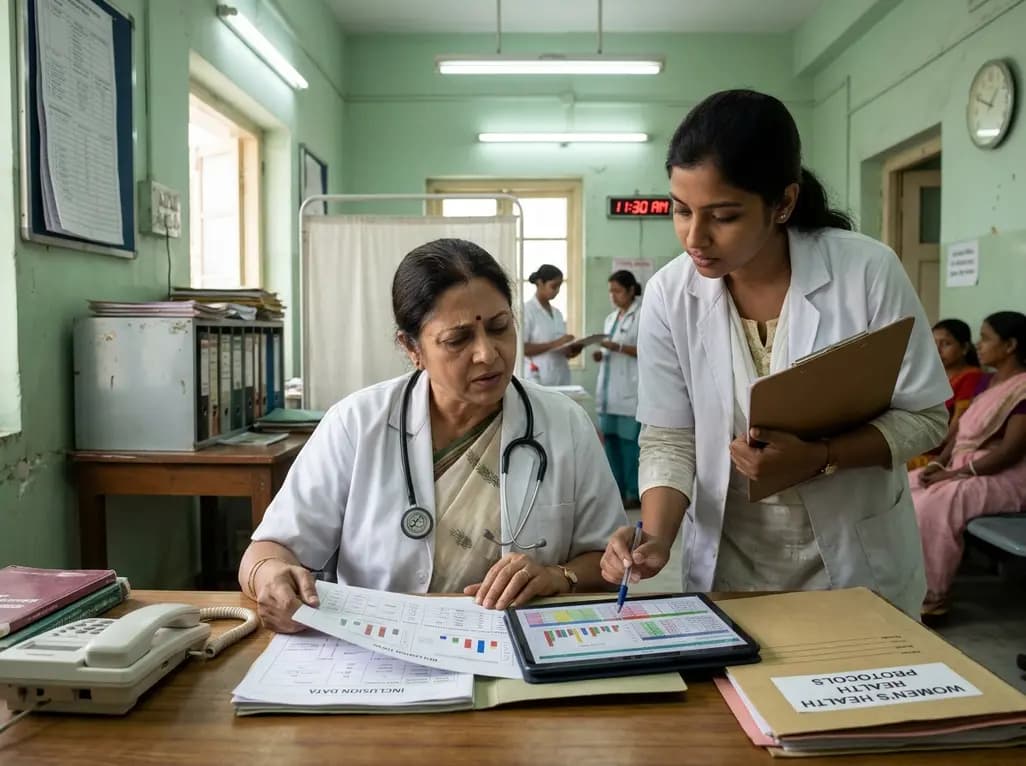
Demanding exhaustive hormonal profiling can inadvertently discourage clinical studies involving females. Methodological standards must align with the specific scientific question to expand, not restrict, equitable evidence for women.
Today

The Directorate General of Health Services directs Indian states to halt the hazardous reuse and reprocessing of single-use medical devices. Discover regulatory implications under the Drugs and Cosmetics Act, critical infection risks, legal liabilities, and operational changes required across clinical specialties.
Today
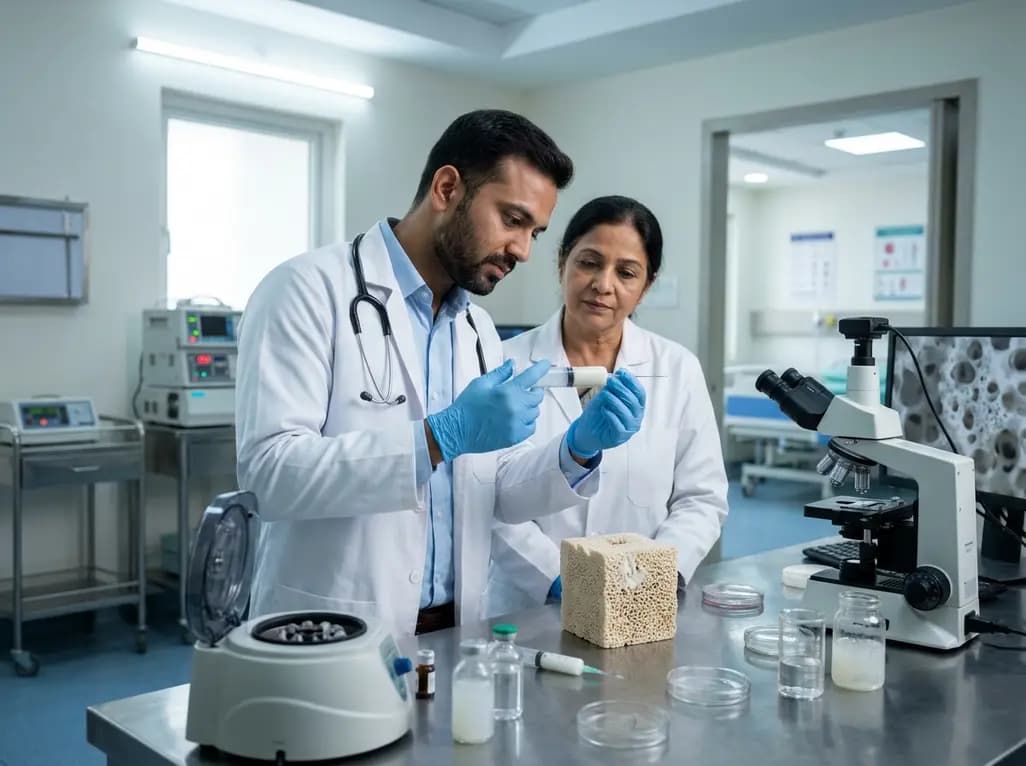
A novel calcium polyphosphate coacervate enables injectable bone implants with in situ hierarchical porosity via phase separation and gas foaming, significantly enhancing cell proliferation, energy metabolism, and osteogenic differentiation for minimally invasive bone defect repair.
Today

Following regulatory scrutiny from FSSAI regarding promotional representations and lean muscle preservation claims, Dr. Reddy's Laboratories and Nestlé Health Science are currently reviewing the branding and marketing strategy for their joint nutritional supplement Celevida GLP+.
Today
