.webp&w=384&q=75)

Loading, please wait...
Loading, please wait...

The Karnataka government recently unveiled a draft policy focusing on digital wellness for students. Developed by the State Mental Health Authority and NIMHANS, this initiative addresses the surge in technology addiction. As nearly 25% of Indian adolescents show signs of internet addiction, the policy aims to foster emotional regulation. Consequently, schools must now integrate social media literacy into their core curriculum.
The draft suggests a multi-pronged approach involving students, teachers, and parents. Schools will be required to establish Digital Safety and Wellness Committees. These committees will include school heads, counsellors, and even cybercrime officials. Furthermore, the policy recommends capping recreational screen time at one hour daily. This limit specifically applies to usage outside of academic requirements.
Parents play a crucial role in managing digital exposure at home. The draft policy encourages device-free family time and structured screen routines. Additionally, teachers will receive training to identify early mental health red flags. Since sleep disturbances and anxiety are rising, early intervention is essential. The policy also advises schools to return to traditional communication methods like diaries. Schools are also encouraged to set guidelines for AI use to prevent plagiarism.
Q1: What is the recommended screen time limit for students?
The draft policy proposes a cap of one hour per day for recreational screen use outside of school hours.
Q2: Who developed the Karnataka digital wellness policy?
The Department of Health and Family Welfare and the Karnataka State Mental Health Authority created it in collaboration with NIMHANS.
Q3: Which age group is the primary focus of this policy?
The target group primarily includes students from Classes 9 to 12, along with their teachers and parents.
Disclaimer: This content is for informational and educational purposes only. It does not constitute medical advice or replace professional judgment. Refer to the latest local and national guidelines for clinical practice.
References

Read summarized clinical updates, watch expert medical content, and earn CME certifications right from your smartphone.
Open your smartphone camera to scan and install.





Karnataka's draft policy on responsible digital use targets screen addiction and cyber risks for students in Classes 9-12 with NIMHANS-led guidelines....
6 months ago

Review how tailored exercise programs benefit frail older patients with heart failure. Explore pathophysiological mechanisms, individualized training prescriptions, and strategies to overcome adherence barriers in clinical practice.
Today
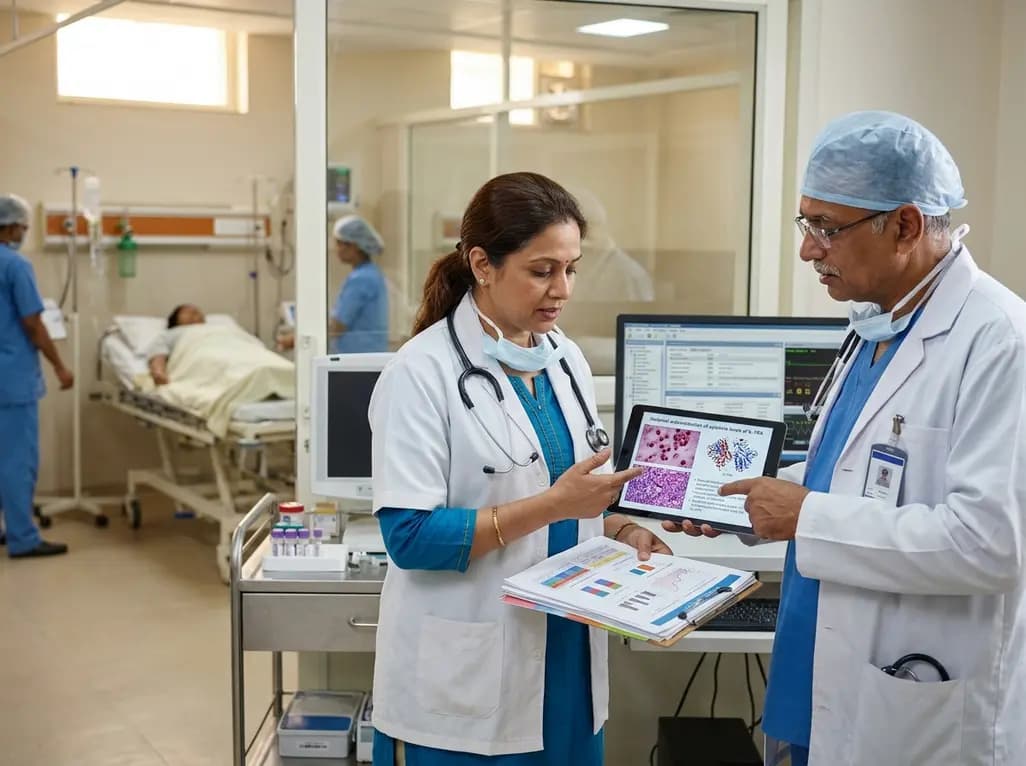
Recent clinical studies reveal maternal autoantibodies targeting IL-1RA as potential triggers for preterm labor, opening avenues for targeted cytokine therapies. Concurrently, new perioperative findings show inhaled cannabis increases propofol requirements during upper endoscopy compared to oral edible consumption.
Today

In high-risk pulmonary embolism complicated by severe anemia and active uterine bleeding, systemic thrombolysis is contraindicated. Large-bore aspiration thrombectomy provides rapid hemodynamic rescue without fibrinolysis, supported by inferior vena cava filter placement and multidisciplinary critical care.
Today

This comparative study evaluates posterior labral tears with and without glenohumeral instability, highlighting distinct demographic patterns, MRI underestimation in stable shoulders, and successful arthroscopic repair outcomes.
Today

A clinical study demonstrates that early intervention with tocilizumab, either as monotherapy or bridged with corticosteroids, achieves significant proptosis reduction and resolves active inflammation in treatment-naive thyroid eye disease.
Today
