.webp&w=384&q=75)

Loading, please wait...
Loading, please wait...

The COVID-19 pandemic significantly increased healthcare worker job strain, particularly in long-term care settings. While the impact was universal, the degree of strain varied between regulated nurses and unregulated personal support workers (PSWs). Recent research highlights how these differences affect both mental and general health outcomes.
A cross-sectional study conducted in 2021 analyzed the experiences of healthcare staff in residential care homes. It focused on workload increases, overtime, and beyond-role work. The findings indicate that nurses experienced a higher prevalence of strain compared to PSWs. Furthermore, the correlation between job conditions and health decline showed distinct patterns across occupations.
Beyond-role work, which involves performing duties outside standard responsibilities, was a major stressor for all staff. For both nurses and PSWs, this practice was strongly associated with worsened mental health. Consequently, the psychological burden of the pandemic was felt across the entire care spectrum. Additionally, nurses reported a significant decline in general physical health due to these roles, a trend not as pronounced in PSWs.
These findings emphasize the need for targeted monitoring of health among staff in long-term care (LTCS) settings. Occupational health practitioners must identify specific experiences of job strain to provide effective solutions. Moreover, collaboration with management is essential to ensure workforce safety. In India, where nursing shortages and high workloads are common, these insights are particularly relevant for hospital administrators and policy makers.
Key indicators include increased workloads, excessive overtime, and performing tasks that fall outside one's official job description or professional training.
While both experience mental health decline due to beyond-role work, nurses are more likely to report worsened general physical health compared to PSWs in similar roles.
Disclaimer: This content is for informational and educational purposes only. It does not constitute professional medical advice, diagnosis, or treatment. Always seek the advice of your physician or other qualified health provider with any questions you may have regarding a medical condition. Refer to the latest local and national guidelines for clinical practice.
References

Read summarized clinical updates, watch expert medical content, and earn CME certifications right from your smartphone.
Open your smartphone camera to scan and install.





A study explores how job strain, including workload and beyond-role work, impacted the mental and general health of nurses and PSWs during the pandemic....
5 months ago
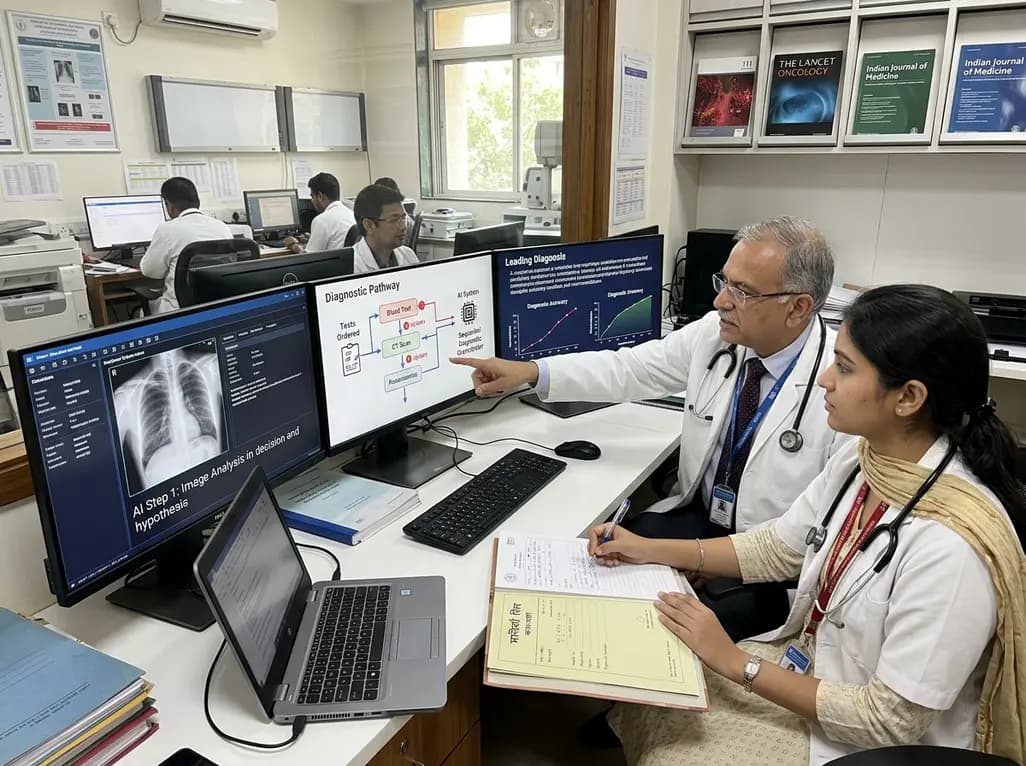
A breakthrough peer-reviewed study demonstrates that a sequential AI diagnosis system can mirror real-world clinical reasoning. By ordering stepwise tests and updating hypotheses dynamically, this multi-agent orchestrator achieved superior diagnostic accuracy while reducing investigative costs.
Today

A prenatal case highlights severe glutaric acidemia type II presenting as bilateral hyperechoic cystic kidneys at 18 weeks. Whole-exome sequencing revealed a novel homozygous ETFDH frameshift variant, demonstrating the power of rapid genetic testing in fetal renal anomalies.
Today

Review how tailored exercise programs benefit frail older patients with heart failure. Explore pathophysiological mechanisms, individualized training prescriptions, and strategies to overcome adherence barriers in clinical practice.
Yesterday

This comparative study evaluates posterior labral tears with and without glenohumeral instability, highlighting distinct demographic patterns, MRI underestimation in stable shoulders, and successful arthroscopic repair outcomes.
Yesterday

A clinical study demonstrates that early intervention with tocilizumab, either as monotherapy or bridged with corticosteroids, achieves significant proptosis reduction and resolves active inflammation in treatment-naive thyroid eye disease.
Yesterday
