.webp&w=384&q=75)

Loading, please wait...
Loading, please wait...
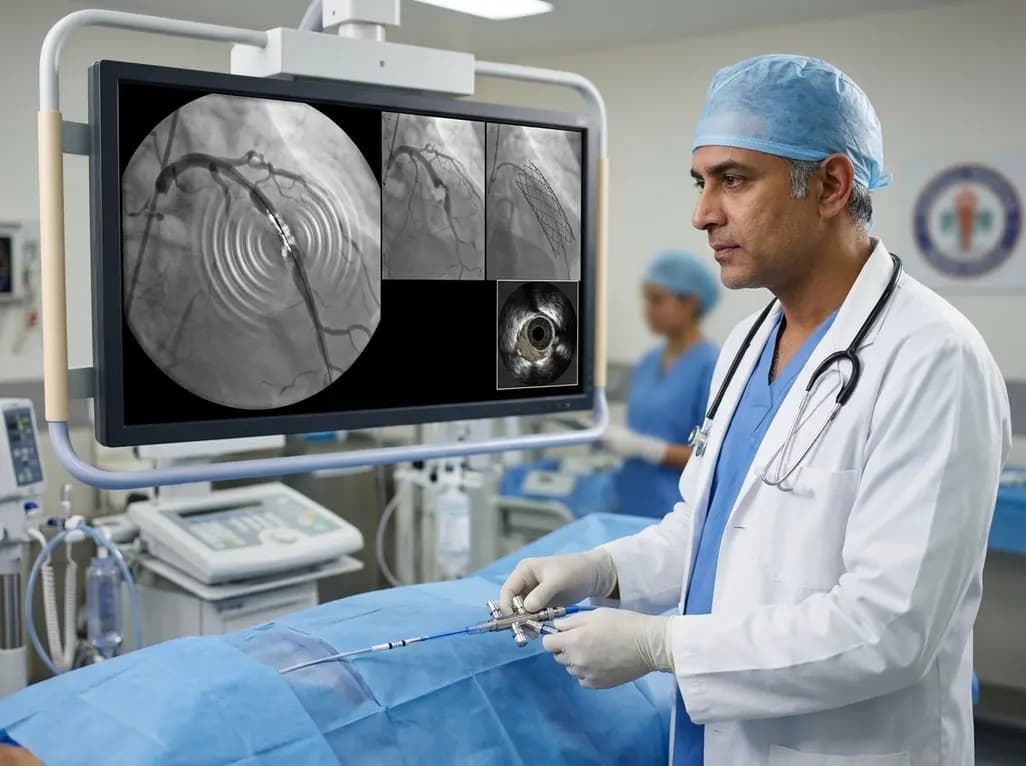
Managing severely calcified coronary lesions has historically presented significant hurdles for interventional cardiologists. These rigid plaques often prevent adequate balloon expansion and lead to suboptimal stent deployment. Consequently, the introduction of intravascular lithotripsy (IVL) revolutionized the field by offering a safer alternative to mechanical atherectomy. Achieving Intravascular Lithotripsy Procedural Success is now a primary goal in complex percutaneous coronary interventions. This technology utilizes acoustic shockwaves to selectively fracture both superficial and deep calcium while preserving the integrity of soft vascular tissues. Furthermore, early clinical trials demonstrated that IVL effectively increases vessel compliance, which simplifies the subsequent stenting process. However, recent data from real-world registries suggest that success is not universally guaranteed. Researchers are now looking beyond the initial procedure to understand why some patients still face long-term challenges. Specifically, the BENELUX-IVL registry has provided critical insights into the drivers of procedural and clinical failure. By analyzing a large cohort of patients, this study clarifies the residual risks that persist even after successful lithotripsy application. Therefore, clinicians must recognize that while the tool is powerful, patient selection and procedural planning remain paramount to ensuring durable outcomes in this high-risk population.
Despite the high efficacy of lithotripsy, technical failure remains a concern in a subset of cases. The BENELUX-IVL registry identifies several independent factors that contribute to these unsuccessful outcomes. For instance, the presence of multivessel disease significantly increases the complexity of the intervention. Moreover, in-stent lesions represent a particularly challenging environment for shockwave delivery. In these scenarios, the pre-existing metal struts can interfere with balloon positioning or acoustic wave propagation. Consequently, clinicians often encounter difficulty achieving the desired residual stenosis of less than 30%. Another critical factor is the absence of intravascular imaging during the procedure. Without the guidance of IVUS or OCT, operators may fail to fully characterize the extent of calcification. This lack of visualization often leads to insufficient pulse delivery or improper balloon sizing. Additionally, procedural complications such as dissections or perforations are more likely when imaging is omitted. Therefore, the study emphasizes that technical success is not merely a product of the device itself. Instead, it relies on a comprehensive procedural strategy that includes advanced imaging and careful lesion preparation. By addressing these modifiable factors, interventionalists can significantly reduce the incidence of technical failure in complex calcific disease.
Long-term clinical stability is the ultimate metric for evaluating any interventional tool. In the context of calcified coronary disease, 12-month Target Lesion Failure (TLF) serves as a robust indicator of success. The BENELUX-IVL registry found that several non-modifiable patient factors independently predict TLF. Specifically, patients with diabetes mellitus face a much higher risk of adverse events following the procedure. Furthermore, a reduced estimated glomerular filtration rate is strongly associated with poorer outcomes. This suggests that the systemic burden of renal dysfunction and metabolic disease continues to influence vessel healing even after mechanical plaque modification. Notably, younger age was also identified as a risk factor for failure in this study. This paradoxical finding might reflect a more aggressive atherosclerotic phenotype in younger individuals who develop severe calcification early. Moreover, the study highlights that technical failure during the initial procedure is a powerful predictor of subsequent TLF. This reinforces the idea that Intravascular Lithotripsy Procedural Success is the foundational requirement for long-term target vessel safety. Consequently, optimizing the index procedure is not just a matter of immediate results; it is a vital step in preventing cardiac death and myocardial infarction over the following year.
Anatomical considerations play a decisive role in determining the durability of coronary interventions. The BENELUX-IVL registry specifically highlighted the left circumflex artery as a location associated with higher TLF rates. This may be due to the inherent tortuosity and challenging take-off angles often found in this vessel. Additionally, treating in-stent target lesions remains a high-stakes endeavor with increased risks of recurrence. In these cases, the interplay between old stent struts, neointimal hyperplasia, and underlying calcium creates a complex substrate. Furthermore, the registry data suggest that multivessel disease correlates with technical difficulties that eventually translate into clinical failure. Therefore, the complexity of the coronary anatomy must be factored into the risk-benefit analysis for every patient. Moreover, clinicians should be prepared for the possibility that certain lesions may require adjunctive therapies alongside IVL. For example, combining lithotripsy with other plaque modification tools might be necessary in ultra-complex cases. Consequently, a one-size-fits-all approach is insufficient for modern interventional cardiology. By tailoring the intervention to the specific anatomical challenges of the lesion, doctors can better navigate the residual risks inherent in calcified vessels.
One of the most striking findings from the registry is the protective role of intravascular imaging. The absence of imaging was independently linked to a nearly two-fold increase in technical failure. Specifically, technologies like Optical Coherence Tomography (OCT) allow for precise measurement of calcium thickness and arc. This information is crucial for deciding the number of lithotripsy pulses required for effective fracture. Moreover, imaging enables the operator to confirm that the stent is fully expanded and well-apposed to the vessel wall. In contrast, relying solely on angiography can lead to a false sense of security regarding the procedural result. Furthermore, intravascular imaging helps identify procedural complications that might be invisible on a standard X-ray. Consequently, the routine use of these tools is now considered a best practice in calcified lesion management. Additionally, the study suggests that imaging-guided procedures are more likely to achieve the threshold for Intravascular Lithotripsy Procedural Success. Therefore, institutions should prioritize the availability and use of imaging technology to improve patient safety. By integrating these advanced diagnostics into the workflow, cardiologists can mitigate many of the factors that lead to both technical and clinical failure.
The findings from the BENELUX-IVL registry offer a clear roadmap for improving outcomes in patients with calcified coronary disease. First, it is evident that procedural success is the primary driver of long-term clinical safety. Therefore, operators must strive for perfection during the initial intervention by utilizing all available tools. Moreover, the study clarifies that residual risk is often driven by patient comorbidities such as diabetes and chronic kidney disease. These patients require more intensive post-procedural follow-up and optimized medical therapy to prevent target lesion failure. Furthermore, the identification of in-stent lesions as a high-risk subset highlights an area where further innovation is needed. Specifically, interventionalists should be cautious when applying lithotripsy within existing stents and ensure optimal lesion preparation. Additionally, the consistent benefit seen with intravascular imaging cannot be overstated. It is no longer an optional luxury but a necessary component of complex PCI. Consequently, the medical community must focus on increasing the adoption of imaging-guided protocols. By understanding the distinct interplay of modifiable and non-modifiable factors, we can move closer to a future where calcified lesions no longer pose a disproportionate risk to our patients.
Intravascular imaging is essential because it provides a detailed view of the calcium's depth and distribution, which angiography cannot achieve. By using IVUS or OCT, a cardiologist can determine the exact pulse count and balloon sizing needed. This precision reduces the risk of underexpansion and complications, which are the primary causes of technical failure. Therefore, imaging transforms a blind procedure into a guided, high-precision intervention for better results.
According to recent registry data, the most significant risk factors include diabetes mellitus, reduced kidney function, and younger patient age. Anatomically, lesions located in the left circumflex artery or those involving pre-existing stents also face higher failure rates. Most importantly, failing to achieve technical success during the initial procedure significantly increases the hazard of long-term failure. Consequently, clinicians must focus on optimizing the index procedure to mitigate these risks.
Diabetes mellitus is a major driver of target lesion failure because it promotes aggressive atherosclerosis and impairs the vessel's natural healing response. Even when the initial lithotripsy procedure is successful, diabetic patients remain at higher risk for restenosis and subsequent revascularization. Therefore, these individuals require rigorous glycemic control and intensive antiplatelet therapy following the procedure. Managing these systemic factors is just as important as the mechanical success of the coronary intervention itself.
Disclaimer: This content is for informational and educational purposes only and does not constitute medical advice or a professional relationship. Always seek the advice of a physician or other qualified health provider with any questions you may have regarding a medical condition. Refer to the latest local and national guidelines for clinical practice.
References
Oliveri F et al. Technical and Target Lesion Failure in Calcified Coronary Lesions: Residual Risk Beyond Successful Lithotripsy. JACC Adv. 2026 Jul 15. doi: undefined. PMID: 42456266.
Hill JM et al. Intravascular Lithotripsy for Treatment of Severely Calcified Coronary Artery Disease. J Am Coll Cardiol. 2020;76(22):2635-2646.
Brinton TJ et al. Feasibility of Transmural Delivery of Acoustic Shock Waves for the Treatment of Calcified Coronary Stenosis. Catheter Cardiovasc Interv. 2019;93(2):212-215.

Read summarized clinical updates, watch expert medical content, and earn CME certifications right from your smartphone.
Open your smartphone camera to scan and install.





The BENELUX-IVL registry study highlights that technical failure and 12-month target lesion failure in IVL-assisted PCI are driven by factors like in-stent lesions, diabetes, and the absence of intravascular imaging, rather than technology limitations.
3 months ago

As monsoon seasons elevate arboviral disease threats, Tamil Nadu has initiated an ICMR-monitored evaluation of the tetravalent dengue vaccine in Tenkasi district. Clinicians emphasize clinical monitoring, public prevention, and high-quality early pediatric care to reduce disease morbidity across endemic regions.
Today

Leucine Rich Bio has introduced South Asia's first comprehensive vaginal microbiome test, BugSpeaks. By profiling microbial dysbiosis, pathogens, and antimicrobial resistance, this next-generation diagnostic platform provides clinicians with deeper insights into recurrent infections, fertility, and reproductive health.
Today

Review how tailored exercise programs benefit frail older patients with heart failure. Explore pathophysiological mechanisms, individualized training prescriptions, and strategies to overcome adherence barriers in clinical practice.
Today

This comparative study evaluates posterior labral tears with and without glenohumeral instability, highlighting distinct demographic patterns, MRI underestimation in stable shoulders, and successful arthroscopic repair outcomes.
Today

A clinical study demonstrates that early intervention with tocilizumab, either as monotherapy or bridged with corticosteroids, achieves significant proptosis reduction and resolves active inflammation in treatment-naive thyroid eye disease.
Today
