.webp&w=384&q=75)

Loading, please wait...
Loading, please wait...
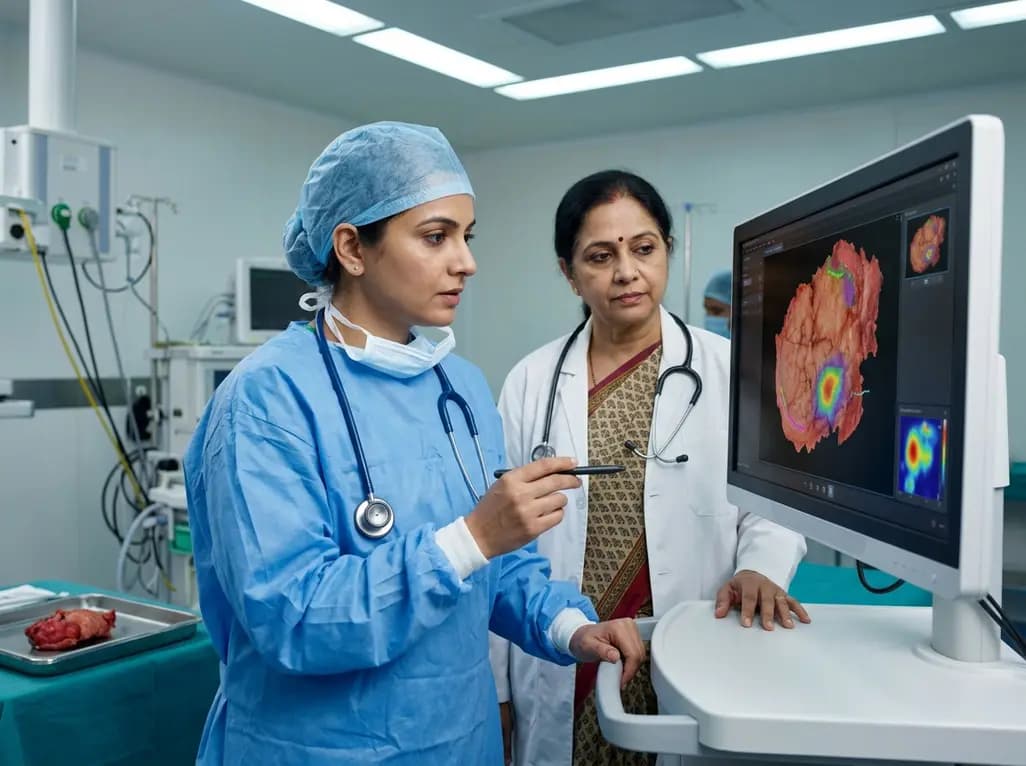
Breast-conserving surgery (BCS) stands as a highly effective treatment for early-stage breast cancer patients. Surgeons aim to achieve clear breast-conserving surgery margins, which strictly requires that no ink touches the tumor on the excised specimen. However, current clinical data suggests that nearly 15% to 35% of these patients require additional surgeries due to the presence of malignant cells at the margin. This high re-excision rate often leads to poorer cosmetic results and increased psychological distress for the patient.
Consequently, many medical experts are looking beyond traditional methods for assessing margins. For decades, clinicians relied on frozen section analysis or touch-preparation cytology. While these methods are standardized, they are also labor-intensive and time-consuming. Furthermore, they often require a high level of pathology expertise that may not be available in every surgical suite. Therefore, the search for more efficient, real-time diagnostic tools has accelerated.
Emerging technological approaches are now gaining significant attention within the surgical community. For instance, new imaging devices such as wide-field optical coherence tomography (OCT) provide high-resolution, microscopic views of the tissue in real-time. Additionally, the integration of artificial intelligence (AI) helps surgeons identify suspicious areas with greater precision than ever before. These AI-enabled systems can analyze millions of tissue images to flag difficult-to-detect cancer cells immediately during the procedure.
Moreover, the development of molecular probes represents another major research direction for the future. These probes target specific markers on cancer cells, allowing them to "light up" under specialized imaging systems. This molecular-level navigation ensures that surgeons can preserve more healthy tissue while ensuring the complete removal of the tumor. Ultimately, collaboration between oncology specialists, bioengineers, and radiologists is essential to reducing positive margin rates and improving long-term recurrence outcomes.
A clear margin, defined as "no ink on tumor," significantly reduces the risk of local recurrence. If margins are positive, patients often need a second surgery to ensure all cancerous tissue is removed.
AI-enabled systems use advanced algorithms to evaluate high-resolution images of the excised tissue. This provides the surgical team with instant feedback, allowing them to re-excise suspicious areas before the initial operation concludes.
Frozen sections are resource-intensive and can cause tissue artifacts. Additionally, they only sample specific areas of the margin, which might miss focal clusters of malignant cells in other parts of the specimen.
Disclaimer: This content is for informational and educational purposes only and does not constitute medical advice or a professional relationship. Always seek the advice of a physician or other qualified health provider with any questions you may have regarding a medical condition. Refer to the latest local and national guidelines for clinical practice.
References

Read summarized clinical updates, watch expert medical content, and earn CME certifications right from your smartphone.
Open your smartphone camera to scan and install.





A review of current and emerging technologies, including AI-driven imaging, for real-time margin assessment in breast-conserving surgery....
4 months ago

Novel diimide and hydrazone scaffolds, particularly compound #C4, synergistically reactivate latent HIV-1 when combined with JQ1 or PKC activators. Demonstrating donor-matched proviral transcription ex vivo and non-canonical signaling, these findings advance shock and kill strategies toward reservoir eradication.
Today

A comparative cohort study evaluates vNOTES vs TLH hysterectomy for benign conditions, demonstrating shorter operative duration, faster return to daily activities, and equivalent female sexual function scores without increased dyspareunia.
Today

Review how tailored exercise programs benefit frail older patients with heart failure. Explore pathophysiological mechanisms, individualized training prescriptions, and strategies to overcome adherence barriers in clinical practice.
Yesterday

This comparative study evaluates posterior labral tears with and without glenohumeral instability, highlighting distinct demographic patterns, MRI underestimation in stable shoulders, and successful arthroscopic repair outcomes.
Yesterday

A clinical study demonstrates that early intervention with tocilizumab, either as monotherapy or bridged with corticosteroids, achieves significant proptosis reduction and resolves active inflammation in treatment-naive thyroid eye disease.
Today
