.webp&w=384&q=75)

Loading, please wait...
Loading, please wait...

Modern medical practice increasingly recognizes image-guided intervention as a comprehensive clinical discipline rather than a diagnostic support service. Historically, radiology departments operated primarily as technical procedure units that fulfilled requests from external surgical teams. However, contemporary healthcare demands that interventional radiologists assume direct clinical ownership of their patients. A landmark longitudinal study evaluating Medicare fee-for-service claims has illuminated how dedicated clinical encounters directly influence interventional radiology procedural complexity. Radiologists who allocate substantial practice time to clinical consultations and interventional therapies routinely manage far more intricate medical conditions.
Individual practitioner focus represents the single strongest determinant of case difficulty in modern vascular and interventional radiology. The nationwide investigation demonstrated that radiologists dedicating over ninety percent of their effort to interventional care experienced dramatic increases in case complexity compared to peers with lower interventional shares. Specifically, practitioners with exclusive interventional dedication demonstrated an odds ratio of 74.74 for performing high-complexity procedures billing at least five work relative value units. Practice-level specialization also yielded positive effects, although individual physician focus remained vastly more influential. Consequently, health systems must appreciate that procedural expertise flourishes when specialists dedicate their full clinical attention to image-guided interventions rather than dividing time between reading rooms and angiosuites. Furthermore, intense clinical immersion sharpens microcatheter skills, tactile responsiveness, and rapid crisis management during emergent embolization or thrombectomy cases. Therefore, healthcare administrators should foster structured subspecialty tracks that insulate interventionalists from routine diagnostic workloads, thereby driving clinical excellence and elevating procedural standards across tertiary medical centers.
The delivery of dedicated evaluation and management services constitutes the operational backbone of advanced interventional care. Procedural specialists cannot achieve optimal clinical outcomes by merely serving as technicians on demand. Instead, comprehensive pre-procedural visits allow operators to evaluate vascular anatomy, review cross-sectional studies, and assess cardiopulmonary risks. Multivariable analysis showed that each one-unit increase in evaluation and management relative value units per procedure yielded a statistically significant 0.14 increase in procedural work units. Moreover, direct patient interactions enable clinicians to explain minimally invasive alternatives, set realistic clinical expectations, and formulate individualized periprocedural care plans. Inpatient rounds and longitudinal outpatient clinics also identify early ischemic complications, puncture-site hematomas, or delayed contrast nephropathy before they escalate into life-threatening emergencies. As a result, robust clinical services actively fuel patient referrals for complex therapies such as transjugular intrahepatic portosystemic shunts, arterial reconstructions, and transarterial chemoembolization. Ultimately, longitudinal clinical presence elevates the perceived institutional value of interventional radiology services within modern multidisciplinary hospital environments.
Integrating nonphysician practitioners into radiology departments significantly expands clinical bandwidth and enhances patient care coordination. Nurse practitioners and physician assistants deliver essential clinical evaluation and management services that streamline workflow efficiency. The data indicated that a one-unit increase in practitioner-billed evaluation work similarly produced an additional 0.14 increase in procedural work complexity per case. By conducting detailed baseline assessments, obtaining consent, and coordinating pre-admission laboratory testing, these allied professionals enable interventionalists to dedicate their primary focus to technical execution. Furthermore, mid-level providers effectively manage hospital discharge planning, reconcile complex discharge medications, and triage post-procedure outpatient inquiries. In tertiary centers with high emergency burdens, nonphysician practitioners also perform ward rounds, check puncture sites, and ensure prompt removal of vascular sheaths. Consequently, collaborative staffing models prevent physician burnout while preserving clinical rigor across every stage of treatment. Modern interventional groups that embrace advanced practice providers consistently report higher procedural throughput, superior patient satisfaction, and expanded capacity to undertake sophisticated reconstructive therapies.
Radiology leadership must re-evaluate traditional compensation frameworks and departmental staffing strategies in light of these clinical findings. Diagnostic imaging practices have long prioritized rapid image interpretation metrics, frequently viewing unbilled clinical consultation hours as lost productivity. However, this outdated perspective overlooks the tremendous downstream economic and clinical value that advanced image-guided therapies generate. High-complexity interventions generate substantial downstream revenue through operating suite utilization, specialized hardware usage, and inpatient admissions. Therefore, practice leaders must actively protect dedicated clinic hours for interventional radiologists, ensuring adequate office space and administrative support. In addition, departmental policies should actively track consultation volumes alongside conventional procedural tallies. When healthcare organizations incentivize thorough clinical evaluations, they empower interventionalists to accept higher-risk surgical candidates who require intensive perioperative surveillance. Furthermore, hospital administrators should support dedicated interventional recovery beds and specialized nursing protocols. By aligning institutional incentives with comprehensive clinical practice models, healthcare systems simultaneously enhance patient safety profiles and maximize departmental operating margins across competitive medical markets.
The transition of interventional radiology toward a clinical model holds profound relevance for international and Indian clinical environments. In India, interventional radiology is rapidly maturing across corporate hospital networks and government medical institutions. Historically, Indian radiologists performed biopsies, drainages, and vascular access on request from attending general surgeons or nephrologists. However, pioneering centers across India now operate dedicated outpatient clinics for varicose veins, uterine fibroid embolization, diabetic foot limb salvage, and neurovascular interventions. Applying dedicated clinical evaluation enables Indian interventionalists to independently manage complex vascular pathology and reduce unnecessary open surgical interventions. Moreover, as specialized infrastructure expands, training programs like the Diplomate of National Board and specialized university fellowships emphasize bedside rounds, clinical pharmacology, and perioperative critical care. Establishing robust clinical consultations also builds direct doctor-patient relationships, which prevents commercial commoditization of radiology services. Ultimately, embracing comprehensive evaluation protocols will allow Indian interventional radiologists to master high-complexity therapies, optimize patient safety, and solidify their vital status as primary clinicians within contemporary multidisciplinary care.
Evaluation and management visits allow interventional radiologists to thoroughly assess patient candidacy, review diagnostic imaging, and optimize medical comorbidities prior to complex operations. Furthermore, dedicated consultations foster patient trust and clarify procedural goals. Post-procedure clinical encounters help identify early complications and manage recovery protocols. Consequently, establishing robust outpatient clinics transforms interventional radiology from a mere technical consultation service into a comprehensive, patient-centered clinical specialty that delivers superior longitudinal outcomes.
Physicians who dedicate ninety percent or more of their clinical practice to interventional radiology maintain heightened technical proficiency and deep familiarity with advanced endovascular devices. Moreover, specialized practitioners routinely manage higher patient volumes, which sharpens clinical decision-making during difficult interventions. Therefore, dedicated interventionalists achieve fewer procedural complications, shorter operative durations, and improved technical success rates when handling high-risk interventions such as arterial embolization, complex thrombectomy, or advanced oncologic ablation.
Nonphysician practitioners, including clinical nurse specialists and physician assistants, play a vital operational role by conducting routine pre-procedural screenings, obtaining informed consent, and assisting with inpatient rounds. In addition, they coordinate post-discharge follow-up care and manage routine patient inquiries. This critical clinical support liberates interventional radiologists to focus their time on technically demanding catheter-based procedures. As a result, radiology practices expand procedural throughput without compromising clinical evaluation quality.
Disclaimer: This content is for informational and educational purposes only and does not constitute medical advice, diagnosis, or treatment. Healthcare professionals should exercise independent clinical judgment. Refer to the latest local and national guidelines for clinical practice.
References

Read summarized clinical updates, watch expert medical content, and earn CME certifications right from your smartphone.
Open your smartphone camera to scan and install.





Research confirms that dedicated clinical evaluation and management services by interventional radiologists and nonphysician practitioners significantly boost procedural complexity, reinforcing interventional radiology as an essential, patient-centered clinical specialty.
Today

A mixed-methods concept mapping study reveals that while health goals are shared, cooking facilitators and barriers differ across urban and rural cohorts. Clinicians must assess food agency and social-structural factors to design effective, participatory dietary interventions.
Today
A bibliometric study maps global research on intimate partner violence during COVID-19, revealing a 17.08% publication growth rate and motor themes of mental health and social support. Clinicians require trauma-informed screening and systemic crisis preparedness to protect vulnerable women during ongoing crises.
Today
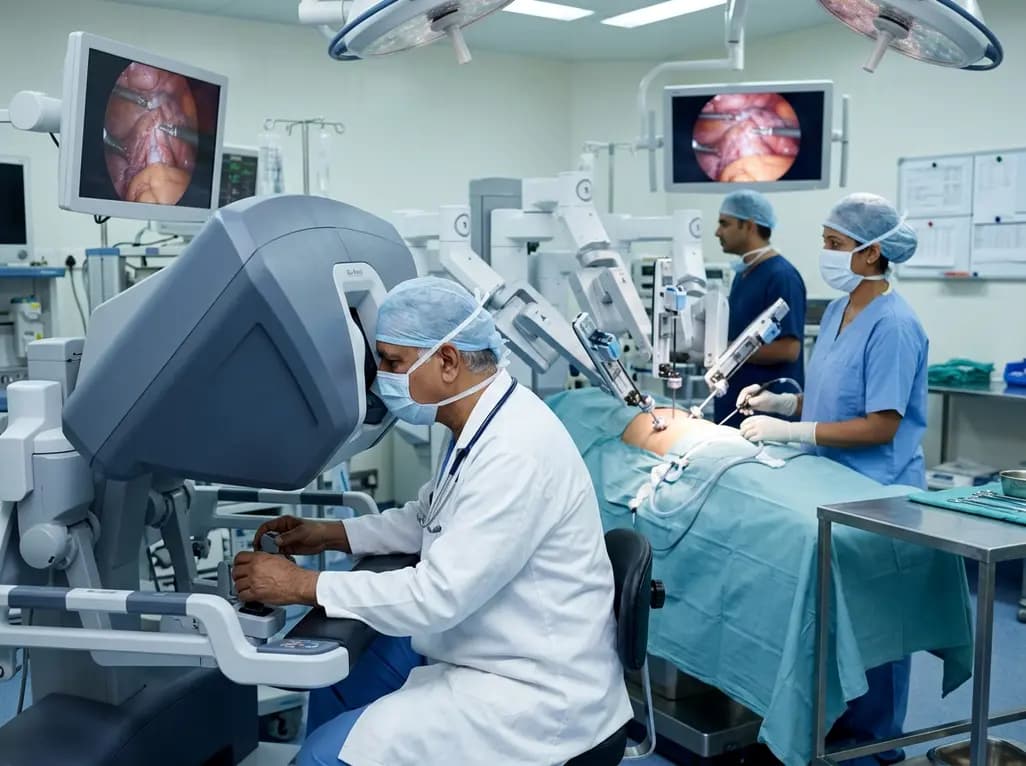
Surgical robotics is redefining modern operating theaters by replacing extensive open incisions with micro-dexterity and stereoscopic 3D vision. Multi-specialty surgeons highlight how robotic platforms mitigate tissue trauma, enhance functional organ preservation, and shorten postoperative hospital recovery.
Today
Piezoelectric amino acids and peptides convert mechanical stress into bioelectric cues. By mimicking endogenous electrical fields, these biodegradable biomaterials advance tissue regeneration, biosensing, antimicrobial therapy, and targeted oncology without leaving toxic residues.
Today
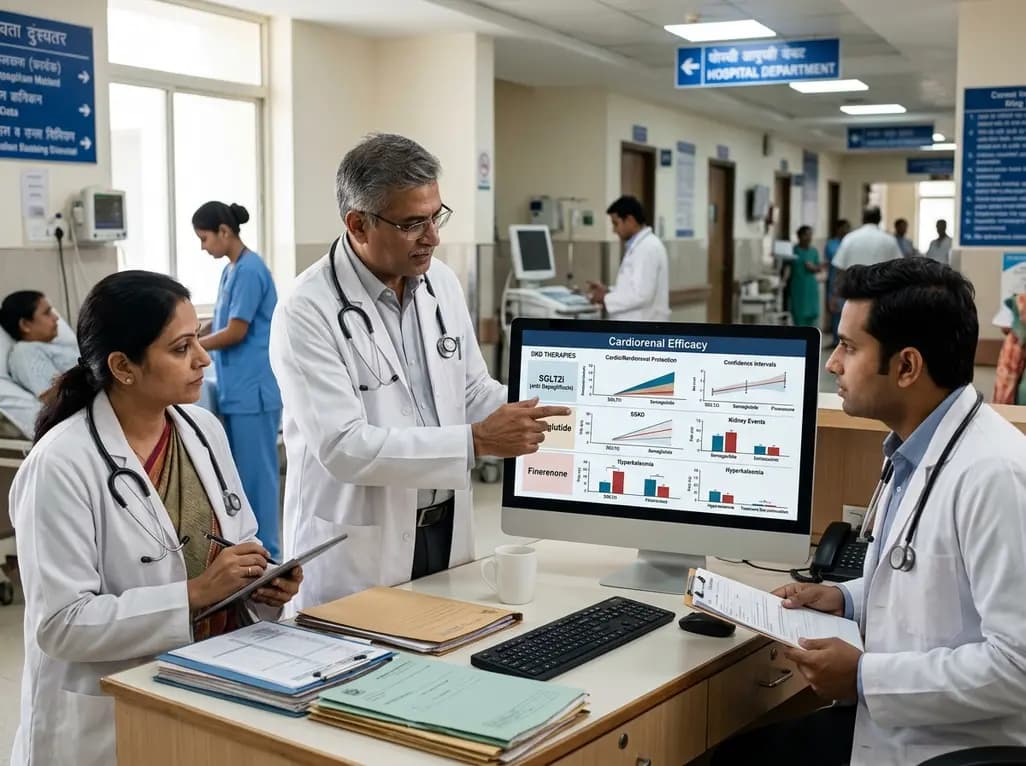
A network meta-analysis of 10 RCTs comprising 37,923 patients reveals that SGLT2 inhibitors offer the broadest cardiorenal protection in diabetic kidney disease. Dapagliflozin reduced kidney outcomes more than semaglutide, while finerenone increased hyperkalaemia and treatment discontinuation rates.
Today
