.webp&w=384&q=75)

Loading, please wait...
Loading, please wait...

The detection of extrachromosomal DNA (ecDNA) represents a significant advancement in modern oncology. Researchers recently introduced **interSeg ecDNA detection AI**, a deep learning tool that classifies oncogene status within interphase cancer cells. Published in Communications Biology, this breakthrough addresses a critical gap in precision diagnostics. Since ecDNA often drives tumor aggressiveness, accurate identification is crucial for optimizing patient care and predicting disease progression.
Traditionally, experts identify ecDNA using fluorescence in situ hybridization (FISH). However, this conventional method requires cells to be in the mitotic metaphase. Unfortunately, most tumor cells in a clinical sample remain in the non-mitotic interphase. In this state, pathologists find it exceptionally difficult to distinguish between extrachromosomal and chromosomal gene amplifications. Consequently, there is a clear need for automated, high-precision methods that can handle standard interphase imaging.
The researchers developed interSeg to solve these diagnostic limitations. They trained the deep neural network on over 40,000 nuclei across a diverse dataset of 652 images. The tool classifies cells into three categories: extrachromosomally amplified (EC-amp), intrachromosomally amplified (HSR-amp), or not amplified. Testing showed that interSeg achieves an impressive 97% accuracy at the sample level for both cultured cells and tissue models. Furthermore, it performed exceptionally well on neuroblastoma tissue samples, maintaining the same high precision.
Beyond simple identification, the tool accurately predicts levels of tumor heterogeneity. This capability allows oncologists to understand the complex mixture of cell types within a single patient sample. Identifying ecDNA is vital because these cancers typically evolve faster and resist common therapies more effectively than others. Therefore, interSeg provides a valuable resource for clinical researchers aiming to personalize treatment strategies. This shift toward AI-assisted diagnostics could significantly improve oncology workflows by simplifying previously labor-intensive manual processes.
Traditional FISH analysis requires cells to be in metaphase for accurate ecDNA identification. Conversely, interSeg enables the analysis of interphase cells, which constitute the majority of cells in a tumor sample, thereby providing a more comprehensive diagnostic profile.
Yes, interSeg has demonstrated the ability to accurately predict levels of heterogeneity in both experimental and computational mixed-cell images. This feature is crucial for identifying different sub-populations of cells that may respond differently to treatment.
Disclaimer: This content is for informational and educational purposes only. It does not constitute medical advice or a professional relationship. Always seek the advice of a qualified healthcare provider for any questions regarding a medical condition. Refer to the latest local and national guidelines for clinical practice.
References
Prasad G et al. Accurate prediction of ecDNA in interphase cancer cells using deep neural networks. Commun Biol. 2026 Apr 11. doi: 10.1038/s42003-026-09982-4. PMID: 41965931.
Kim H et al. Extrachromosomal DNA is associated with oncogene amplification and poor outcome across multiple cancers. Nat Genet. 2020;52(9):891-897. doi: 10.1038/s41588-020-0678-2.
Wu S et al. Circular ecDNA promotes accessible chromatin and high oncogene expression. Nature. 2019;575(7784):699-703. doi: 10.1038/s41586-019-1763-5.

Read summarized clinical updates, watch expert medical content, and earn CME certifications right from your smartphone.
Open your smartphone camera to scan and install.





Researchers introduce interSeg, a deep learning tool that identifies ecDNA-mediated oncogene amplification in interphase cancer cells with 97% accuracy....
6 months ago

Novel glucose-responsive mPEG-PSA nanocarriers deliver insulin aspart on demand, achieving dual postprandial and basal glycemic control without hypoglycemia in diabetic models. This biomaterial breakthrough offers promising clinical implications for physiologic diabetes management.
Today
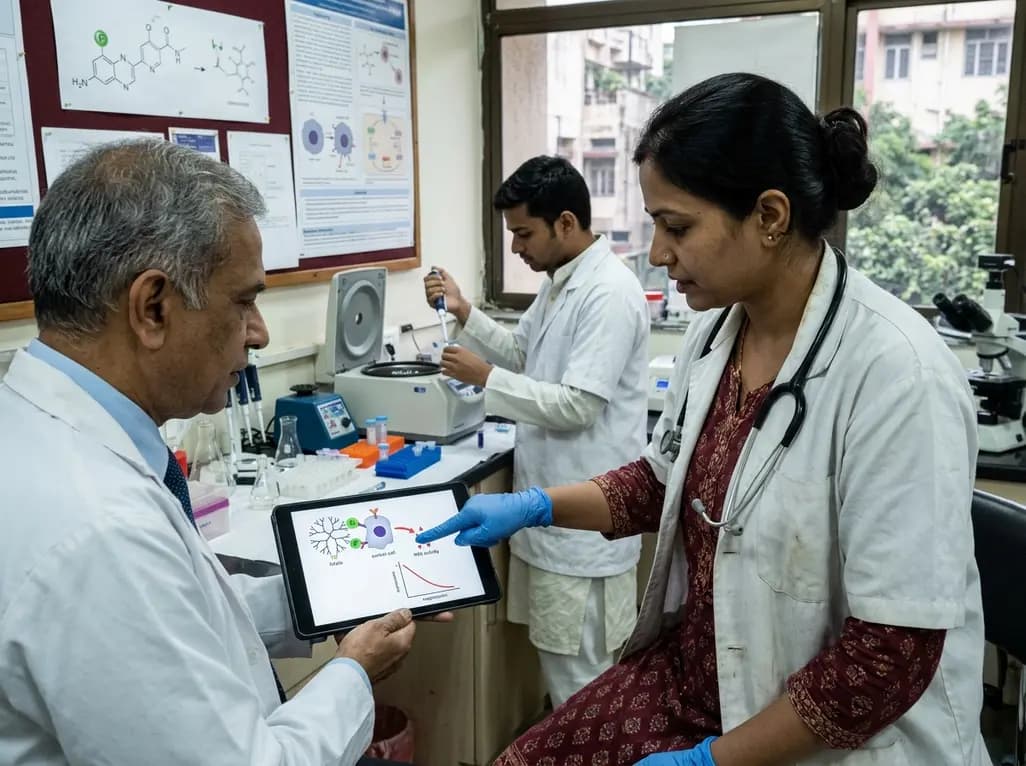
A novel folate-conjugated tecto-dendrimer nanoplatform successfully delivers siRNA to achieve targeted HK2 silencing, disrupting ovarian cancer glycolysis and suppressing lactate output.
Today
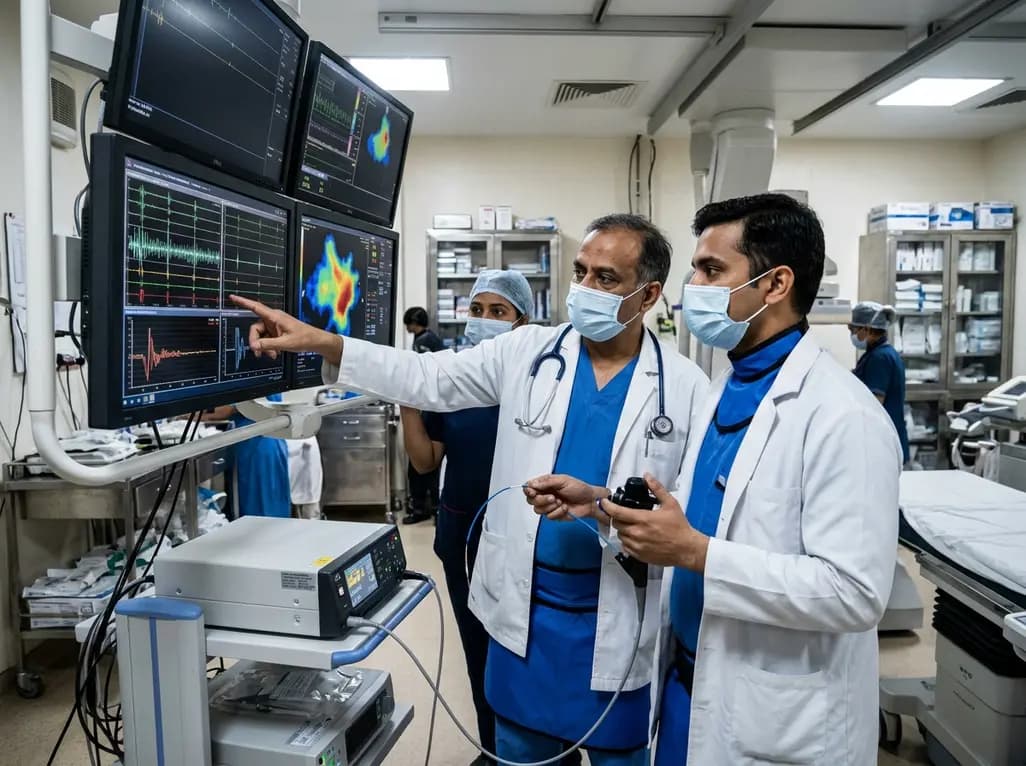
A comparative non-contact study reveals that high-power radiofrequency delivery with the QDOT MICRO catheter induces an artifactual contact force rise. Electrophysiologists must understand this power-dependent thermal and electrical phenomenon to avoid inadvertent catheter withdrawal and ineffective ablation.
Today
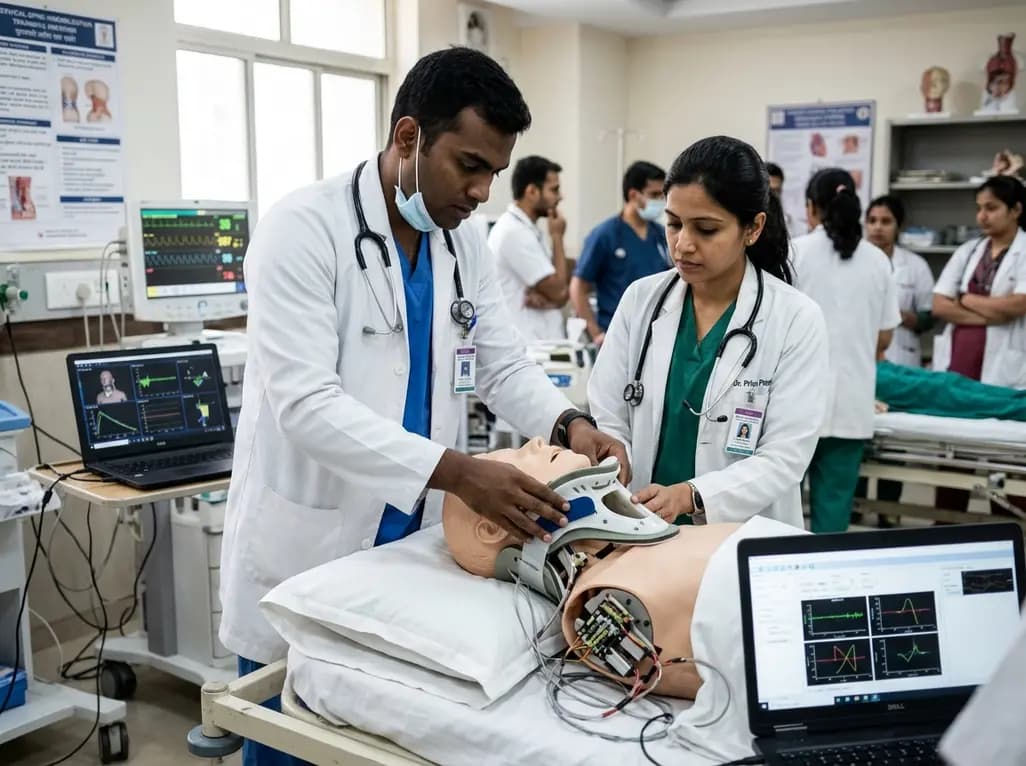
A novel proof-of-concept study presents a six-degree-of-freedom articulated manikin neck equipped with linear potentiometers. The system provides real-time kinematic motion feedback during cervical immobilisation, delivering sub-degree tracking accuracy to improve pre-hospital trauma training and patient safety.
Today

A retrospective comparative cohort study evaluated genitourinary safety in HFpEF between dapagliflozin and empagliflozin over six months. Rates of symptomatic UTI and asymptomatic bacteriuria showed no statistically significant differences, supporting comparable safety profiles across both SGLT2 inhibitors.
Today
