.webp&w=384&q=75)

Loading, please wait...
Loading, please wait...

Cerebral revascularization techniques have traditionally relied on the saphenous vein or radial artery as interposition grafts. These conduits are vital for managing complex aneurysms and skull base tumors that compromise blood flow. However, surgeons recently identified the internal mammary artery bypass as a groundbreaking alternative for high-flow revascularization. This novel approach provides a solution when traditional donor vessels are unavailable or unsuitable for the patient's specific anatomy.
The internal mammary artery (IMA) is renowned in cardiac surgery for its exceptional long-term patency and resistance to atherosclerosis. Furthermore, using this vessel for an internal maxillary artery to middle cerebral artery (IMax-MCA) bypass offers a high-capacitance solution. In a landmark case, a patient suffering from progressive arterial stenosis after flow diverter treatment required urgent revascularization. Because the patient’s radial arteries and saphenous veins were not viable, the surgical team selected the IMA. Moreover, the team harvested the graft using a minimally invasive thoracoscopic approach. This method reduces surgical trauma while ensuring a high-quality conduit for the intracranial bypass. Consequently, postoperative results showed significant clinical improvement, and perfusion imaging confirmed the restoration of cerebral blood flow.
The internal maxillary artery remains a preferred donor site because it eliminates the need for a long cervical graft. Additionally, the proximity of the IMax to the MCA reduces the overall length of the bypass, which potentially improves long-term outcomes. By incorporating the IMA as the interposition graft, clinicians can provide high-flow augmentation even in patients with limited vascular options. Therefore, meticulous planning of the bypass strategy remains essential for achieving success in complex cerebrovascular cases. This innovative use of the internal mammary artery bypass expands the surgical options for patients requiring life-saving cerebral blood flow restoration.
The internal mammary artery is used when traditional grafts like the radial artery or saphenous vein are unsuitable. It offers excellent long-term patency and high flow capacity, making it an ideal conduit for complex cerebral revascularization.
Surgeons can harvest the internal mammary artery using a minimally invasive thoracoscopic approach. This technique involves small incisions in the chest wall, which minimizes recovery time and surgical trauma compared to open harvesting methods.
Disclaimer: This content is for informational and educational purposes only. It is not intended as medical advice or a substitute for professional consultation with a qualified healthcare provider. Refer to the latest local and national guidelines for clinical practice.
References
Ramírez-Andrade JJ et al. The internal mammary artery as an alternative graft for internal maxillary artery-middle cerebral artery bypass: illustrative case. J Neurosurg Case Lessons. 2026 May 04. doi: undefined. PMID: 42081839.
Nossek E et al. Internal Maxillary Artery-Middle Cerebral Artery Bypass: Infratemporal Approach for Subcranial-Intracranial (SC-IC) Bypass. Oper Neurosurg (Hagerstown). 2014;10(2):227-236.
Akca F, ter Woorst J. Learning Curve of Thoracoscopic Nonrobotic Harvest of the Left Internal Mammary Artery in Minimally Invasive Coronary Artery Bypass Grafting. Innovations (Phila). 2023;18(3):250-256.
"
Read summarized clinical updates, watch expert medical content, and earn CME certifications right from your smartphone.
Open your smartphone camera to scan and install.





First documented case of cerebral revascularization using the internal mammary artery as an interposition graft for IMax-MCA bypass in a patient with stenos...
5 months ago
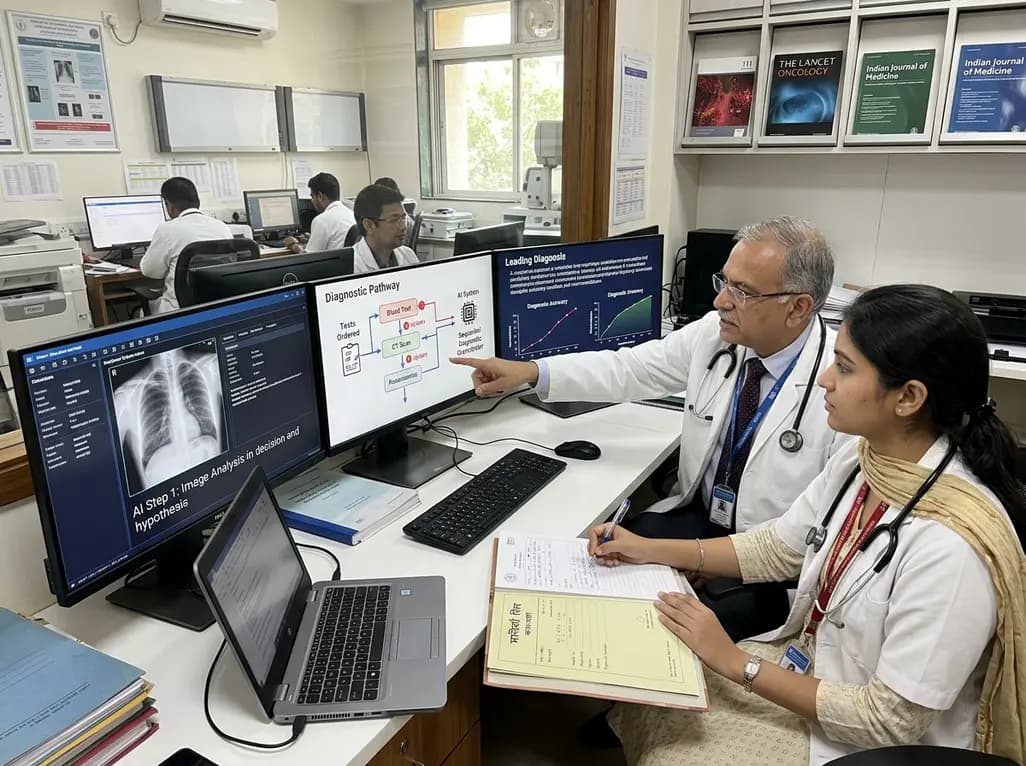
A breakthrough peer-reviewed study demonstrates that a sequential AI diagnosis system can mirror real-world clinical reasoning. By ordering stepwise tests and updating hypotheses dynamically, this multi-agent orchestrator achieved superior diagnostic accuracy while reducing investigative costs.
Today

A prenatal case highlights severe glutaric acidemia type II presenting as bilateral hyperechoic cystic kidneys at 18 weeks. Whole-exome sequencing revealed a novel homozygous ETFDH frameshift variant, demonstrating the power of rapid genetic testing in fetal renal anomalies.
Today

Review how tailored exercise programs benefit frail older patients with heart failure. Explore pathophysiological mechanisms, individualized training prescriptions, and strategies to overcome adherence barriers in clinical practice.
Yesterday

This comparative study evaluates posterior labral tears with and without glenohumeral instability, highlighting distinct demographic patterns, MRI underestimation in stable shoulders, and successful arthroscopic repair outcomes.
Yesterday

A clinical study demonstrates that early intervention with tocilizumab, either as monotherapy or bridged with corticosteroids, achieves significant proptosis reduction and resolves active inflammation in treatment-naive thyroid eye disease.
Yesterday
