.webp&w=384&q=75)

Loading, please wait...
Loading, please wait...
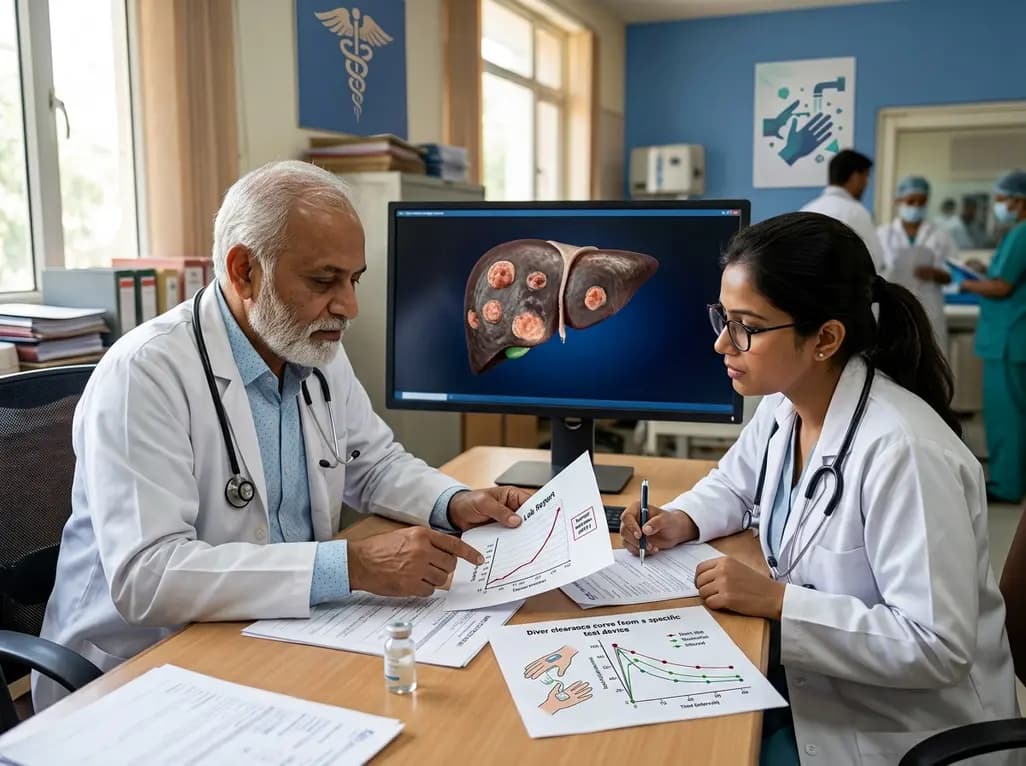
Managing intermediate-stage hepatocellular carcinoma surgery remains a significant clinical challenge due to the high heterogeneity of the disease. While liver resection offers a potential cure, identifying which patients will benefit most is crucial for optimal surgical planning. A recent study by Yen YH and colleagues analyzed 170 patients to determine preoperative predictors of overall survival. This research clarifies why outcomes vary so significantly among patients with Barcelona Clinic Liver Cancer (BCLC) stage B tumors. Moreover, it provides a practical framework for risk stratification in clinical practice.
The study utilized multivariate analysis to identify three independent risk factors for overall mortality. Specifically, an alpha-fetoprotein (AFP) level of 50 ng/ml or higher significantly increased the hazard ratio for death. Furthermore, patients undergoing major resection faced higher risks compared to those undergoing minor procedures. Notably, the indocyanine green retention rate at 15 minutes (ICG-R15) proved to be a vital indicator. Additionally, patients with an ICG-R15 of 10% or greater showed significantly poorer survival outcomes. Consequently, surgeons must consider these physiological and tumor markers before deciding on the extent of the operation. Ultimately, this approach ensures better patient selection and resource allocation.
By combining these three variables, the researchers constructed a predictive model to stratify patients into three risk groups. The low-risk group achieved a promising 5-year overall survival rate of 58%. In contrast, the medium-risk and high-risk groups showed 5-year survival rates of 30% and 12%, respectively. Therefore, this model helps clinicians identify the most favorable candidates for surgery. However, the study also highlights that high-risk individuals might require different therapeutic approaches. Using these prognostic tools allows for more personalized treatment strategies in the management of primary liver cancer. Similarly, local guidelines in India emphasize the importance of multidisciplinary evaluation for these complex cases.
The key predictors include alpha-fetoprotein (AFP) levels above 50 ng/ml, the extent of the surgical procedure (major resection), and the indocyanine green retention rate (ICG-R15) at 15 minutes being 10% or higher.
The model stratifies patients into low, medium, and high-risk groups. Those in the low-risk group have a 58% 5-year survival rate, making them ideal candidates for liver resection. Conversely, high-risk patients may need alternative or neoadjuvant therapies to improve their prognosis.
Disclaimer: This content is for informational and educational purposes only... Refer to the latest local and national guidelines for clinical practice.
References
Yen YH et al. Patients with Favorable Prognosis among Those Selected for Liver Resection for Intermediate-Stage Hepatocellular Carcinoma. J Invest Surg. 2026 Dec undefined. doi: 10.1080/08941939.2026.2684797. PMID: 42261743.
Puri P, et al. 2023 Update of Indian National Association for Study of the Liver Consensus on Management of Intermediate and Advanced Hepatocellular Carcinoma: The Puri III Recommendations. J Clin Exp Hepatol. 2023.
Bolondi L, et al. Heterogeneity of intermediate stage hepatocellular carcinoma and subclassification: proposals for treatment optimization. Semin Liver Dis. 2012;32(4):240-59.

Read summarized clinical updates, watch expert medical content, and earn CME certifications right from your smartphone.
Open your smartphone camera to scan and install.





A study identifies AFP levels and ICG-R15 as critical predictors for survival in patients undergoing liver resection for intermediate-stage HCC....
4 months ago

Novel diimide and hydrazone scaffolds, particularly compound #C4, synergistically reactivate latent HIV-1 when combined with JQ1 or PKC activators. Demonstrating donor-matched proviral transcription ex vivo and non-canonical signaling, these findings advance shock and kill strategies toward reservoir eradication.
Today

A comparative cohort study evaluates vNOTES vs TLH hysterectomy for benign conditions, demonstrating shorter operative duration, faster return to daily activities, and equivalent female sexual function scores without increased dyspareunia.
Today

Review how tailored exercise programs benefit frail older patients with heart failure. Explore pathophysiological mechanisms, individualized training prescriptions, and strategies to overcome adherence barriers in clinical practice.
Yesterday

This comparative study evaluates posterior labral tears with and without glenohumeral instability, highlighting distinct demographic patterns, MRI underestimation in stable shoulders, and successful arthroscopic repair outcomes.
Yesterday

A clinical study demonstrates that early intervention with tocilizumab, either as monotherapy or bridged with corticosteroids, achieves significant proptosis reduction and resolves active inflammation in treatment-naive thyroid eye disease.
Today
