

Loading, please wait...
Loading, please wait...

Understanding physiological vulnerability in aging populations requires continuous clinical vigilance. Longitudinal research tracking older cohorts confirms that frailty trajectories follow diverse pathways rather than a uniform decline over time. Furthermore, familial assistance often influences how older adults access medical and personal care. A recent study evaluating thousands of community-dwelling elders provides vital insights into functional health trends. Consequently, healthcare providers must look beyond static household dynamics to identify individuals facing sudden functional deterioration.
Frailty represents a dynamic multidimensional state characterized by diminished physiological reserve and increased vulnerability to external stressors. Rather than developing linearly, functional decline often follows distinct temporal courses across the geriatric lifespan. Recent longitudinal investigations utilizing group-based trajectory modeling demonstrate three clear patterns among aging individuals. Specifically, researchers identified a cohort with persistently low frailty, a second group exhibiting high frailty with slow change, and a third group demonstrating low initial frailty followed by rapid increase.
This heterogeneity carries substantial implications for everyday clinical decision-making. Patients who start with minimal deficits may experience swift decline due to acute illnesses, silent microvascular events, or progressive social isolation. Conversely, those presenting with chronic deficits frequently remain stable over extended intervals when baseline comorbidities receive proper medical management. Therefore, healthcare practitioners cannot rely on a single baseline consultation to predict long-term functional survival. Systematic monitoring across time remains necessary to detect subtle physiological shifts before overt disability emerges.
Intergenerational support has long served as a cornerstone of informal eldercare across Asian societies. Familial assistance includes financial transfers, instrumental activities of daily living help, and emotional encouragement from adult offspring. Unadjusted baseline models often show that higher intergenerational support correlates with higher-risk functional pathways. However, this apparent paradox reflects confounding by indication. Adult children naturally increase their assistance when their aging parents already exhibit declining physical reserves or multimorbidity.
After controlling for baseline demographic, behavioral, and chronic health covariates, the statistical association between family support and adverse functional pathways disappears. This finding proves that family support alone does not arrest underlying biological deterioration. While emotional and practical assistance enhances quality of life, it cannot replace structured medical treatments, nutritional optimization, and formal rehabilitation. Consequently, clinicians must distinguish between informal caregiving capacity and objective biological resilience. Relying solely on family presence risks obscuring progressive physiological deficits in older patients.
Perhaps the most striking finding involves the trajectory characterized by low initial frailty followed by rapid functional increase. Many clinicians mistakenly assume that robust or mildly pre-frail older adults will remain stable over several years. Nevertheless, acute medical insults, adverse drug events, and hospitalizations can precipitate catastrophic physiological failure in seemingly stable seniors. Without ongoing surveillance, these rapid decliners elude clinical detection until severe disability, recurrent falls, or dependency occur.
Gerontological social work and medical teams must recognize that initial robustness provides no permanent immunity. Biological reserves can deplete swiftly when systemic stressors outpace physiological compensation. In addition, subclinical cognitive deficits and sarcopenia often progress quietly without causing obvious outward distress. Therefore, healthcare teams must institute scheduled interval reassessments for every elderly patient, regardless of their apparent vitality at intake. Early detection of steep functional drops enables timely clinical, physical, and nutritional interventions before functional loss becomes permanent.
The findings hold profound relevance for the Indian healthcare ecosystem, where joint family living and filial piety represent dominant cultural pillars. National data from the Longitudinal Ageing Study in India reveal a high prevalence of pre-frailty and frailty across rural and urban communities. Indian families routinely provide intensive informal caregiving to aging parents. Yet, physicians frequently encounter elderly patients presenting in advanced stages of functional collapse despite living in supportive multigenerational households.
Filial assistance can inadvertently mask functional losses. Well-meaning family members often compensate for an elder's declining physical capacity by performing daily tasks for them, thereby hiding progressive muscle weakness, gait impairment, and cognitive change. Furthermore, socio-economic factors, limited health literacy, and lack of specialized geriatric services exacerbate these delays. The National Programme for Health Care of the Elderly emphasizes comprehensive assessment at primary and secondary levels. Consequently, Indian physicians must proactively screen elderly individuals rather than assuming that family care secures functional independence.
Integrating regular frailty assessment into routine clinical workflows requires practical, validated, and time-efficient instruments. Physicians in outpatient clinics and inpatient wards can readily implement tools such as the Clinical Frailty Scale, the FRAIL questionnaire, or the Frailty Index. These assessments take only minutes to administer but yield invaluable prognostic information. Clinicians should repeat these evaluations at least annually, and immediately following major hospitalizations, acute infections, or medication adjustments.
Furthermore, medical teams must collaborate with medical social workers, physiotherapists, and clinical nutritionists to design targeted care plans. Structured exercise protocols focusing on resistance training and balance exercises effectively counter sarcopenia. Concurrently, physicians must conduct rigorous medication reconciliations to minimize polypharmacy and eliminate inappropriate anticholinergic medications. Educating family caregivers regarding early warning signs of functional decline ensures timely reporting of red flags. By adopting longitudinal monitoring and interdisciplinary interventions, clinicians can identify vulnerable trajectories early and preserve autonomy in aging individuals.
Older adults presenting with low baseline frailty may possess hidden subclinical vulnerabilities, including unrecognized sarcopenia, mild cognitive impairment, or borderline organ reserve. When acute stressors such as severe infections, traumatic falls, polypharmacy, or major psychosocial disruptions occur, their physiological coping mechanisms become overwhelmed. Without timely compensatory reserves, these individuals experience sudden decompensation. Consequently, clinicians must never assume that an initially low frailty score guarantees sustained long-term resilience without regular reassessment.
Family support provides essential emotional comfort and practical help, but it cannot reverse or halt biological frailty independently. Clinical evidence demonstrates that after adjusting for underlying medical conditions, lifestyle, and demographic factors, intergenerational support does not alter long-term frailty trajectories. Informal caregiving often masks emerging functional deficits because relatives take over routine activities. Therefore, structured clinical interventions, supervised physical exercise, nutritional therapy, and formal medical supervision remain indispensable for functional preservation.
In busy Indian outpatient and inpatient environments, brief validated tools like the Clinical Frailty Scale and the FRAIL questionnaire offer high feasibility. The FRAIL scale evaluates fatigue, resistance, ambulation, illness, and weight loss using simple questions requiring no specialized equipment. Similarly, the Clinical Frailty Scale summarizes functional capability quickly based on clinical judgment. Both instruments enable primary physicians to identify pre-frailty early and monitor longitudinal trajectories across sequential consultations effectively.
Disclaimer: This content is for informational and educational purposes only. It is not intended to be a substitute for professional medical advice, diagnosis, or treatment. Always seek the advice of your physician or other qualified health provider with any questions you may have regarding a medical condition. Refer to the latest local and national guidelines for clinical practice.
References

Read summarized clinical updates, watch expert medical content, and earn CME certifications right from your smartphone.
Open your smartphone camera to scan and install.





A longitudinal study of 6,881 older adults highlights distinct frailty trajectories and shows that intergenerational support does not prevent rapid functional decline after covariate adjustment, emphasizing the necessity of repeated frailty assessments in geriatric and primary care practice.
Today

A recent clinical study demonstrates that women with inflammatory bowel disease undergoing assisted reproductive technology experience low flare rates and high live birth rates, confirming that fertility treatment is safe with proper multidisciplinary care.
Today
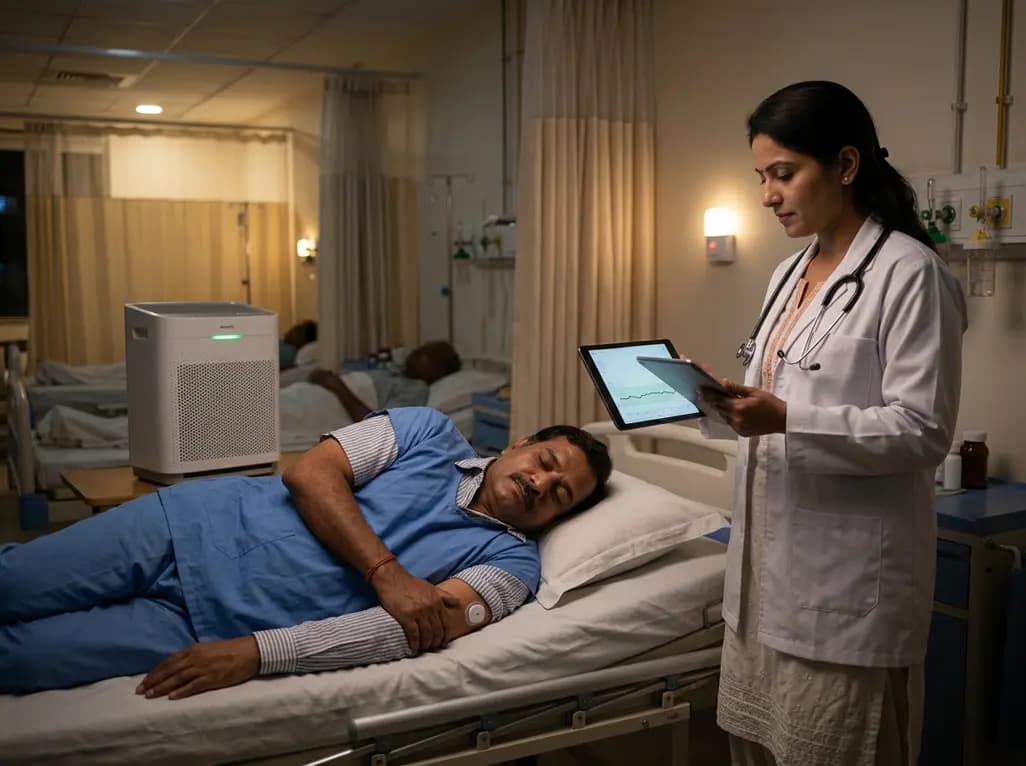
A recent clinical trial demonstrates that using bedroom HEPA air filtration during sleep significantly reduces nocturnal particulate exposure, curbs glycemic variability, and mitigates postprandial glucose surges in prediabetic patients, underscoring indoor air quality as an actionable cardiometabolic risk factor.
Today
A decade after experts highlighted a crisis in bone health, the osteoporosis care gap remains open. Explore the underlying causes, therapeutic innovations, and systematic care models required to improve secondary fracture prevention.
Today
A systematic review evaluates psychological interventions for smoking cessation in diabetes, showing short-term success but highlighting challenges in long-term abstinence.
Today
