

Loading, please wait...
Loading, please wait...

A decade after clinicians declared an urgent crisis in skeletal health, the osteoporosis care gap remains alarmingly open. Fragility fractures cause severe disability, loss of autonomy, and substantial mortality among older adults. However, most individuals suffering sentinel fractures never receive secondary prevention. Healthcare systems globally, including in developing nations, struggle to bridge this divide. Consequently, high-risk patients remain unprotected against recurrent fractures. Clinicians must recognize systemic shortcomings, dispel therapeutic misconceptions, and adopt contemporary clinical pathways.
Despite the availability of proven bone-strengthening pharmacotherapies, fewer than 15% of patients receive appropriate medical management within twelve months of a fragility fracture. In fact, real-world registry evaluations demonstrate that post-fracture treatment rates actually declined between 2015 and 2022. While historical declines in hip fracture incidence plateaued around 2012, clinical vertebral fractures have steadily increased over the past decade. This epidemiological shift reflects a widespread failure in secondary fracture prevention. When an older adult sustains a low-trauma fracture of the hip, spine, or wrist, that index event flags an immediate risk for future fractures. Specifically, up to half of recurrent skeletal events occur within the first one to two years following the initial fracture. Nevertheless, acute fracture admissions rarely translate into structured osteoporosis assessments or therapeutic interventions. Orthopedic teams frequently discharge patients after surgical repair without initiating bone-protective pharmacotherapy or establishing outpatient metabolic follow-up. As a result, patients remain caught in a vicious cycle of recurrent skeletal trauma and progressive functional decline.
Multiple interconnected obstacles sustain this persistent clinical gap. First, limited public awareness prevents patients from recognizing osteoporosis as a progressive chronic illness rather than an unavoidable consequence of natural aging. Second, diagnostic screening rates remain inadequate across diverse clinical settings. Access to dual-energy X-ray absorptiometry (DXA) has diminished significantly due to reduced reimbursement, geographic maldistribution of scanners, and limited routine referrals. Furthermore, profound racial, ethnic, and socioeconomic disparities restrict access to specialized bone health assessments and timely follow-up. In developing healthcare environments, high out-of-pocket costs and urban-rural imbalances exacerbate these diagnostic shortfalls. In addition, fragmented clinical workflows create substantial communication voids between acute orthopedic surgical units and primary care providers. Without clear interprofessional ownership of metabolic bone management, responsibility for initiating treatment frequently falls through the cracks. Moreover, routine outpatient visits frequently prioritize competing chronic conditions like hypertension and diabetes. Consequently, silent bone loss remains unaddressed until another catastrophic fracture occurs.
Widespread patient and physician anxiety regarding rare therapeutic complications represents another pivotal barrier to closing the care gap. Media coverage and sensationalized public reports often exaggerate the dangers of atypical femur fractures (AFF) and osteonecrosis of the jaw (ONJ). Consequently, many eligible individuals refuse antiresorptive medications despite facing an imminent risk of devastating hip or spine fractures. However, rigorous clinical trial data and long-term cohort studies consistently demonstrate that the absolute benefit of fracture prevention dramatically outweighs these rare risks. For example, antiresorptive therapy prevents hundreds of catastrophic hip and vertebral fractures for every single potential occurrence of an atypical femoral fracture. Clinicians must proactively engage in goal-directed discussions to contextualize these relative probabilities clearly. Moreover, periodic reassessment and structured treatment holidays during extended bisphosphonate therapy can mitigate long-term oversuppression risks while preserving skeletal integrity. Transparent communication regarding safety parameters empowers patients to make informed decisions that prioritize fracture prevention over exaggerated fears.
Fortunately, the therapeutic armamentarium for severe osteoporosis has expanded substantially over the past decade. Clinicians are no longer restricted to antiresorptive agents alone. Instead, modern clinical guidelines strongly endorse osteoanabolic medications, such as teriparatide, abaloparatide, and romosozumab, as initial therapy for patients at very high risk of fracture. These anabolic agents stimulate active bone formation, rapidly increasing bone mineral density and significantly enhancing microarchitectural strength. In addition, sequential therapeutic strategies—initiating treatment with a potent bone-building agent followed by an antiresorptive medication—produce unprecedented gains in skeletal density. Regulatory developments have also accelerated therapeutic progress. Specifically, regulatory bodies increasingly recognize total hip bone mineral density as an accepted surrogate endpoint for fracture reduction in clinical trials. This regulatory evolution facilitates more efficient drug development pathways. Furthermore, evolving clinical perspectives on menopausal hormone therapy provide valuable opportunities for earlier primary prevention in younger postmenopausal women experiencing rapid bone loss.
Addressing the crisis requires modern clinical tools and structural care reforms. First, Fracture Liaison Services (FLS) represent the single most effective model for coordinating post-fracture secondary prevention. FLS coordinator-led teams ensure that every patient presenting with a fragility fracture receives systematic screening, risk stratification, and timely therapy initiation. Second, opportunistic screening strategies using routine computed tomography (CT) scans allow clinicians to detect low bone mass and occult vertebral deformities without dedicated DXA testing. Third, artificial intelligence algorithms embedded within radiological software can automatically detect asymptomatic vertebral compression fractures that radiologists might otherwise overlook. In addition, electronic health record-based decision support alerts primary physicians when high-risk patients warrant bone health workups. Ultimately, closing the treatment gap demands concerted collaboration across orthopedic surgeons, endocrinologists, rheumatologists, primary care practitioners, and policymakers. Only an integrated, multi-stakeholder strategy can establish equitable, reliable fracture prevention pathways worldwide.
The care gap persists due to multiple systemic, logistical, and behavioral obstacles. These factors include limited patient education, declining access to dual-energy X-ray absorptiometry screening, fragmented care transitions between orthopedic surgeons and primary physicians, and exaggerated fears regarding rare side effects like atypical femur fractures. In addition, persistent socioeconomic disparities, poor interprofessional communication, and inadequate reimbursement mechanisms further hinder prompt therapeutic initiation following acute fragility fracture events.
Osteoanabolic therapies, such as teriparatide, abaloparatide, and romosozumab, stimulate rapid bone formation rather than merely slowing down bone resorption. Current clinical practice guidelines recommend these anabolic agents as frontline treatment for patients presenting with severe osteoporosis or very high imminent fracture risk. Initiating therapy with an anabolic agent followed sequentially by an antiresorptive drug produces substantial, rapid gains in bone mineral density and reduces recurrent fracture risk far more effectively than antiresorptive monotherapy.
Fracture Liaison Services provide a structured, coordinator-led model that systematically identifies, evaluates, and manages patients presenting with fragility fractures. By bridging the critical communication divide between acute hospital-based orthopedic surgery and outpatient primary care, these services ensure timely bone mineral density scanning, falls risk assessments, and pharmacotherapy initiation. Robust clinical evidence demonstrates that coordinated liaison models significantly boost long-term treatment adherence, lower healthcare costs, and prevent recurrent secondary fractures across diverse patient populations.
Disclaimer: This content is for informational and educational purposes only. It is not intended to provide medical advice, diagnosis, or treatment. Always consult a qualified healthcare professional regarding any medical condition or treatment options. Refer to the latest local and national guidelines for clinical practice.
References

Read summarized clinical updates, watch expert medical content, and earn CME certifications right from your smartphone.
Open your smartphone camera to scan and install.





A decade after experts highlighted a crisis in bone health, the osteoporosis care gap remains open. Explore the underlying causes, therapeutic innovations, and systematic care models required to improve secondary fracture prevention.
Today
A longitudinal study of 6,881 older adults highlights distinct frailty trajectories and shows that intergenerational support does not prevent rapid functional decline after covariate adjustment, emphasizing the necessity of repeated frailty assessments in geriatric and primary care practice.
Today

A recent clinical study demonstrates that women with inflammatory bowel disease undergoing assisted reproductive technology experience low flare rates and high live birth rates, confirming that fertility treatment is safe with proper multidisciplinary care.
Today
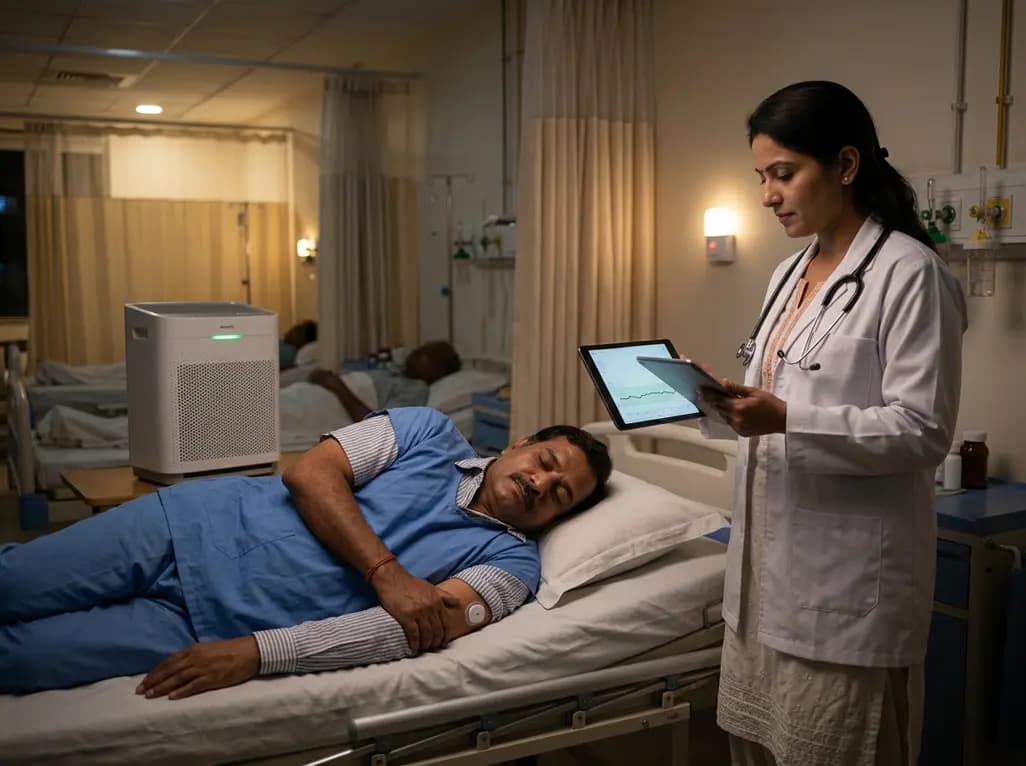
A recent clinical trial demonstrates that using bedroom HEPA air filtration during sleep significantly reduces nocturnal particulate exposure, curbs glycemic variability, and mitigates postprandial glucose surges in prediabetic patients, underscoring indoor air quality as an actionable cardiometabolic risk factor.
Today
A systematic review evaluates psychological interventions for smoking cessation in diabetes, showing short-term success but highlighting challenges in long-term abstinence.
Today
