.webp&w=384&q=75)

Loading, please wait...
Loading, please wait...

Achieving high interfacility transfer appropriateness is crucial for optimizing trauma care systems globally. A recent study by Islam AM et al. analyzed 1335 patients with facial trauma, focusing specifically on acute orbital floor fractures. The researchers found that out of 318 transferred patients, only 45.9% resulted in additional clinical benefit. This finding suggests that over half of these transfers might have been avoidable or unnecessary for the actual clinical management of the patient.
Furthermore, the data indicated that transferred patients were significantly older than those who presented directly to the Level 1 facility. Because age often correlates with higher comorbidity rates, this demographic shift likely influences initial transfer decisions. However, the study highlights a pressing need for better triage protocols. Such protocols would ensure that tertiary specialists treat those who truly require higher-level surgical intervention.
Consequently, clinicians should prioritize standardized assessment tools before initiating a transfer. While transferring a patient ensures access to specialized surgery, unnecessary moves strain emergency resources and increase costs for families. Therefore, improving interfacility transfer appropriateness involves balancing clinical necessity with logistical efficiency in the emergency department.
Improving the triage process requires clear communication between referring and receiving facilities. For example, using digital imaging sharing can prevent redundant transfers for minor fractures. Additionally, health systems must address socioeconomic factors and insurance status that often influence patient movement. In conclusion, refining these protocols will benefit both the healthcare provider and the trauma patient by reducing the burden of unnecessary travel.
A transfer is concordant if it leads to a specific clinical benefit. This includes specialized surgical intervention or advanced diagnostic procedures not available at the originating hospital.
Reducing unnecessary transfers minimizes patient discomfort and lowers overall healthcare costs. It also ensures that tertiary trauma centers remain available for the most critical cases that require immediate specialist care.
Disclaimer: This content is for informational and educational purposes only. It does not constitute medical advice or establish a doctor-patient relationship. Refer to the latest local and national guidelines for clinical practice.
References
Islam AM et al. Evaluating Appropriateness of Interfacility Transfers for Patients with Facial Trauma Including Acute Orbital Floor Fractures. Facial Plast Surg Aesthet Med. 2026 May 26. doi: 10.1177/26893614261441472. PMID: 42186905.
American College of Surgeons. Resources for Optimal Care of the Injured Patient. Chicago, IL; 2022.
"
Read summarized clinical updates, watch expert medical content, and earn CME certifications right from your smartphone.
Open your smartphone camera to scan and install.





New research evaluates the necessity of transferring patients with orbital floor fractures, finding that over 50% of transfers may be unnecessary....
4 months ago
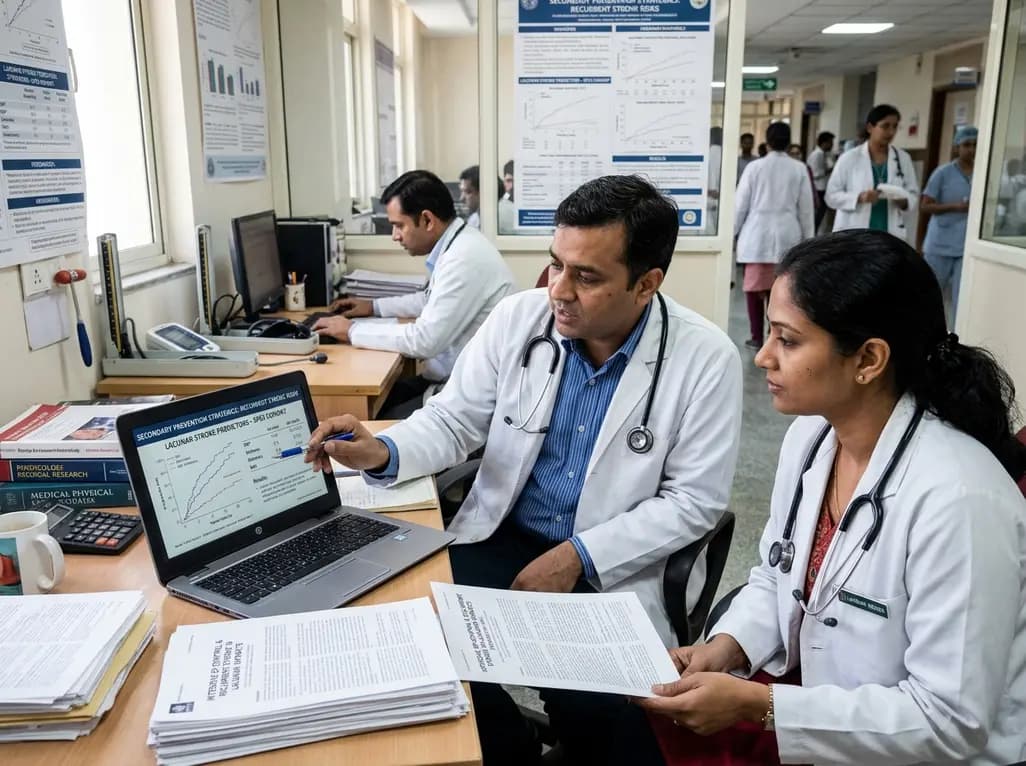
Explore vital recurrent stroke predictors in lacunar stroke patients managed with intensive blood pressure lowering. This analysis examines trial findings from SPS3 to uncover residual vascular risks, metabolic factors, and targeted secondary prevention strategies for high-risk neurological patients.
Today

Odisha has established India's first state-level clinical protocol specifically tailored for pregnant women with sickle cell disease. Developed with NHM and UNICEF, the framework provides structured antenatal screening, crisis mitigation, standardized referral pathways, and specialized interdisciplinary care.
Today

The Directorate General of Health Services directs Indian states to halt the hazardous reuse and reprocessing of single-use medical devices. Discover regulatory implications under the Drugs and Cosmetics Act, critical infection risks, legal liabilities, and operational changes required across clinical specialties.
Today

Mitochondria-targeted nanoparticles self-assembled from EGCG and L-glutamic acid effectively restore mitochondrial homeostasis, suppress synovial inflammation, and attenuate chondrocyte senescence in osteoarthritis, offering a promising disease-modifying nanotherapy.
Today

India is advancing preventive healthcare by integrating genomics, artificial intelligence, and quantum technologies. With the SANGAM programme sequencing one million Indian genomes, clinicians can unlock personalized therapies, detect cardiometabolic risks early, and curb the burden of diabetes and heart disease.
Today
