.webp&w=384&q=75)

Loading, please wait...
Loading, please wait...
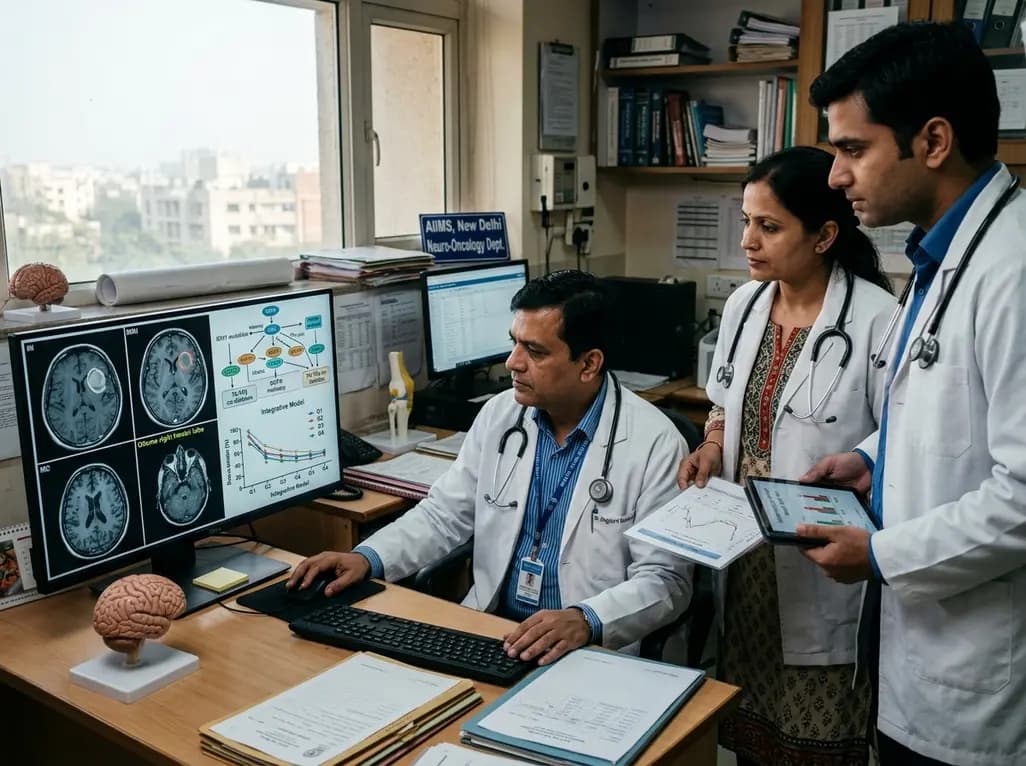
Accurate determination of glioma malignancy grade remains a critical milestone in modern neuro-oncological management. Diffuse gliomas encompass a diverse spectrum of primary central nervous system neoplasms characterized by marked heterogeneity in cellular kinetics, invasion patterns, and therapeutic outcomes. Historically, clinicians relied on postoperative histopathology to assign tumor grade. However, waiting for definitive histology can delay vital surgical decisions and postoperative chemoradiotherapy planning. Furthermore, stereotactic biopsies often suffer from sampling error due to intra-tumoral heterogeneity, frequently underestimating true biological aggression. Consequently, neurosurgeons and neuro-oncologists require robust auxiliary tools to assess malignancy risk earlier in patient management. Recent clinical discoveries highlight that combining systemic physiological indicators with demographic parameters and tissue markers significantly enhances risk stratification. Therefore, creating an integrative predictive model that combines serum indicators, clinical variables, and molecular drivers represents an important advancement. By synthesizing multiple parameters into a coherent machine learning framework, clinicians can estimate tumor aggressiveness more objectively. This approach helps bridge the diagnostic gap between neuroimaging and definitive pathology, supporting personalized clinical strategies and timely interventions.
To establish this predictive model, researchers conducted a single-center retrospective observational study consecutively enrolling 400 glioma patients. The investigators systematically evaluated 26 diverse candidate variables, spanning patient demographics, clinical performance measures, routine laboratory indicators, and circulating serum biomarkers. Initially, univariate statistical testing screened all variables to detect significant associations with tumor malignancy. Subsequently, investigators applied Least Absolute Shrinkage and Selection Operator (LASSO) regression to penalize non-essential coefficients and eliminate multicollinearity. This machine learning methodology successfully prevented statistical overfitting while preserving the most influential clinical features. Furthermore, the team trained multiple supervised classification algorithms, ultimately selecting a Random Forest architecture for final model construction. To eliminate the black-box nature of the algorithm, researchers implemented SHapley Additive exPlanations (SHAP) analysis. SHAP values quantified the exact mathematical contribution of each variable to individual risk predictions. In addition, the team evaluated model calibration using the Hosmer-Lemeshow test, while decision curve analysis evaluated net clinical benefit across varied decision thresholds. This computational framework ensured high statistical stability and clinical interpretability.
Multivariable regression identified seven independent predictors strongly correlated with high-grade glioma, designated as World Health Organization grades III and IV. Specifically, older patient age increased high-grade odds (odds ratio 1.085), whereas a higher Karnofsky Performance Scale score exerted a significant protective effect (odds ratio 0.928). Maximum tumor diameter also correlated with malignancy (odds ratio 1.649), reflecting aggressive volumetric expansion. Additionally, systemic blood biomarkers demonstrated strong prognostic relevance. An elevated neutrophil-to-lymphocyte ratio emerged as a significant risk factor (odds ratio 2.310), indicating systemic inflammatory responses and tumor-induced immune suppression. Conversely, a higher albumin-to-globulin ratio was protective (odds ratio 0.163), reflecting preserved nutritional status and attenuated chronic inflammation. At the molecular level, isocitrate dehydrogenase (IDH) wild-type status conferred a fourfold elevation in high-grade odds compared to mutant variants (odds ratio 4.502). Moreover, every percentage increase in the Ki-67 proliferation index independently increased malignancy risk (odds ratio 1.176). Together, these diverse variables capture tumor biology, systemic host factors, and anatomical lesion burden.
The Random Forest algorithm demonstrated outstanding diagnostic performance in distinguishing high-grade from low-grade gliomas. During internal model training, the classifier achieved an area under the receiver operating characteristic curve of 0.864. More importantly, the model maintained high predictive stability within the internal validation cohort, yielding an area under the curve of 0.820. Calibration curves demonstrated tight agreement between predicted probabilities and observed pathological grades. Specifically, the Hosmer-Lemeshow test confirmed excellent calibration with a non-significant p-value above 0.05. Furthermore, investigators performed decision curve analysis to evaluate real-world clinical utility across varied decision thresholds. The decision curve demonstrated meaningful net clinical benefit across a wide threshold probability window between 0.2 and 0.8. Consequently, the model offers actionable clinical guidance compared to universal treat-all or treat-none strategies. By offering calibrated risk estimates across this therapeutic window, this computational tool assists surgical teams in weighing aggressive resections against functional preservation, optimizing patient management.
These findings hold practical implications for neuro-oncology teams, particularly within resource-diverse healthcare landscapes such as India. Many regional centers encounter limitations in rapid genomic sequencing facilities; therefore, utilizing accessible systemic biomarkers like neutrophil and albumin ratios facilitates cost-effective risk stratification. Preoperative risk estimates help neurosurgeons select intraoperative monitoring techniques and determine appropriate resection margins. However, clinicians must interpret these algorithmic outputs with appropriate caution. Because the model incorporates tissue-derived parameters, including IDH mutation status and Ki-67 proliferation index, it cannot function as an isolated preoperative screening tool. Furthermore, single-center retrospective datasets require external validation in diverse international populations before broad clinical adoption. Neuro-oncologists must continue to view histopathology and targeted molecular sequencing as the definitive gold standard. Nevertheless, this integrative model serves as a powerful auxiliary decision-support tool. It assists multidisciplinary tumor boards in prioritizing care pathways and refining personalized management plans for glioma patients.
No, this model serves as an auxiliary predictive tool rather than a replacement for definitive histopathological and molecular analysis. Because the algorithm requires tissue-derived variables, specifically IDH mutation status and the Ki-67 proliferation index, tissue sampling remains mandatory. Instead of eliminating biopsy, the tool supports clinicians by standardizing risk assessment, guiding aggressive surgical planning, and identifying discrepancies between initial clinical impressions and final pathological findings.
Systemic inflammatory markers reflect the biological interplay between host immunity and tumor aggressiveness. High-grade gliomas foster substantial local immunosuppression and release pro-inflammatory cytokines, which stimulate circulating neutrophil production while suppressing lymphocyte counts. Consequently, a high neutrophil-to-lymphocyte ratio signals systemic immune dysfunction and an invasive tumor microenvironment. Combining systemic inflammation markers with nutritional indicators like the albumin-to-globulin ratio provides clinicians with an accessible surrogate for biological tumor aggressiveness.
IDH mutation status is a fundamental prognostic biomarker in neuro-oncology. In this machine learning model, IDH wild-type status was a dominant predictor of high-grade disease, increasing malignancy odds fourfold compared to mutant tumors. IDH-mutant gliomas generally follow a less aggressive natural history and associate with superior survival outcomes. Therefore, incorporating IDH status allows the algorithm to align statistical risk predictions directly with modern molecular neuropathological classification systems.
Disclaimer: This content is for informational and educational purposes only and should not be considered medical advice. It is not intended to replace professional judgment, diagnosis, or treatment. Always seek the advice of a qualified healthcare provider with any questions regarding a medical condition. Refer to the latest local and national guidelines for clinical practice.
References

Read summarized clinical updates, watch expert medical content, and earn CME certifications right from your smartphone.
Open your smartphone camera to scan and install.





A retrospective study of 400 patients introduces a machine learning model combining clinical metrics, systemic inflammatory markers, and molecular parameters to predict glioma malignancy grade, achieving strong discrimination and clinical utility to assist neuro-oncology treatment planning.
last month
Recent epidemiological data reveals a dramatic surge in summer heat mortality driven by human-induced climate warming. This analysis explores the pathophysiological impacts on cardiac and renal systems, diagnostic dilemmas in death certification, and essential emergency cooling protocols for acute clinical care.
Today

Odisha has established India's first state-level clinical protocol specifically tailored for pregnant women with sickle cell disease. Developed with NHM and UNICEF, the framework provides structured antenatal screening, crisis mitigation, standardized referral pathways, and specialized interdisciplinary care.
Today

India is advancing preventive healthcare by integrating genomics, artificial intelligence, and quantum technologies. With the SANGAM programme sequencing one million Indian genomes, clinicians can unlock personalized therapies, detect cardiometabolic risks early, and curb the burden of diabetes and heart disease.
Today

A randomized controlled trial demonstrates that an eight-week dual-task training intervention significantly improves static and dynamic postural control over standard balance exercises in individuals with chronic ankle instability, addressing critical neurocognitive deficits during athletic and daily activities.
Today

A retrospective cohort study of 7,716 ICU patients from the MIMIC-IV database demonstrates that Gradient Boosting Decision Trees significantly outperform traditional SOFA scores in predicting in-hospital mortality among patients with sepsis and diabetes, with SHAP analysis providing clinical interpretability.
Today
