.webp&w=384&q=75)

Loading, please wait...
Loading, please wait...
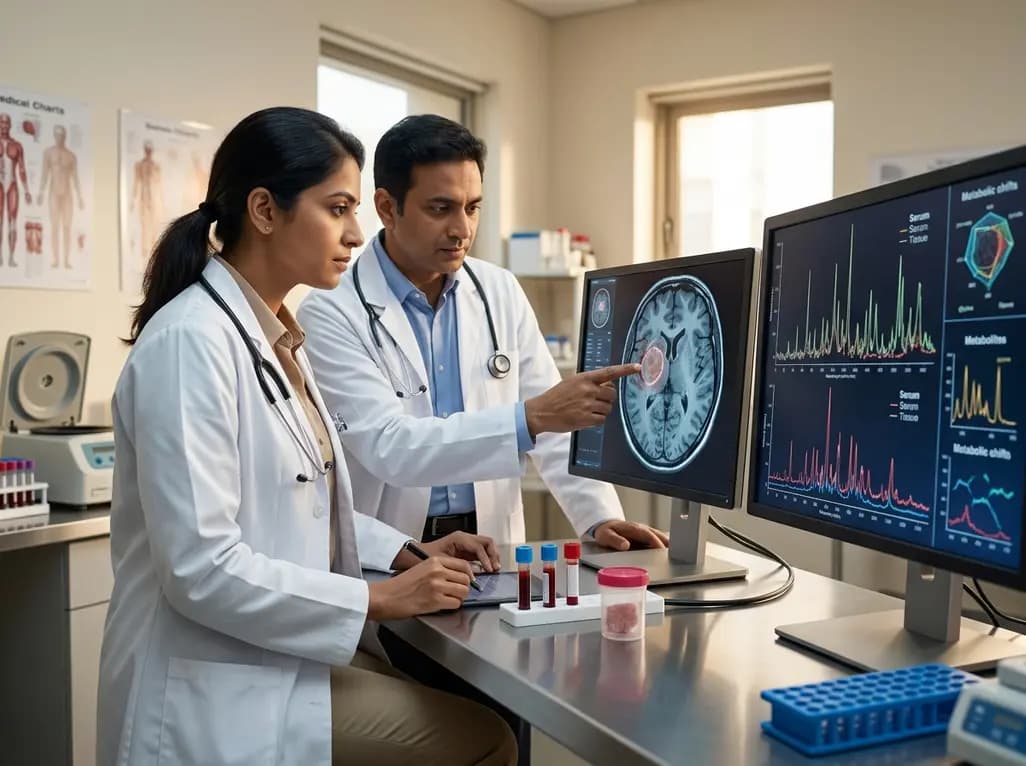
Gliomas remain among the most challenging primary central nervous system tumors due to their significant heterogeneity and aggressive nature. Current diagnostic standards rely heavily on invasive tissue biopsies and advanced neuroimaging. However, these methods sometimes struggle to capture the full spectrum of the tumor's biological behavior. Consequently, researchers are turning toward metabolomics to uncover the underlying biochemical shifts that drive tumor progression. Integrated glioma metabolomics analysis has emerged as a powerful tool for this purpose. By examining the metabolic state of both the systemic circulation and the tumor tissue, clinicians can gain a more holistic view of the disease. This dual approach helps in identifying biomarkers that may eventually allow for more precise and less invasive monitoring of patient health. Specifically, the study in a North Indian cohort highlights how metabolic profiles can differentiate between healthy individuals and those with gliomas. Moreover, the integration of serum and tissue data provides a unique perspective on how local tumor changes manifest systemically. Therefore, understanding these metabolic alterations is crucial for improving diagnostic accuracy and tailoring personalized treatment strategies in neuro-oncology.
Nuclear Magnetic Resonance (NMR) spectroscopy has become a cornerstone in the field of metabolomics because of its highly reproducible and non-destructive nature. This technology allows for the simultaneous detection of numerous small-molecule metabolites within a single sample. In this particular study, 1D-H NMR spectra were acquired from both serum and tissue samples. Furthermore, researchers used specialized software like Chenomx to assign metabolites and validated these findings with 2D NMR techniques. This rigorous methodology ensures that the identified metabolic signatures are both accurate and reliable. Additionally, the use of multivariate statistical analysis on platforms like Metaboanalyst 6.0 allows for the clear differentiation of disease groups from healthy controls. Notably, NMR metabolomics requires minimal sample preparation compared to other analytical techniques. This efficiency makes it particularly attractive for clinical applications where rapid results are often necessary. Because NMR can provide a quantitative snapshot of the metabolic pool, it serves as an excellent window into the tumor's bioenergetic requirements. Consequently, this high-resolution metabolic mapping is vital for decoding the complex metabolic reprogramming that characterizes glioma growth and survival.
Tumor cells frequently undergo metabolic reprogramming to meet the intense bioenergetic and biosynthetic demands of rapid proliferation. This shift often involves the Warburg effect, where cells prefer glycolysis over oxidative phosphorylation even in the presence of oxygen. In the context of Integrated glioma metabolomics analysis, several key metabolites have been identified as significant players in this process. For instance, the study found that glycine, histamine, and pyruvate displayed distinct trends that correlated with the progression of tumor grades. Specifically, glycine levels often increase in high-grade gliomas, reflecting the high demand for amino acids during rapid cell division. Moreover, pyruvate serves as a critical junction in energy metabolism, and its accumulation or depletion can signal shifts in glycolytic flux. Histamine also appeared as a significant marker, potentially linked to the inflammatory microenvironment surrounding the tumor. By tracking these metabolites across different grades, clinicians can better understand the metabolic shifts that occur as a tumor becomes more malignant. Therefore, these metabolic alterations serve as functional indicators of the tumor's aggressive potential and biological state.
One of the most innovative aspects of this research is the correlation between serum and tissue metabolic profiles. While tissue metabolomics offers a direct look at the tumor-intrinsic changes, serum metabolomics captures the resulting perturbations in the systemic circulation. Linking these two profiles helps in identifying which tumor-specific changes are detectable in the blood. Consequently, this integrated analysis may pave the way for a "liquid biopsy" approach to glioma management. In the study, eight metabolites were found to be statistically significant in differentiating healthy controls from patients in serum samples. Simultaneously, five metabolites showed significant variation across different tissue grades. Finding overlap or strong correlations between these sets provides confidence that serum markers truly reflect the underlying tumor biology. Furthermore, this correlation analysis reveals how the tumor heterogeneity influences the whole-body metabolic state. Notably, the ability to capture disease-specific perturbations in both compartments offers a more comprehensive understanding than looking at either one in isolation. Therefore, integrated metabolomics represents a significant step forward in non-invasive disease assessment.
Accurate grading of gliomas is essential for determining the appropriate course of treatment, including surgery, radiation, and chemotherapy. However, traditional grading can sometimes be subjective or limited by tissue sampling errors. Metabolic profiling offers an objective way to discriminate between different grades of malignancy. The gradual trend observed in metabolites like glycine and pyruvate across tumor grades suggests that these molecules could serve as quantitative indicators of aggressiveness. Additionally, the integrated glioma metabolomics analysis provides a framework for non-invasive assessment that could supplement current imaging techniques. For example, if specific serum signatures can reliably predict a high-grade tumor, clinicians might opt for more aggressive initial interventions. Moreover, the North Indian cohort study adds valuable regional data to the global understanding of glioma metabolism. This is important because genetic and environmental factors can influence metabolic profiles in different populations. Consequently, these findings support the development of more tailored diagnostic models that consider local population characteristics. Overall, the ability to discriminate grades through metabolic signatures holds great promise for improving patient outcomes.
While the results of this pilot study are promising, further research is needed to validate these biomarkers in larger and more diverse cohorts. Future studies should focus on how these metabolic signatures change in response to treatment or during tumor recurrence. Furthermore, integrating metabolomics with other "omics" data, such as genomics and proteomics, could provide an even deeper understanding of glioma biology. For instance, knowing how specific genetic mutations like IDH1 influence the metabolome would be highly valuable. Additionally, improving the sensitivity of NMR techniques or combining them with mass spectrometry could expand the number of detectable metabolites. Researchers are also exploring the use of machine learning algorithms to enhance the predictive power of metabolic models. As these technologies evolve, the transition from research to clinical practice will likely accelerate. Notably, the ultimate goal is to provide clinicians with a rapid, non-invasive, and highly accurate tool for real-time patient monitoring. Therefore, the continued exploration of integrated metabolic pathways will remain a high priority in the field of neuro-oncology and beyond.
Traditional methods like MRI and biopsy focus on structural changes and histology. In contrast, integrated metabolomics analyzes the chemical fingerprints left by cellular processes. By combining serum and tissue data, this approach provides a functional snapshot of tumor biology, offering a more comprehensive and potentially non-invasive way to assess malignancy and grade.
Glycine and pyruvate are central to the metabolic reprogramming of cancer cells. High levels of glycine often support the rapid protein synthesis and cell division seen in aggressive tumors. Pyruvate is a key intermediate in glycolysis; its levels reflect the altered energy production strategies that allow gliomas to thrive in challenging environments.
While serum metabolomics shows great promise for non-invasive assessment, it currently serves as a supplementary tool. It can help in early screening, grading, and monitoring treatment response. However, a tissue biopsy remains the gold standard for definitive diagnosis and detailed molecular subtyping until larger clinical trials validate these metabolic biomarkers for standalone use.
Disclaimer: This content is for informational and educational purposes only and does not constitute medical advice or a professional diagnosis. Always seek the advice of your physician or other qualified health provider with any questions you may have regarding a medical condition. Refer to the latest local and national guidelines for clinical practice.
References
Datta A et al. Integrated serum and tissue NMR metabolomics with correlation analysis reveals metabolic alterations in gliomas. J Neurooncol. 2026 Jun 25. doi: 10.1007/s11060-026-05674-5. PMID: 42348073.
Moren L et al. Metabolomic profiling of tumor tissue and serum in glioma patients reveals diagnostic and prognostic information. Metabolites. 2015; 5(3): 502-514.
Baek HM. Metabolic profiling of human gliomas assessed with NMR. Journal of Clinical Neuroscience. 2019; 68: 275-280.

Read summarized clinical updates, watch expert medical content, and earn CME certifications right from your smartphone.
Open your smartphone camera to scan and install.





A pilot study in a North Indian cohort investigates metabolic alterations in gliomas using integrated serum and tissue NMR metabolomics. The findings reveal significant perturbations in metabolites like glycine and pyruvate, offering new pathways for non-invasive grade discrimination and biomarker discovery.
3 months ago
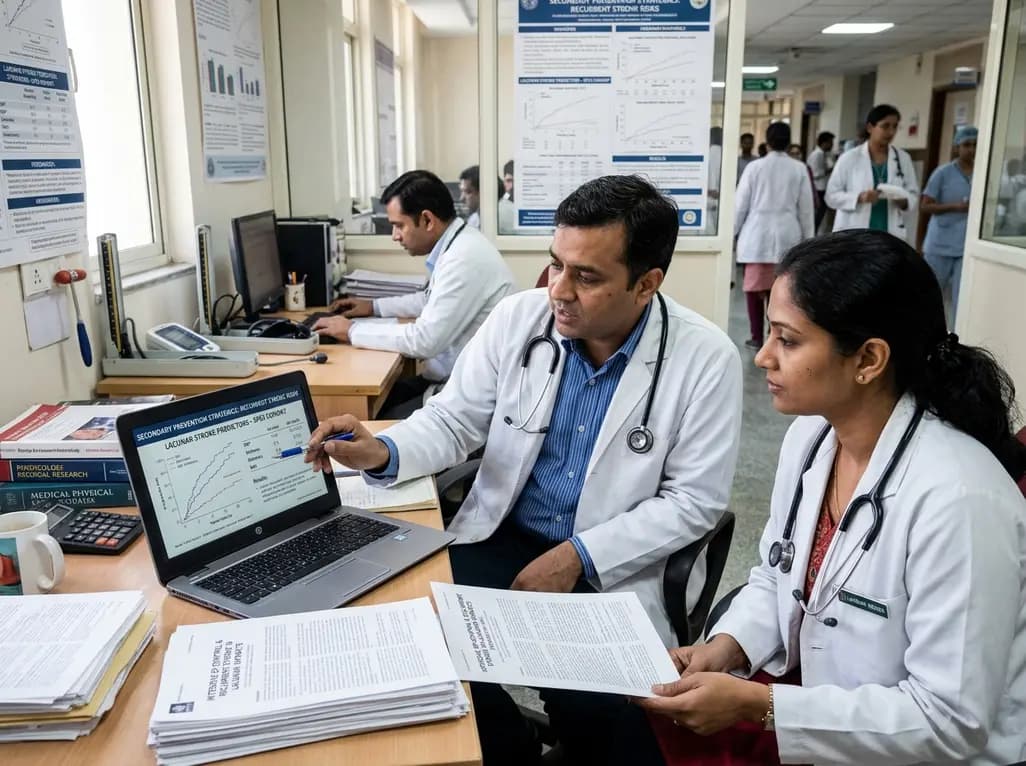
Explore vital recurrent stroke predictors in lacunar stroke patients managed with intensive blood pressure lowering. This analysis examines trial findings from SPS3 to uncover residual vascular risks, metabolic factors, and targeted secondary prevention strategies for high-risk neurological patients.
Today

A comprehensive scoping review synthesises evidence linking prenatal maternal mental health to long-term offspring neurodevelopment, evaluating neuroendocrine, inflammatory, and epigenetic pathways while highlighting clinical screening and future research priorities.
Today

The Directorate General of Health Services directs Indian states to halt the hazardous reuse and reprocessing of single-use medical devices. Discover regulatory implications under the Drugs and Cosmetics Act, critical infection risks, legal liabilities, and operational changes required across clinical specialties.
Today

Mitochondria-targeted nanoparticles self-assembled from EGCG and L-glutamic acid effectively restore mitochondrial homeostasis, suppress synovial inflammation, and attenuate chondrocyte senescence in osteoarthritis, offering a promising disease-modifying nanotherapy.
Today

India is advancing preventive healthcare by integrating genomics, artificial intelligence, and quantum technologies. With the SANGAM programme sequencing one million Indian genomes, clinicians can unlock personalized therapies, detect cardiometabolic risks early, and curb the burden of diabetes and heart disease.
Today
