.webp&w=384&q=75)

Loading, please wait...
Loading, please wait...

Infectious disease modeling serves as a cornerstone for modern public health departments seeking to manage outbreaks effectively. Consequently, these departments require evidence-backed scenario projections to guide their complex decision-making processes. However, traditional models often fail to provide rapid or responsive answers to urgent priorities within health systems. To address these gaps, the Insight Net Modeling Guidance group has developed a practical toolkit based on early COVID-19 data. This guidance illustrates how modeling can answer critical questions across three distinct response phases.
The first phase involves preparation before a pathogen reaches a local area. During this stage, infectious disease modeling helps experts anticipate the potential speed and magnitude of spread. Furthermore, it supports advanced planning and facilitates clear communication with key stakeholders. By simulating various introduction scenarios, health departments can identify resource gaps early. Therefore, they become better prepared for the eventual arrival of an infectious agent.
As an outbreak enters its early exponential growth phase, the focus shifts toward real-time data integration. The working group integrates case, hospitalization, and death data to capture a range of plausible future trajectories. For instance, this approach helps practitioners understand the current burden while planning for imminent healthcare demands. Additionally, once transmission becomes established, the model evaluates potential interventions. These scenarios allow officials to compare the impact of different public health measures, such as social distancing or vaccination campaigns.
Ultimately, this work emphasizes that models should inform planning rather than provide precise forecasts of future outcomes. Managing and communicating uncertainty remains a vital component of this process. Specifically, when modelers acknowledge the range of possible outcomes, they build greater trust among the public and practitioners. This transparent approach ensures that decision-makers use models appropriately and timely throughout any infectious crisis.
Modeling typically occurs in three phases: prior to local introduction, during early exponential growth, and after established transmission. Each phase requires different data inputs and answers specific questions about speed, magnitude, and intervention efficacy.
Uncertainty is inherent in any outbreak scenario because initial data is often incomplete. By communicating a range of plausible outcomes instead of a single forecast, modelers help practitioners prepare for various possibilities. This transparency builds trust and prevents the public from feeling misled if exact numbers vary from earlier projections.
Disclaimer: This content is for informational and educational purposes only and does not constitute medical advice or a recommendation for any specific treatment or model. Model outputs should be interpreted in the context of broader epidemiological evidence. Refer to the latest local and national guidelines for clinical practice.
References
Brouwer AF et al. Infectious disease modeling for public health practice: projections, scenarios, and uncertainty in three phases of outbreak response. Am J Epidemiol. 2026 Mar 12. doi: undefined. PMID: 41820223.
Metcalf CJE, Lessler J. Opportunities and challenges in modeling emerging infectious diseases. Science 2017; 357: 149–152.
Wu JT, Leung K, Lam TTY, et al. Nowcasting epidemics of novel pathogens: lessons from COVID-19. Nat Med 2021; 27: 388–395.

Read summarized clinical updates, watch expert medical content, and earn CME certifications right from your smartphone.
Open your smartphone camera to scan and install.





A comprehensive guide on using infectious disease modeling for public health practice, covering three key response phases and methods to handle uncertainty....
7 months ago
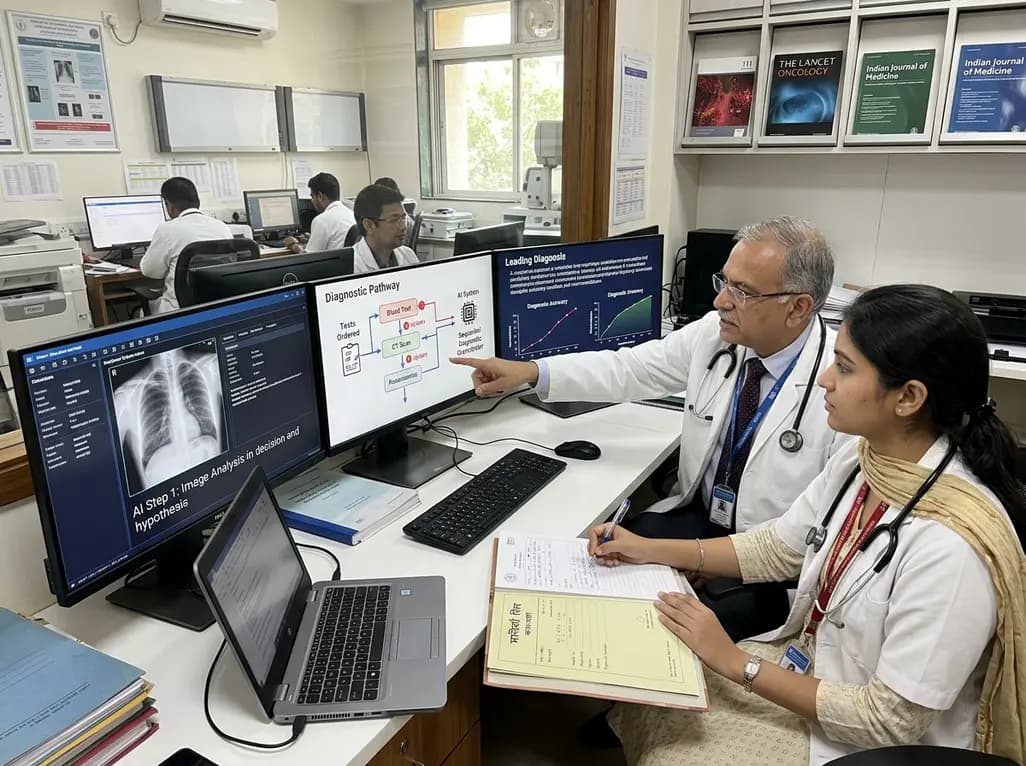
A breakthrough peer-reviewed study demonstrates that a sequential AI diagnosis system can mirror real-world clinical reasoning. By ordering stepwise tests and updating hypotheses dynamically, this multi-agent orchestrator achieved superior diagnostic accuracy while reducing investigative costs.
Today

A prenatal case highlights severe glutaric acidemia type II presenting as bilateral hyperechoic cystic kidneys at 18 weeks. Whole-exome sequencing revealed a novel homozygous ETFDH frameshift variant, demonstrating the power of rapid genetic testing in fetal renal anomalies.
Today

Review how tailored exercise programs benefit frail older patients with heart failure. Explore pathophysiological mechanisms, individualized training prescriptions, and strategies to overcome adherence barriers in clinical practice.
Yesterday

This comparative study evaluates posterior labral tears with and without glenohumeral instability, highlighting distinct demographic patterns, MRI underestimation in stable shoulders, and successful arthroscopic repair outcomes.
Yesterday

A clinical study demonstrates that early intervention with tocilizumab, either as monotherapy or bridged with corticosteroids, achieves significant proptosis reduction and resolves active inflammation in treatment-naive thyroid eye disease.
Yesterday
