.webp&w=384&q=75)

Loading, please wait...
Loading, please wait...
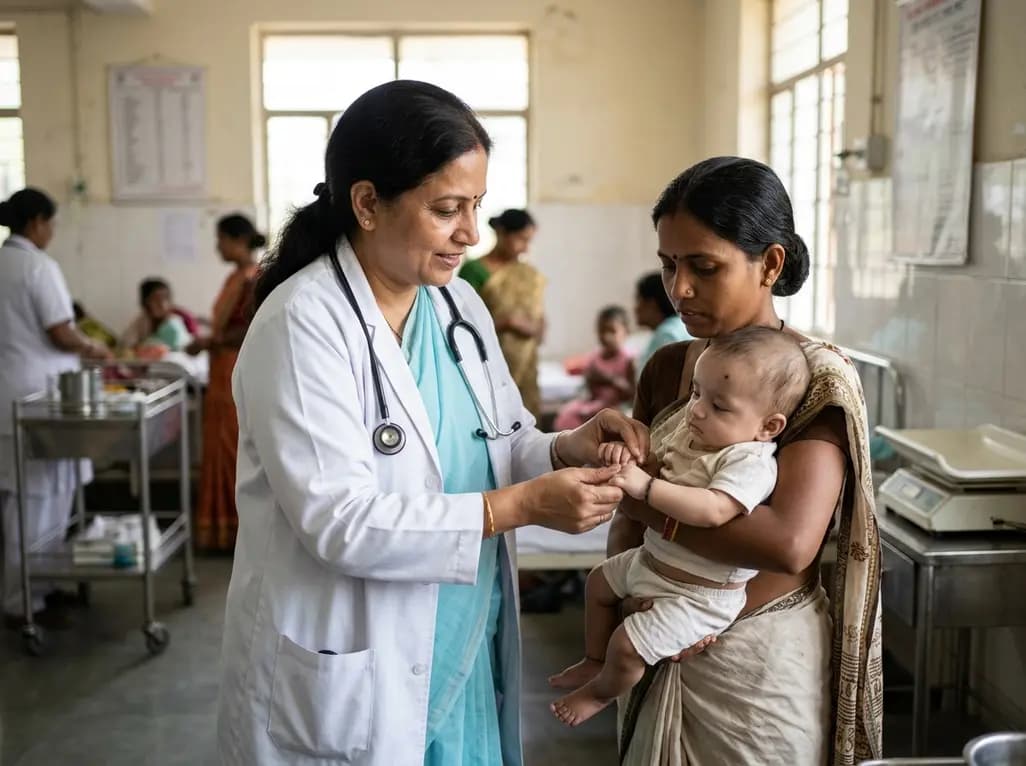
Infantile tremor syndrome (ITS) remains a significant clinical challenge across the Indian subcontinent. This self-limiting disorder primarily presents with a characteristic tetrad of coarse tremors, anemia, pigmentary skin changes, and developmental regression. Doctors frequently observe these symptoms in infants who were previously thriving. Consequently, understanding the underlying etiological factors is essential for effective management. Recent research emphasizes that Infantile Tremor Syndrome nutrition serves as a cornerstone for both pathogenesis and recovery. Although practitioners traditionally link the condition to vitamin B12 deficiency, the precise biochemical pathways involve more than just simple vitamin levels. The syndrome often affects infants from lower socioeconomic backgrounds who are exclusively breastfed by mothers with nutritional deficits. Therefore, clinicians must look beyond surface-level symptoms to identify the complex nutritional gaps that drive this condition. Recent pilot studies have begun to explore bioactive markers and lipid profiles to better understand why some infants develop severe tremors while others do not. By examining these disparities, the medical community can refine diagnostic protocols and improve long-term neurodevelopmental outcomes for affected children in the region.
While serum vitamin B12 levels are a common focus, they may not provide a complete picture of cellular deficiency. Notably, the study conducted at Government Medical College, Datia, revealed that infants in both tremor and non-tremor groups exhibited low median serum B12 levels, ranging between 188 pg/mL and 198 pg/mL. However, the most striking finding was the undetectable level of holo-transcobalamin (holo-TC) in all subjects. Holo-transcobalamin represents the biologically active fraction of B12 available for tissue uptake. Because holo-TC levels drop before total B12 in the depletion cycle, it serves as a more sensitive indicator of early deficiency. In the context of Infantile Tremor Syndrome nutrition, the absence of detectable holo-TC suggests a profound and chronic state of cellular starvation. This absolute deficiency likely precipitates the neurological and cutaneous manifestations seen in clinical practice. Furthermore, the lack of this bioactive marker correlates with the severity of developmental delays. Therefore, measuring holo-TC could potentially offer a superior diagnostic advantage over traditional B12 assays, allowing for earlier intervention before permanent neurological damage occurs. Clinicians should consider this marker when investigating infants with unexplained regression or hypotonia.
Beyond vitamin markers, the role of essential fatty acids (EFAs) is gaining traction in the study of ITS. These lipids are fundamental components of the neuronal membrane and are vital for myelination. Data from recent investigations indicates that infants with ITS possess significantly low levels of alpha-linolenic acid (ALA) and linoleic acid (LA). Interestingly, the study observed a higher omega-3 to omega-6 ratio in infants with active tremors compared to those without. This imbalance suggests that the clinical spectrum of ITS may be influenced by specific lipid disparities. Specifically, the deficiency in these long-chain polyunsaturated fatty acids may exacerbate the neurological vulnerability caused by B12 depletion. Since the brain undergoes rapid growth during infancy, a simultaneous lack of B12 and EFAs creates a perfect storm for developmental regression. Consequently, nutritional rehabilitation must be comprehensive. Doctors should ensure that treatment plans address both micronutrient and macronutrient gaps. By incorporating EFA profiles into the research agenda, we can better understand the nutritional synergy required for healthy brain maturation. This holistic approach is crucial for reversing the hypotonia and pigmentary changes characteristic of the syndrome.
The clinical presentation of ITS is not uniform, as evidenced by the distinction between tremor-dominant and non-tremor cases. In the Datia study, researchers compared infants with tremors to those without to assess biochemical thresholds. Notably, severe developmental delays were significantly more frequent in the group presenting with active tremors. Five out of seven infants in the tremor group showed severe delays, whereas the non-tremor group predominantly exhibited mild to moderate regression. This suggests that tremors might serve as a clinical marker for more advanced neurological involvement or a longer duration of nutritional deprivation. Furthermore, although both groups shared similar B12 and holo-TC profiles, the differences in EFA ratios hint at a physiological threshold for motor symptoms. Therefore, the presence of rhythmic, coarse tremors should prompt an immediate and aggressive nutritional intervention. In contrast, infants with non-tremor ITS, often referred to as "pre-ITS," may present primarily with skin hyperpigmentation and anemia. Recognizing these subtle variations allows pediatricians to tailor their counseling for parents. Early detection during the pre-tremor phase is ideal for preventing the onset of more severe neurological sequelae.
Management of Infantile Tremor Syndrome requires a multifaceted strategy focusing on rapid nutritional replenishment. Initially, high-dose vitamin B12 supplementation is the priority, often administered via intramuscular injections followed by oral maintenance. Additionally, treating the associated megaloblastic or dimorphic anemia with iron and folic acid is essential for restoring systemic health. However, the recent findings regarding holo-TC and EFAs suggest that standard protocols might need expansion. For instance, ensuring adequate maternal nutrition and supporting appropriate complementary feeding practices are vital preventive measures. Because many mothers of affected infants are vegetarians with low B12 stores, maternal supplementation during pregnancy and lactation is a critical public health goal. Moreover, adding essential fatty acid sources to the infant's diet once weaning begins could support better recovery. Future large-scale longitudinal studies should investigate whether EFA supplementation specifically improves the rate of motor recovery in ITS. Ultimately, the goal is to shift from reactive treatment to proactive nutritional surveillance. By integrating these newer biochemical insights, Indian pediatricians can more effectively combat the nutritional disparities that fuel this unique regional syndrome.
Holo-transcobalamin is the bioactive form of vitamin B12 that cells can actually use for metabolic processes. In patients with Infantile Tremor Syndrome, holo-TC is often undetectable even when serum B12 levels appear borderline. This indicates a severe cellular deficiency that standard tests might overlook. Consequently, holo-TC serves as a highly sensitive early marker for the metabolic dysfunction that leads to tremors and developmental regression in infants.
Essential fatty acids like omega-3 and omega-6 are critical for the structural integrity of the brain and the process of myelination. In infants with ITS, low levels of these fats can impair neurological function. Research suggests that a specific imbalance or deficiency in these fatty acids may contribute to the severity of motor symptoms, such as the coarse tremors that define the more advanced clinical stages of the syndrome.
The prevalence of ITS in India is largely attributed to widespread nutritional disparities and dietary habits. Specifically, maternal vitamin B12 deficiency is common due to vegetarian diets and low socioeconomic status. Since infants rely on breast milk for their initial B12 and fatty acid stores, maternal depletion leads to early infantile deficiency. Furthermore, delayed or inadequate introduction of complementary foods often exacerbates these nutritional gaps during critical windows of development.
Disclaimer: This content is for informational and educational purposes only and does not constitute medical advice or a professional relationship. Always seek the advice of a physician or other qualified health provider with any questions regarding a medical condition. Refer to the latest local and national guidelines for clinical practice.
References
Gupta R et al. Unveiling Nutritional Disparities in Infantile Tremor Syndrome: A Focus on Holo-Transcobalamin and Essential Fatty Acids. J Trop Med. 2026 undefined undefined. doi: 10.1155/jotm/3144439. PMID: 42472033.
Basnet S, Bajracharya L, K C S. Infantile tremor syndrome: a case series from the tertiary care center of Nepal. Front Nutr. 2026 Jun 23;13:1783728. doi: 10.3389/fnut.2026.1783728.
Dhaka SK, Shivran S, Jaiswal N, Kumar M. To Estimate Vitamin B12 Level and Folate in Children with Infantile Tremor Syndrome. Int J Pharm Clin Res. 2023; 15(10); 1238-1240.
"
Read summarized clinical updates, watch expert medical content, and earn CME certifications right from your smartphone.
Open your smartphone camera to scan and install.





A comparative study in India highlights critical nutritional disparities in Infantile Tremor Syndrome, revealing the roles of holo-transcobalamin and essential fatty acids in the clinical spectrum of tremors and developmental delay.
3 months ago

Novel diimide and hydrazone scaffolds, particularly compound #C4, synergistically reactivate latent HIV-1 when combined with JQ1 or PKC activators. Demonstrating donor-matched proviral transcription ex vivo and non-canonical signaling, these findings advance shock and kill strategies toward reservoir eradication.
Today

A cross-sectional study reveals that maternal RSV vaccination coverage reached only 43.7% in Argentina, with maternal vaccine knowledge being the sole independent predictor of uptake. Clinicians play a crucial role in eliminating informational and structural barriers to optimize infant health.
Today

Review how tailored exercise programs benefit frail older patients with heart failure. Explore pathophysiological mechanisms, individualized training prescriptions, and strategies to overcome adherence barriers in clinical practice.
Yesterday

This comparative study evaluates posterior labral tears with and without glenohumeral instability, highlighting distinct demographic patterns, MRI underestimation in stable shoulders, and successful arthroscopic repair outcomes.
Yesterday

A clinical study demonstrates that early intervention with tocilizumab, either as monotherapy or bridged with corticosteroids, achieves significant proptosis reduction and resolves active inflammation in treatment-naive thyroid eye disease.
Yesterday
