.webp&w=384&q=75)

Loading, please wait...
Loading, please wait...
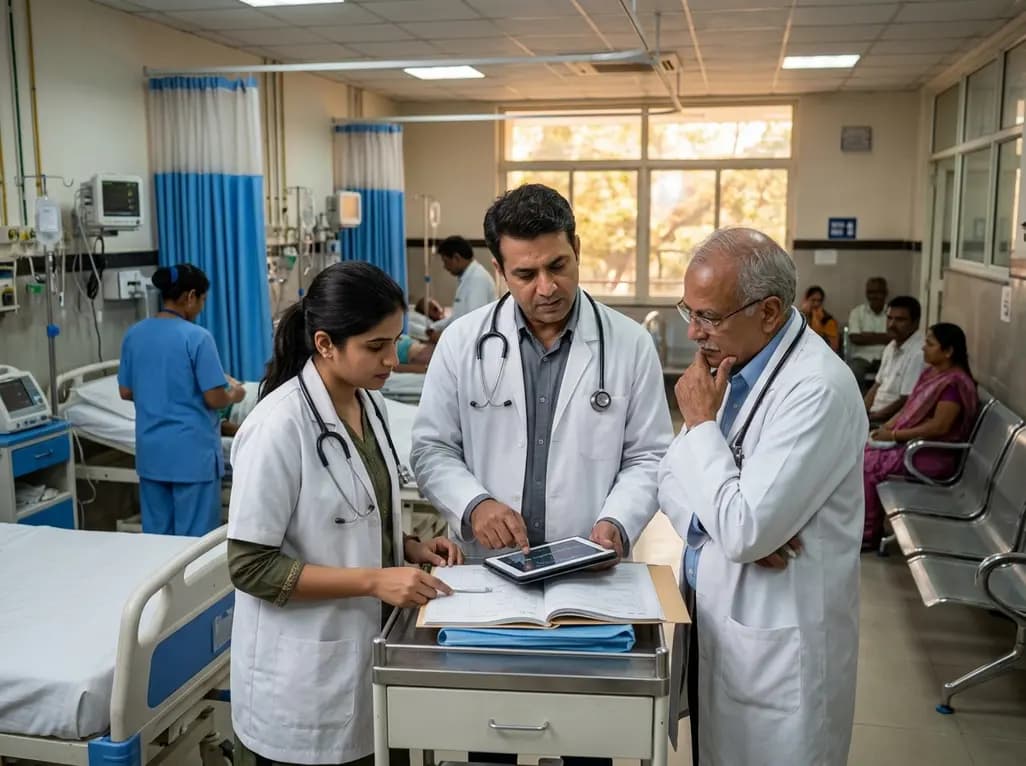
Recently, India and Switzerland have intensified their strategic cooperation in science, technology, and medicine. Consequently, this bilateral partnership creates a powerful bridge between Indian clinical scale and Swiss technological innovation. In this evolving landscape, robust Indo-Swiss health research initiatives are emerging to address pressing global medical challenges. By combining resources, both nations aim to foster breakthrough medical solutions.
Initially, the foundation of this collaboration rests on a shared vision of mutual growth. Switzerland brings cutting-edge research methodologies to the table, whereas India offers unparalleled clinical data and manufacturing capabilities. To facilitate this exchange, Swissnex acts as a critical intermediary. Specifically, this global Swiss network connects researchers, medical entrepreneurs, and academic institutions across both borders. Furthermore, government agencies are actively aligning their strategies to support joint science ventures. Consequently, this synergy creates an ideal environment for medical startups to validate their technologies. Additionally, the exchange is designed to address highly complex scientific problems that require large-scale testing. Currently, Swissnex is active in helping emerging companies enter new markets in both India and Europe. Through specialised bootcamps and exchange programmes, researchers can easily transition their lab discoveries into commercial healthcare products. Thus, this alliance ensures that academic excellence directly translates into practical clinical solutions. Ultimately, the partnership seeks to elevate the standards of global medical technology. By bridging these two ecosystems, both nations can achieve remarkable progress in scientific diplomacy.
In recent developments, the Indo-Swiss Joint Research Programme has expanded its scope to include vital public health sectors. To achieve this, India's Department of Biotechnology and the Indian Council of Medical Research have joined forces with the Swiss National Science Foundation. Specifically, these prominent funding bodies are prioritizing the global "One Health" framework. This holistic strategy acknowledges that human health is inextricably linked to animal and environmental health. Therefore, researchers from both countries are co-developing multidisciplinary projects to combat zoonotic diseases and environmental threats. Furthermore, the joint initiative provides significant funding to support reciprocal mobility for early-career scientists. Consequently, young medical researchers can work in world-class laboratories in both Switzerland and India. This bilateral model accelerates knowledge transfer and fosters long-term institutional relationships. Moreover, addressing public health issues through a One Health approach is critical for preventing future global pandemics. Ultimately, this structured collaboration will help both nations build resilient healthcare infrastructures. Indeed, these joint efforts proactively protect global communities from emerging infectious pathogens.
In addition to public health initiatives, the bilateral partnership focuses heavily on accelerating pharmaceutical and drug development research. Currently, clinical researchers are grappling with the rising threat of global antimicrobial resistance. To solve this, scientists are actively collaborating to design innovative diagnostic tools and novel therapeutic alternatives to traditional antibiotics. Furthermore, joint research projects are investigating host-pathogen interactions to identify potential drug targets. Consequently, these efforts could lead to faster drug discovery pipelines for complex infectious diseases. Meanwhile, the integration of advanced biotechnology tools, such as genomics and high-throughput screening, significantly enhances the research efficiency. Additionally, Swiss pharmaceutical expertise complements India's robust biomanufacturing sector perfectly. This successful combination allows for rapid prototyping and cost-effective production of new medical devices and therapeutics. Subsequently, clinical trials can proceed more efficiently with high-quality experimental drug candidates. Thus, patients globally will eventually benefit from more affordable and precise treatments. Ultimately, the synergy in drug development research is completely poised to strengthen global supply chains.
Beyond academic research, the bilateral alliance places a strong emphasis on fostering the startup ecosystem. Specifically, programmes like the Academia-Industry Training India initiative provide critical pathways for emerging entrepreneurs. Organised by Venturelab and supported by Swissnex India, this training actively helps scientists commercialise their innovations internationally. Initially, participants undergo rigorous and intensive bootcamps to refine their business strategies. Subsequently, they participate in cross-border ecosystem visits to engage with international mentors and potential investors. Moreover, this interaction helps healthcare startups navigate complex regulatory pathways in both countries. Consequently, young healthcare companies can validate their medical devices and digital health solutions in real-world clinical environments. Furthermore, Swiss startups gain direct access to India's vast patient demographic, which is invaluable for testing scalability. Meanwhile, Indian startups can leverage Swiss precision engineering and clinical trial frameworks to improve product quality. Thus, this reciprocal exchange builds a sustainable and scalable pipeline of high-tech medical solutions. Ultimately, the startup exchange program successfully empowers medical innovators to scale their technologies globally.
Simultaneously, Switzerland is showing active interest in India's highly successful digital public infrastructure. This robust system includes advanced digital identity and real-time payment technologies that streamline public services. Therefore, both nations are exploring joint ventures to integrate these secure digital systems into healthcare delivery models. For instance, digital infrastructure can greatly improve patient tracking, health records management, and clinical trial coordination. Furthermore, the collaboration is branching into other scientific domains like geosciences, glaciology, and climate change. Because mountain hazards and environmental shifts directly impact human health, these research areas are highly relevant. Consequently, interdisciplinary scientists are working to model the health impacts of climate change on vulnerable populations. Additionally, the integration of telemetry and digital mapping will aid in disaster medicine preparedness. Thus, the technological ventures between the two nations extend far beyond traditional laboratory research. Ultimately, these joint initiatives pave the way for a more integrated, tech-driven approach to wellness. By doing so, they safeguard public health against modern environmental crises.
Q1: What is the primary focus of the Indo-Swiss healthcare collaboration in 2026?
In 2026, the primary focus centers on the "One Health" framework and accelerating drug development. Partner agencies such as DBT, ICMR, and the Swiss National Science Foundation are financing joint research projects. These initiatives target disease pathogen research, zoonotic diseases, and antimicrobial resistance. Consequently, this collaborative effort aims to design new diagnostics and therapeutics that address interconnected human, animal, and environmental health challenges globally.
Q2: How does the Swissnex network support medical and scientific startups?
Specifically, Swissnex acts as a critical bridge connecting researchers and innovators with industry and academia. Through programmes like the Academia-Industry Training India initiative, Swissnex helps science entrepreneurs scale internationally. It organizes specialized bootcamps and ecosystem visits that allow startups to validate their technologies in foreign markets. Ultimately, this support enables emerging companies to secure funding, build partnerships, and expand their operations across Switzerland and India.
Q3: Why is Switzerland interested in India's digital public infrastructure?
Switzerland is actively interested in India's robust digital public infrastructure, specifically digital identity and real-time payment systems. Consequently, both nations plan to establish joint technological ventures using these tools. In healthcare, integrating this secure digital infrastructure can optimize telemedicine services, streamline patient registry systems, and improve clinical data management. This technical synergy will ultimately lead to more efficient and equitable healthcare delivery systems in both regions.
Disclaimer: This content is for informational and educational purposes only. It does not constitute medical advice or replace professional judgment. Refer to the latest local and national guidelines for clinical practice.
References

Read summarized clinical updates, watch expert medical content, and earn CME certifications right from your smartphone.
Open your smartphone camera to scan and install.





India and Switzerland are enhancing their bilateral collaboration in health, biotechnology, and start-up innovation. Through key initiatives like the Indo-Swiss Joint Research Programme, both countries are focusing on 'One Health' approaches, drug development research, and cross-border entrepreneurial exchanges.
3 months ago
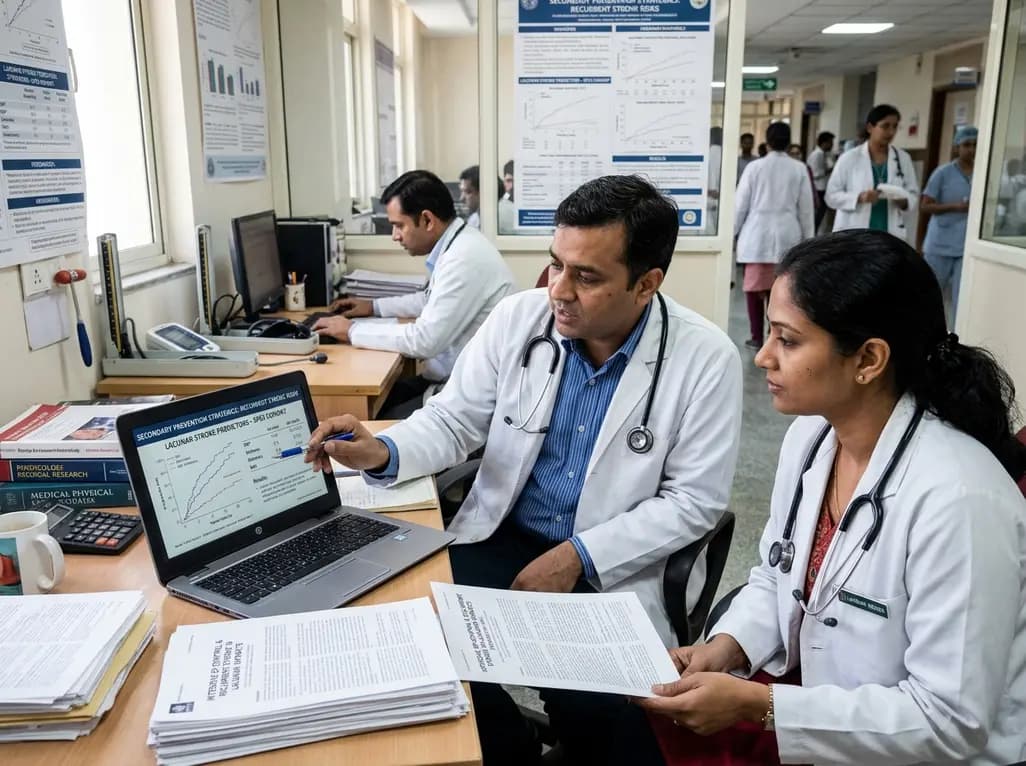
Explore vital recurrent stroke predictors in lacunar stroke patients managed with intensive blood pressure lowering. This analysis examines trial findings from SPS3 to uncover residual vascular risks, metabolic factors, and targeted secondary prevention strategies for high-risk neurological patients.
Today

Odisha has established India's first state-level clinical protocol specifically tailored for pregnant women with sickle cell disease. Developed with NHM and UNICEF, the framework provides structured antenatal screening, crisis mitigation, standardized referral pathways, and specialized interdisciplinary care.
Today

The Directorate General of Health Services directs Indian states to halt the hazardous reuse and reprocessing of single-use medical devices. Discover regulatory implications under the Drugs and Cosmetics Act, critical infection risks, legal liabilities, and operational changes required across clinical specialties.
Today

Mitochondria-targeted nanoparticles self-assembled from EGCG and L-glutamic acid effectively restore mitochondrial homeostasis, suppress synovial inflammation, and attenuate chondrocyte senescence in osteoarthritis, offering a promising disease-modifying nanotherapy.
Today

India is advancing preventive healthcare by integrating genomics, artificial intelligence, and quantum technologies. With the SANGAM programme sequencing one million Indian genomes, clinicians can unlock personalized therapies, detect cardiometabolic risks early, and curb the burden of diabetes and heart disease.
Today
